Fragrance, in plain language.
Sixty-plus definitions for the words fragrance buyers, perfumers, and reviewers actually use. Written without jargon, structured for fast lookup, kept current with industry standards.
Notes & accords
- Accord
- A blend of two or more raw materials that creates a single perceived smell. Most fragrances are constructed from a small number of accords rather than dozens of individual notes.
- Aldehyde
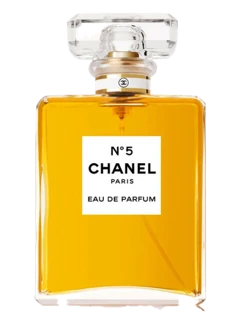
- A class of synthetic and natural compounds with a sparkling, slightly waxy, sometimes soapy character. Famously dominant in Chanel No. 5.
- Ambergris
- A waxy substance originally produced by sperm whales, valued in perfumery as a fixative and base note. Almost always synthetic today (ambroxan).
- Amber
- An accord of warm, sweet, slightly powdery materials, traditionally combining labdanum, vanilla, and benzoin. Not a single note.
- Attar
- A traditional concentrated perfume made by distilling botanicals into a sandalwood or other carrier oil, common in the Middle East and South Asia.
- Base note
- The longest-lasting layer of a fragrance, perceived hours after application. Common base notes include sandalwood, oud, vanilla, white musk, amber.
- Bergamot
- A small bitter citrus fruit grown mainly in Calabria, Italy, that produces one of the most-used top notes in perfumery.
- Chypre
- A fragrance family built around a citrus top, a floral heart, and an oakmoss-labdanum base. Mitsouko by Guerlain is the canonical example.
- Citrus
- A fragrance family characterised by bright, sparkling top notes from fruits like bergamot, lemon, lime, grapefruit, mandarin.
- Floral
- The largest fragrance family, built around flower notes such as rose, jasmine, tuberose, lily of the valley, ylang-ylang, iris.
- Fougère
- A fragrance family combining lavender, oakmoss, coumarin, and often geranium. The traditional structure of classic men's colognes.
- Fresh
- An umbrella descriptor for fragrances that smell clean, airy, or aquatic, including marine, ozonic, herbaceous, and citrus profiles.
- Gourmand
- A fragrance family built around edible-smelling notes like vanilla, caramel, chocolate, almond, coffee. Angel by Mugler defined the modern category.
- Green
- Notes that evoke crushed leaves, cut grass, or stems. Often built around galbanum, violet leaf, or tomato leaf.
- Heart note
- Also called the middle note. The body of a fragrance that emerges 15 to 60 minutes after application and lasts a few hours.
- Iso E Super
- A widely used synthetic molecule with a soft, woody, ambery, slightly cedar-like character. The defining material of Molecule 01.
- Leather
- An accord that smells of cured hide, often built from birch tar, isobutyl quinoline, castoreum, or saffron.
- Moss
- Most often oakmoss, a lichen used as a fixative and base in chypre fragrances. Modern formulations use restricted oakmoss derivatives or synthetics due to IFRA limits.
- Musk
- Originally an animal-derived material, today almost always synthetic (white musks, polycyclic musks). Provides warmth, depth, and skin-like sensuality.
- Notes pyramid
- The standard three-tier representation of a fragrance: top notes evaporate fastest, heart notes follow, base notes anchor the dry-down. An approximation, not a strict timeline.
- Oriental
- An older industry term for warm, often spicy, resinous, vanillic fragrances. Many brands now use 'amber' as a more accurate descriptor for the same family.
- Oud
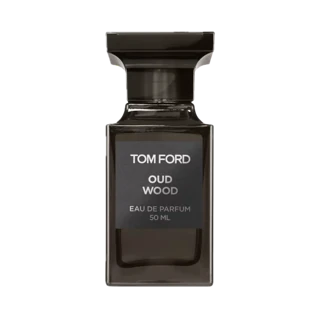
- Also agarwood. A resinous wood produced by Aquilaria trees infected with mold. Deeply complex, animalic, smoky, sweet. One of the most expensive raw materials in perfumery.
- Powdery
- A descriptor for fragrances with a soft, cosmetic, slightly dusty quality, often built from iris, violet, heliotrope, vanilla, or musk.
- Resin
- Sticky botanical exudates such as benzoin, frankincense, myrrh, labdanum, and styrax. Used as base notes and fixatives.
- Spicy
- A descriptor for fragrances featuring spices: pink pepper, cardamom, cinnamon, clove, nutmeg, saffron.
- Top note
- The first impression of a fragrance, perceived in the first 15 to 30 minutes. Usually citrus, herbs, or light fruits.
- Woody
- A family of base notes including sandalwood, cedar, vetiver, patchouli, oud, guaiac, gaiac, and synthetic woods like Iso E Super.
Concentrations & form
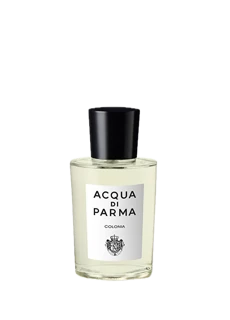
- Eau de Cologne
- Around 2 to 5 percent fragrance oil concentration. Light, traditionally citrus-led, short-lived (one to two hours).
- Eau de Toilette (EDT)
- Around 5 to 15 percent oil concentration. The most common concentration for daytime fragrance. Typically lasts three to five hours.
- Eau de Parfum (EDP)
- Around 15 to 20 percent oil concentration. The standard concentration for modern niche releases. Typically lasts six to eight hours.
- Extrait / Parfum
- 20 to 40 percent oil concentration. Richest, longest-lasting, often denser and less projecting than EDP.
- Concentration
- The percentage of fragrance oils dissolved in alcohol (and water). Higher concentration usually means greater longevity, but not always more projection.
- Dilution
- The act of diluting fragrance concentrate in alcohol or carrier oil to reach a target concentration.
Performance
- Sillage
- The trail of scent left behind as you move. Pronounced 'see-yazh'. A fragrance with strong sillage is detectable from a few feet away.
- Projection
- How far a fragrance projects from the skin during the first hours of wear. Often confused with sillage but technically distinct.
- Longevity
- How long a fragrance remains detectable on skin, fabric, or in the air. Typically measured in hours.
- Dry-down
- The final phase of a fragrance, what remains on skin after the top and heart notes have evaporated. Usually base notes alone.
- Skin chemistry
- The interaction between body chemistry (pH, sebum, hydration, diet) and a fragrance, which alters how it smells and how long it lasts on a specific person.
- Throw
- Informal synonym for projection, especially in enthusiast communities.
- Volatile compound
- Any molecule that evaporates at room temperature. Top notes are highly volatile; base notes are low-volatility.
Industry
- Niche
- A category of perfume houses focused on artistic vision over commercial scale. Examples include Frederic Malle, Maison Francis Kurkdjian, Amouage, Diptyque.
- Designer
- Mass-market fragrances released by fashion houses such as Dior, Chanel, Tom Ford, YSL. Wider distribution, larger marketing budgets.
- Indie perfumer
- An independent perfumer or small house that formulates and produces in low volume, often without traditional retail distribution.
- Pillar / Line
- A flagship fragrance from a house, often the foundation of a long-running line with flankers (Aventus, Sauvage, Black Opium are pillars).
- Flanker
- A spin-off from a successful pillar fragrance, often with a similar name and visual identity (Aventus Cologne, Sauvage Elixir).
- Discontinued
- A fragrance no longer produced by its house. Often valued highly on the resale market, especially when reformulations replaced beloved originals.
- Reformulation
- A change to a fragrance's formula, often driven by IFRA restrictions on raw materials, supply availability, or cost reduction.
- Vintage
- An older batch of a fragrance, predating reformulation. Enthusiasts often prefer vintage formulations for their richer materials.
- Nose / Perfumer
- The professional who composes a fragrance. Most niche releases credit a specific perfumer; many designer fragrances do not.
Process
- Maceration
- The aging process where a freshly mixed perfume rests in alcohol for weeks or months, allowing molecules to harmonise. Affects how the final fragrance smells and projects.
- Fixative
- A material used to slow the evaporation of more volatile components, extending longevity. Resins, ambers, and musks are common fixatives.
- Enfleurage
- A traditional extraction method using fat to capture the scent of delicate flowers like jasmine and tuberose. Now mostly historical.
- Distillation
- The dominant extraction method for essential oils, using steam or solvents to separate aromatic compounds from plant material.
- Headspace
- A technology that captures the aromatic profile of a flower, fruit, or environment in situ without harvesting. Allows synthetic recreation of scents from rare or fragile sources.
- Synthetic
- A laboratory-produced aroma molecule. Modern perfumery is overwhelmingly built on synthetics, both for cost and for materials that cannot be safely or sustainably extracted from nature.
Safety & regulation
- IFRA
- The International Fragrance Association. Sets the safety standards for raw material usage in fragrance products globally.
- IFRA Amendment
- Periodic updates to IFRA standards, restricting or banning specific raw materials based on new safety data. Amendment 51 (2023) is the current set used in IFRA-aware formulation.
- Allergen declaration
- EU regulation requires labelling of 26 specific fragrance allergens above set thresholds. Modern Scent Lab outputs include this declaration as part of the manufacturing PDF.
- ISO compliance
- Conformity with ISO standards for cosmetic and fragrance manufacturing, including good manufacturing practice (GMP) requirements.
Buying & sampling
- Decant
- A small portion of a fragrance transferred from the original bottle into a smaller container, usually 5 to 10 ml. The standard way to test a fragrance properly without buying a full bottle.
- Sample
- An official 1 to 2 ml vial provided by a house, often free or low cost. Useful for first impressions but rarely enough for a full evaluation across days.
- Split
- A community-organised purchase where multiple buyers share the cost and contents of a full bottle, each receiving a decant. Common in enthusiast groups.
- Blind buy
- Purchasing a full bottle of a fragrance without first testing it. High risk for the buyer; the use case Fragnatique's match score and offline scanner are designed to reduce.
- Layering
- Wearing two or more fragrances at the same time. Some niche houses release entire layering systems; layering is common with oud, musk, and amber.
- Signature scent
- A fragrance that others associate with you on contact. Usually one to three perfumes worn consistently across seasons, not a single perfume worn forever.
- Scent strip
- A paper test strip used in fragrance counters. Reveals the top and early heart notes only; never trust a scent strip for the dry-down.