I'm 22, I've worn whatever cologne my dad bought me for years, and I want to actually pick a fragrance that feels like mine. The problem: I have no idea what I like, the niche world feels intimidating, and I don't want to drop 200 EUR on a bottle and regret it
Where do I even start? Looking for a beginner-friendly process that doesn't require me to memorise the names of two hundred fragrances first.
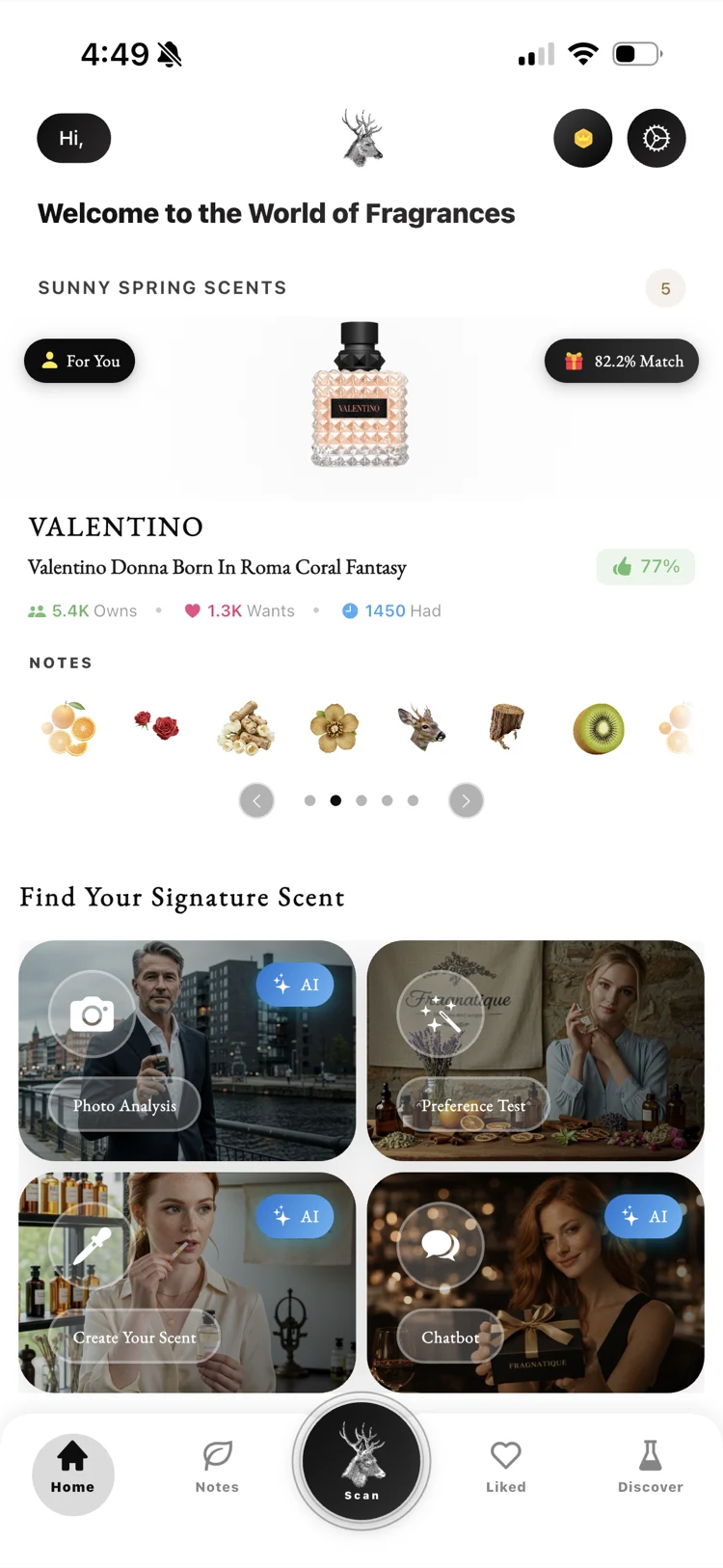
Start from a twelve-question profile
Beginners get the most out of the app by finishing the profile quiz first. Twelve questions, then a ranked shortlist with the reasoning attached, so the first purchase is an informed one rather than a blind buy.
Open it on iOS7 answers
Most useful answer firstMost useful answer
Camille here. Ill write the long version of alex's plan because I learned this the hard way.
Most expensive mistake new fragrance wearers make is treating the first bottle as the destination. It's not. The first bottle is the start of a long process.
My recommended structured first year:
Months 1 to 2: family discovery
Buy a discovery set across at least six fragrance families. Wear each one for a full day. Take notes. Goal: identify the two families that consistently make you feel good.
Tools: fragrance family charts (search fragrance family wheel). The Fragnatique app's match score quiz can help narrow this down using your taste profile and photo style if you find the abstract chart confusing.
Months 3 to 4: family deep dive
Within your two preferred families, sample 4 to 6 specific fragrances at different price points. Mix mainstream (Sauvage, Aventus dupes) and niche (Mancera, Initio).
Months 5 to 6: finalist round
Two of those candidates will pull ahead. Buy 5ml decants of the two finalists from a reputable splitter (~25 EUR each).
Wear each for a full week. Pay attention to:
- How it makes you feel when you wear it
- How people react
- Whether you reach for it on cold mornings, late evenings, or all day
Month 7: commit
Buy a 50ml bottle of the finalist. Not 100ml. Ull probably want to try other things later.
Months 8 to 12: build the wardrobe
Once you have a signature, you can start sampling for a complementary second fragrance. Different family from the signature, different occasion. Maybe a winter evening fragrance if your signature is a daytime one, or a cologne for hot summer days.
Why this is worth doing slowly:
- Your taste will change. The fragrance you love at 22 is unlikely to be the fragrance you love at 25. Buying a 100ml at 22 locks you in.
- Niche fragrances reward time. The first 30 minutes of a fragrance is not the fragrance. The four hour mark is.
- The fragrance world is a slow hobby. Rushing it doesn't work.
Costs to budget for the first year:
- Discovery set: 60 to 100 EUR
- Family deep dive samples: 60 to 100 EUR
- Finalist decants: 50 EUR
- Bottle purchase: 100 to 250 EUR depending on what you choose
Total: ~300 to 500 EUR over a year. Same total as a panic-buy of two niche bottles, but with infinitely more learning and infinitely fewer regrets.
Welcome to the hobby
Most useful thing anyone said to me when I was starting was: do not buy a bottle. Buy samples. Lots of samples.
Concrete starting plan for your first three months:
- Buy a fragrance family discovery set from a reputable splitter or directly from a niche houses sample line. Aim for 10 to 15 samples covering different families: citrus, floral, woody, oriental, fougère, gourmand. ~50 to 80 EUR for the whole set.
- Wear each one for a full day. Not for 30 minutes in a shop. A full day. Take a one-line note that evening on what you noticed.
- After two weeks, ull have noticed which families you keep coming back to. Probably two of them.
- From there, sample 3 or 4 specific fragrances within those families. Buy 5ml decants if the official samples are too small.
- Around month 4 or 5, you can buy a 50ml bottle of the candidate that's felt most you across multiple wearings.
Resist the urge to skip the sampling. The 80 EUR you spend on samples saves you from a 250 EUR mistake
Adding the technical layer. New wearers tend to make three specific mistakes:
- Buying based on first impression in a shop. The first 10 minutes of a fragrance is the top notes, which are designed to attract. The actual character of a fragrance lives in the heart and base, 3 to 6 hours in. Always test on skin and wait.
- Underestimating skin chemistry. The same fragrance can smell quite different on different people. Reviews online are useful but not predictive. You have to test on yourself.
- Confusing loud and projecting with good. A fragrance you can smell on yourself for hours is often the better long-term choice than the one that broadcasts.
Camilles plan above is essentially how you avoid all three mistakes
Stockholm voice. Add a winter test to whatever finalist you pick. A fragrance that wears beautifully in summer can disappear in cold air, and vice versa. If you live somewhere with real winter, test your finalists in the cold before committing.
One outside-the-box note for a 22 year old: don't feel obligated to land at a niche house. Some of the best signature scents are mainstream, well-priced, and easy to access. Hermès Terre d'Hermès, Acqua di Parma Colonia, Chanel Bleu, Le Labo classics. There's no rule that says a 22 year old needs Tom Ford or Creed.
Office angle, since at 22 many people are starting first jobs. Whatever you commit to, sample it in your actual office for a week before buying. Some fragrances that smell amazing on a saturday evening are too much for a tuesday meeting.
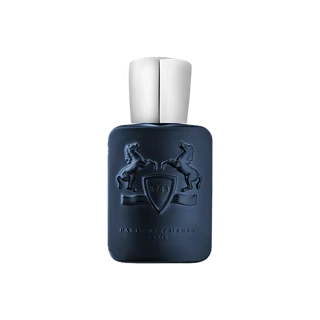
Original asker. I followed camilles plan, almost word for word. Bought a 12-sample discovery set, learned I keep coming back to woody-fresh and woody-spicy. Sampled Cedrat Boise, Layton, and Side Effect over the next two months. Bought a 50ml of Layton at 165 EUR.
Best 165 EUR I've ever spent on something for myself. Thank you all especially camille
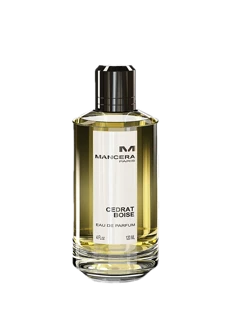
- Mancera Cedrat Boise
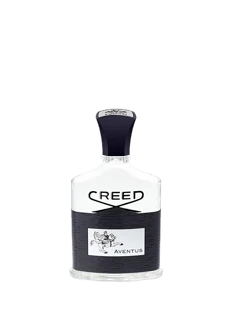
- Creed Aventus
- Parfums de Marly Layton
Get personal answers inside the Fragnatique app.
Ask follow-ups, get a match score against your taste profile, and pull curated shortlists into your wishlist. The AI advisor lives where the conversation happens.