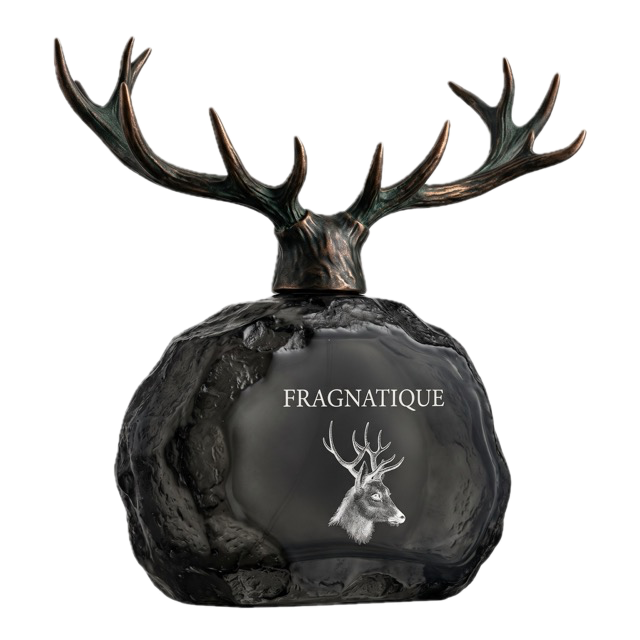
Just finished my first formula in the Fragnatique Scent Lab in the iOS app. The match advisor walked me through proportions for a woody-fresh structure I designed. Exported the manufacturing PDF, mixed up a 10ml sample at home, and now I have a bottle of something I made
How do I actually evaluate whether its good? What should I be paying attention to? Looking for community guidance on the evaluation process, not just the smell.
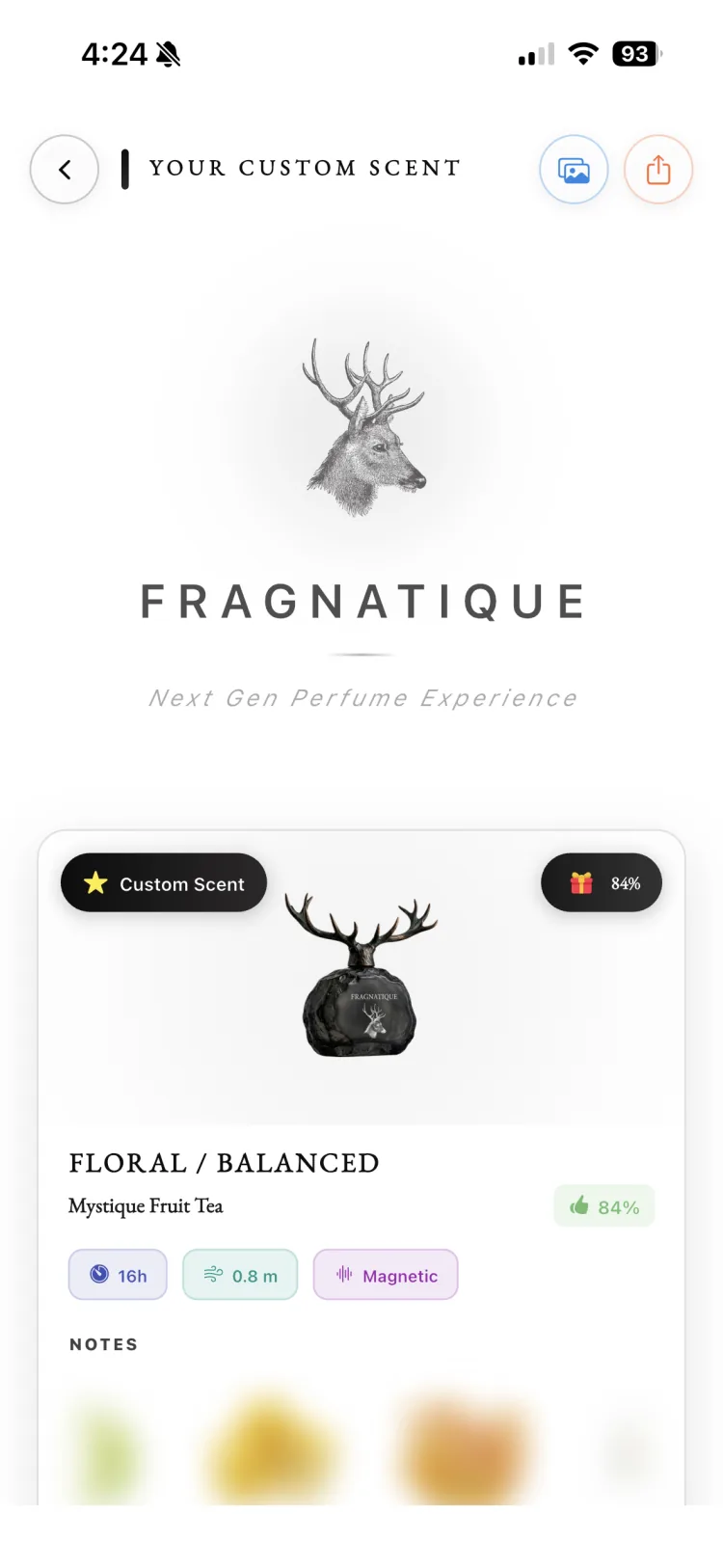
Scent Lab turns an idea into a manufacturing document
Answer the Lab's questions and it returns a formula with a note pyramid, projection and longevity metrics, an IFRA compliance check, a cost analysis and an exportable PDF a producer can actually read.
Open it on iOS7 answers
Most useful answer firstMost useful answer
Welcome to the most useful part of formulation: evaluating your own work without lying to yourself.
Step-by-step evaluation:
Blotter test (mandatory before skin test):
- Spray once on a clean perfume blotter. Set a timer.
- Smell at: 0 minutes (top), 15 minutes (top settling), 1 hour (heart), 3 hours (heart-base transition), 6 hours (base), 12 hours (residual).
- Take a one-line note at each interval. Use specific words: bright, sharp, muddled, clear, cloying, thin.
Skin test:
- Apply two sprays to the inside of one wrist.
- Same intervals: 0, 15, 1h, 3h, 6h, 12h.
- Note differences from the blotter test. Skin amplifies sweet notes and absorbs heavy bases. Some materials disappear entirely.
What to listen for:
- Structure coherence. Does the fragrance still feel like one idea at three hours, or has it broken into separate fragrances?
- Top to heart transition. Is it smooth, or does the top notes fall off a cliff leaving an awkward gap?
- Single material poking through. Often a top-note material was over-dosed. Look for a single aggressive smell that does not blend.
- Sillage shape. How far does the fragrance project? Is the projection consistent across the wear, or does it spike and crash?
- Lasting power. Most home formulas under-perform on lasting power because of insufficient base materials. If your fragrance is gone after three hours, the next iteration needs more base.
Common first-formula problems:
- Too much top note material. The first hour is loud and sharp. Reduce by 30 to 50 percent in the next iteration.
- Top heart gap. Top notes evaporate before heart notes wake up. Add a connective material (a soft musk, a light woody amber).
- Thin base. Use base material that is heavier or use more of it.
- Material clash. Two strong materials fighting (citrus and oud, for example, often clash). Pull one back.
Iteration is where formulation lives. The first version is rarely the final version. The Scent Lab walks you through creating a new version with adjusted ratios. Plan for two or three iterations before evaluating the formula as done
Florist with a side fragrance practice here. The biggest first-formula mistake I see in students is over-fragmenting. New formulators want to use ten materials. Best practice is three to five carefully chosen materials in your first formula. The fewer materials, the easier to evaluate, the easier to fix.
The Scent Lab can help here because it surfaces material counts and warns when your pushing past coherent ratios. Listen to those warnings on the first pass
Practical wear test. After the blotter and skin test, ask three people you trust to smell your wrist at different times during a normal day. Their reactions will tell you something your own nose cannot. Ull be amazed how often the formula you think is perfect is described by someone else as smells like soap or smells weirdly medicinal
Use that data without ego. Iterate.
Documentation discipline. Keep a notebook for every batch. Record the formula, the date, the ratios you actually used (not just the planned ones), the substitutions you made, and the evaluation notes from each interval.
Six months in, ull be able to read your old formulas like a code. Without notes, every batch is a new experiment from scratch.
Original asker. Reading these answers carefully. Have already spotted my single material poking through issue (I over-dosed cardamom). Iterating with reduced cardamom + added base musk this weekend. Will report back.
One frame that helped me when I started: think of a formula like a song. The top notes are the opening hook, the heart is the chorus, the base is the bass line. Every part has to work alone AND in combination with the others. If you focus only on what does the top smell like, ull end up with a great chorus and no song.
The Scent Lab's three-tier display (top, heart, base) was the first time I really felt that arc as part of formulation rather than as a marketing concept
Update from the original asker. Iterated three times. Third version is genuinely good. I've been wearing it for a week. Mads's evaluation framework is now my permanent process.
The Scent Lab makes it easy to ship the formula to a small fulfilment lab if you want a real bottle made up. I'm considering it for the third version
Get personal answers inside the Fragnatique app.
Ask follow-ups, get a match score against your taste profile, and pull curated shortlists into your wishlist. The AI advisor lives where the conversation happens.