I keep reading ambroxan in fragrance reviews. Critics use the word like everyone agrees what it is, but I have no clue. I sniff fragrances people say are very ambroxan-heavy and I can't point to which part is the ambroxan
Can someone explain in plain language: what does ambroxan actually smell like, why is it in everything now, and how do I learn to recognise it on my skin?
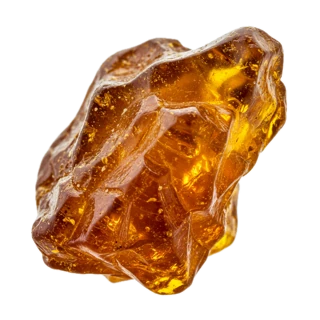 Amber
Amber
680 notes, each one browsable on its own
Every note discussed here has its own page in the app: what it smells like, which families use it, and which bottles in the catalogue lean on it hardest. Start from a note instead of a bottle and work outwards.
Open it on iOS7 answers
Most useful answer firstMost useful answer
Plain language tour
Ambroxan is a synthetic molecule developed in the 1950s as a substitute for ambergris (the rare and ethically problematic whale-derived material that used to anchor classic fragrances). Its now produced industrially and one of the most widely used materials in modern perfumery.
What it smells like:
- On a pure paper strip, ambroxan smells like a dry, slightly woody, slightly mineral, almost salty radiance. People describe it as clean amber, skin-like musk, or the inside of a leather jacket.
- On skin, ambroxan does something other materials do not. It diffuses widely without smelling sweet or floral. That is, it broadcasts the fragrance you're wearing far past your collar without adding a recognisable smell of its own.
Why its in everything since the 2010s:
- Diffusion without character. Ambroxan amplifies whatever else is in the fragrance. It's the perfect projection material for the modern preference for clean, expensive-smelling fragrances.
- Synthetic but not cheap-feeling. Doesn't have the sweet, sticky character that gives away cheap synthetics. Used at high dose, it actually reads as luxurious.
- Easy to use. Unlike materials like real oud or rose absolute, which require careful balancing, ambroxan is forgiving.
Famous high-dose users you can study:
- Dior Sauvage. Mainstream ambroxan benchmark. Sample it and sniff your wrist at the four hour mark. The clean, radiant, slightly metallic feeling that lingers is mostly ambroxan.
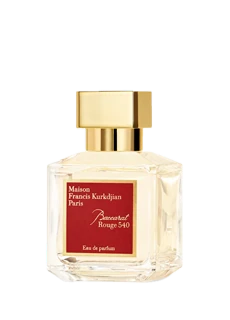
- Baccarat Rouge 540. High dose ambroxan combined with saffron, jasmine, and a sweet ethyl maltol. The luminous projection is ambroxan.
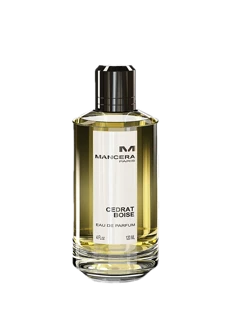
- Mancera Cedrat Boise. Another ambroxan-forward composition.
- Parfums de Marly Layton. Lighter ambroxan dose, but still recognisable.
Once uve spent a few hours with two or three of these on different wrists, the molecule becomes very easy to spot. It's the shimmer at distance you get with many modern fragrances
Why you should care:
- If you love ambroxan, ull probably love most modern niche ambers and woody fresh fragrances.
- If you find ambroxan boring, you may need to look at older chypres, fougeres, or ambery orientals to find fragrances that don't lean on it.
Historical frame. Before ambroxan became cheap and ubiquitous, perfumers used a wider palette to achieve diffusion: musks, civet, ambergris, oakmoss, real animalics. Each had a recognisable character of its own. Ambroxan replaces all of these with a single, neutral, well-behaving substitute.
The trade-off is that perfumes lost some of the distinctive character those older materials gave them. The benefit is that perfumes are now more wearable, more office-friendly, and cheaper to produce.
Whether this is a net gain depends on your taste. I personally think the 1980s and 1990s benchmark fragrances feel more memorable. But I also recognise that many of those classics were too loud or too animal for most contemporary tastes.
One thing mads is too polite to say: ambroxan is also responsible for a kind of sameness people complain about in 2020s perfumery. Many fragrances at all price points smell vaguely related because they all use the same ambroxan radiance trick.
Not bad in itself. Just dominant. When ten fragrances on a department store shelf all read as fresh, modern, expensive, your mostly smelling ambroxan, not ten distinct creative ideas.
Indie note: a lot of small house perfumers are deliberately moving away from ambroxan-forward compositions because of exactly this fatigue. If you want to taste what perfumery looks like without ambroxan as the spine, sample anything from Bruno Fazzolari, Slumberhouse, Strange Invisible, or Gather. Different chemistry, much more distinctive results
Fun layering experiment to learn ambroxan: take a fragrance that doesn't have a heavy ambroxan dose (a real chypre, a green floral, a vintage cologne) and a fragrance that does (Sauvage or BR540). Spray one on each wrist. Sniff each, then sniff the air around you. The one with a shimmer three feet away from your body is the ambroxan-heavy one. The molecule is mostly perceived in the projection, not at close range.
Practical office takeaway: high-ambroxan fragrances project further than you think. Two sprays of an ambroxan-heavy fragrance is the equivalent of three or four sprays of a quieter fragrance. New wearers consistently over-apply
Original asker. Came back after two months of paying attention. I can now spot ambroxan on most fragrances I sample and its changed how I shop. I noticed that I gravitate toward fragrances that use it lightly or not at all. Not bad, just useful self-knowledge. Thank you mads especially, this was a perfect explainer
- Parfums de Marly Layton
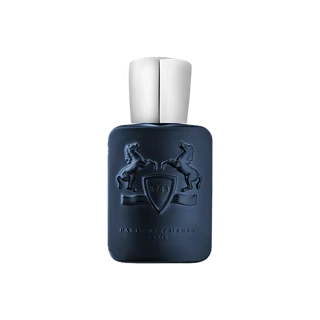
- Mancera Cedrat Boise
- Maison Francis Kurkdjian Baccarat Rouge 540
Get personal answers inside the Fragnatique app.
Ask follow-ups, get a match score against your taste profile, and pull curated shortlists into your wishlist. The AI advisor lives where the conversation happens.