Arabian vs Designer Perfume: The Real Differences
Arabian vs designer perfume: who makes them, how they smell, how strong they are, where they sell and why prices differ. A fair comparison of both.
- 01The real difference is who makes the perfume and how it is sold: Arabian houses are mostly family-owned makers from the Gulf that produce and sell under their own names; many designer perfumes are made under licence by beauty groups for a fashion name.
- 02In style, Arabian houses lean to oud, amber, musk, rose and gourmand notes at high concentration, often with perfume oils; designer houses cover every family, with more fresh and floral bestsellers.
- 03Neither is better by default. Designer perfumes carry heritage, wide distribution and named perfumers; Arabian perfumes offer strength, Gulf styles and lower prices. Choose by the scent, not the label.
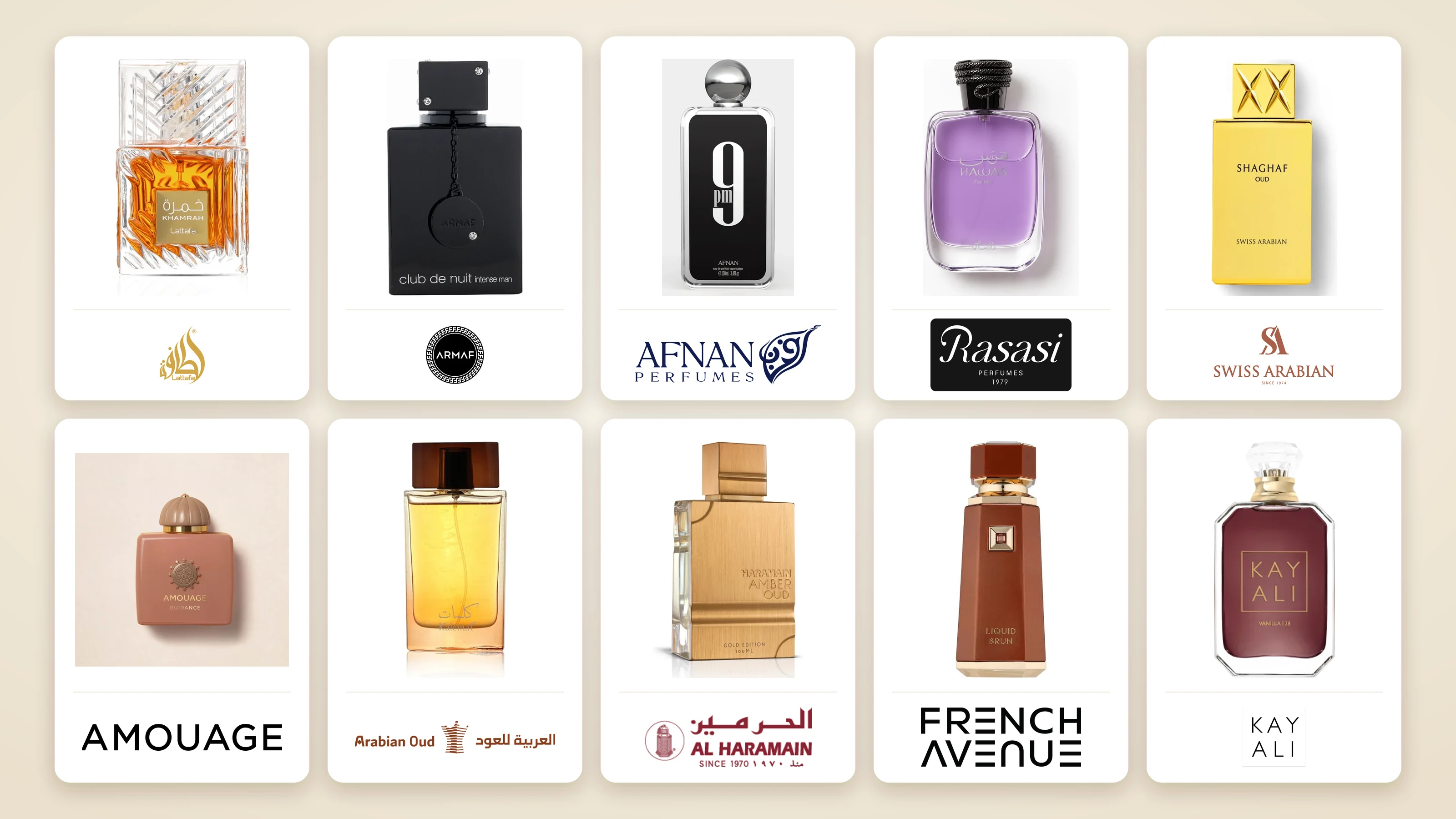
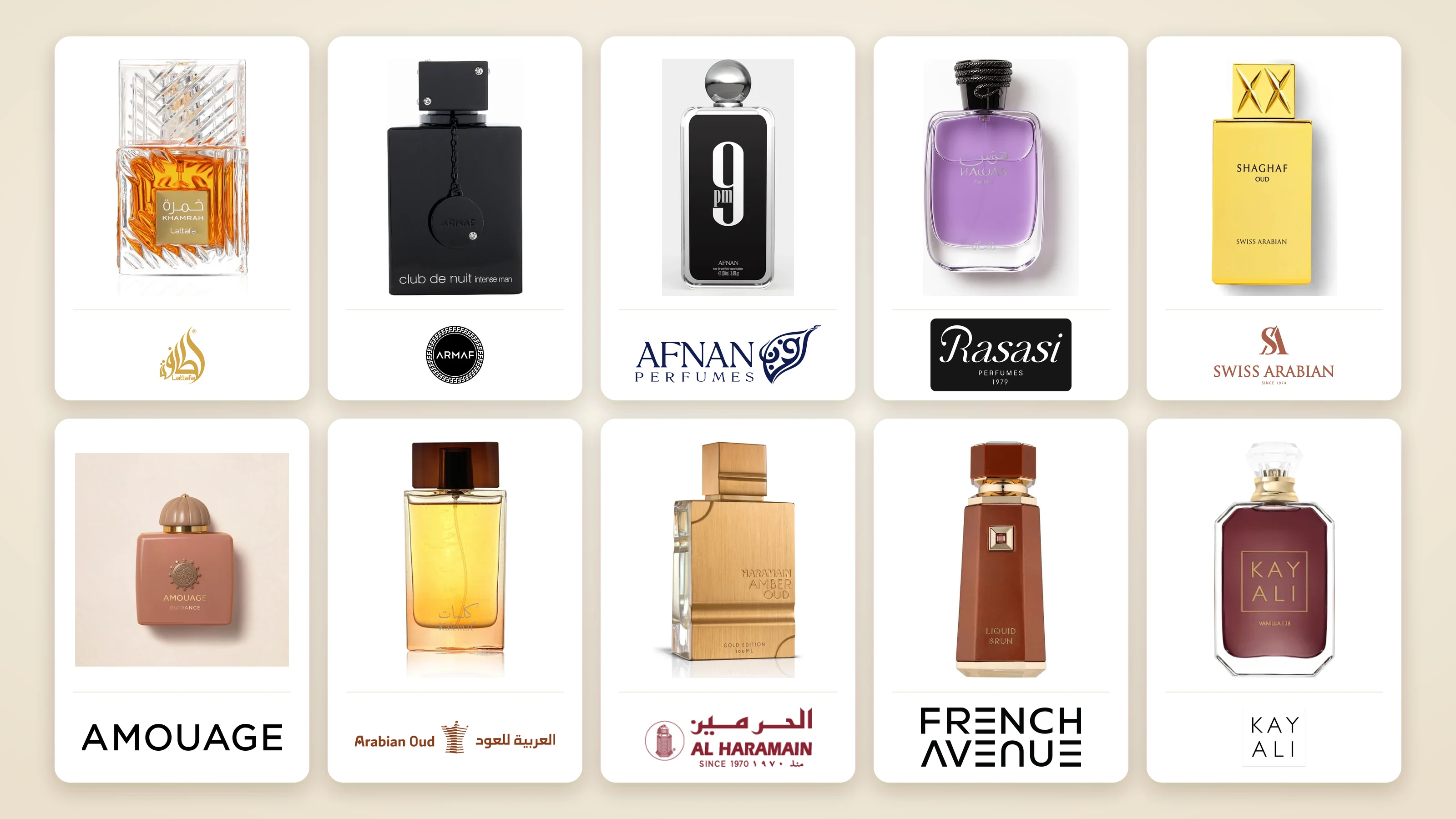
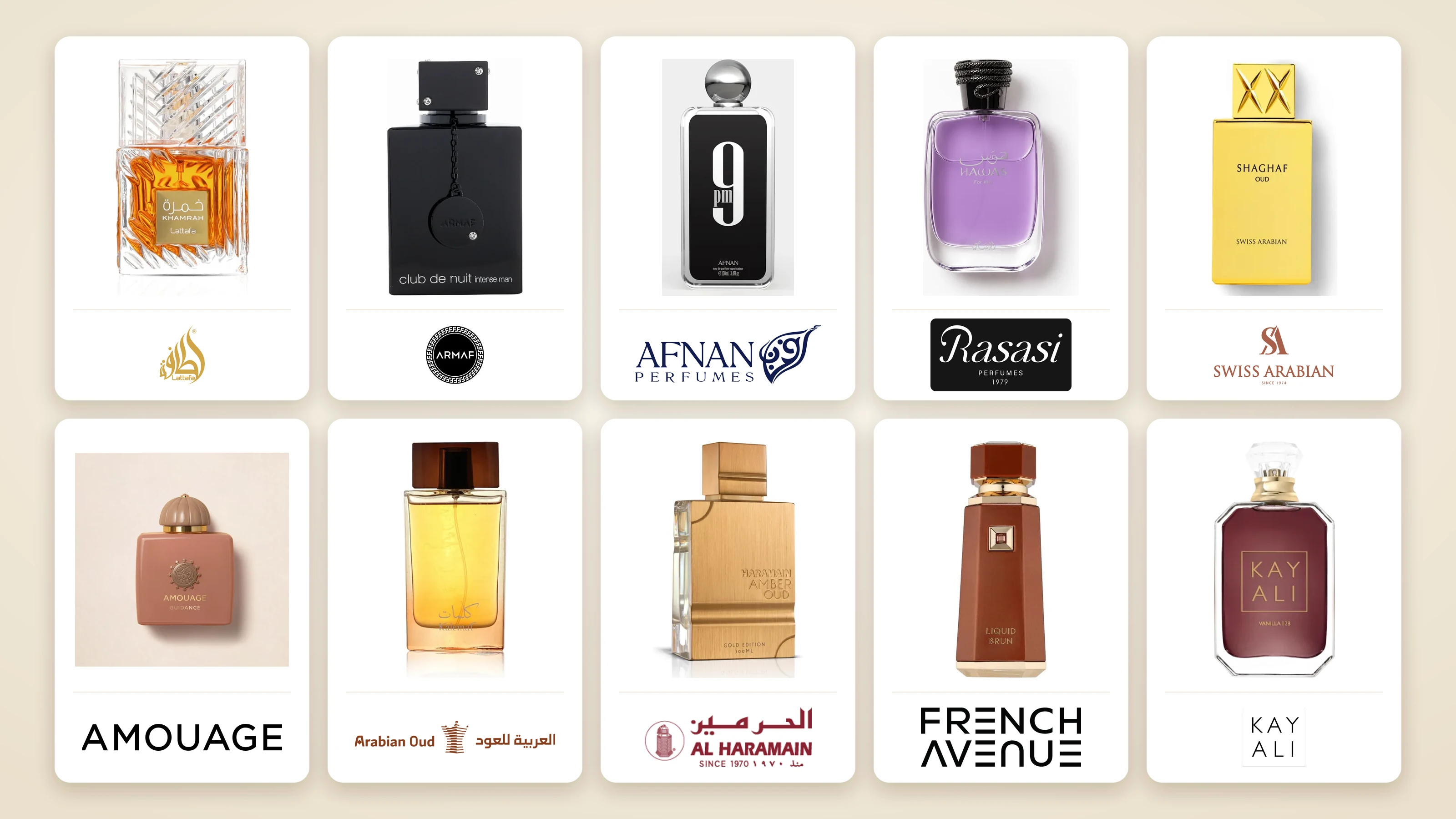
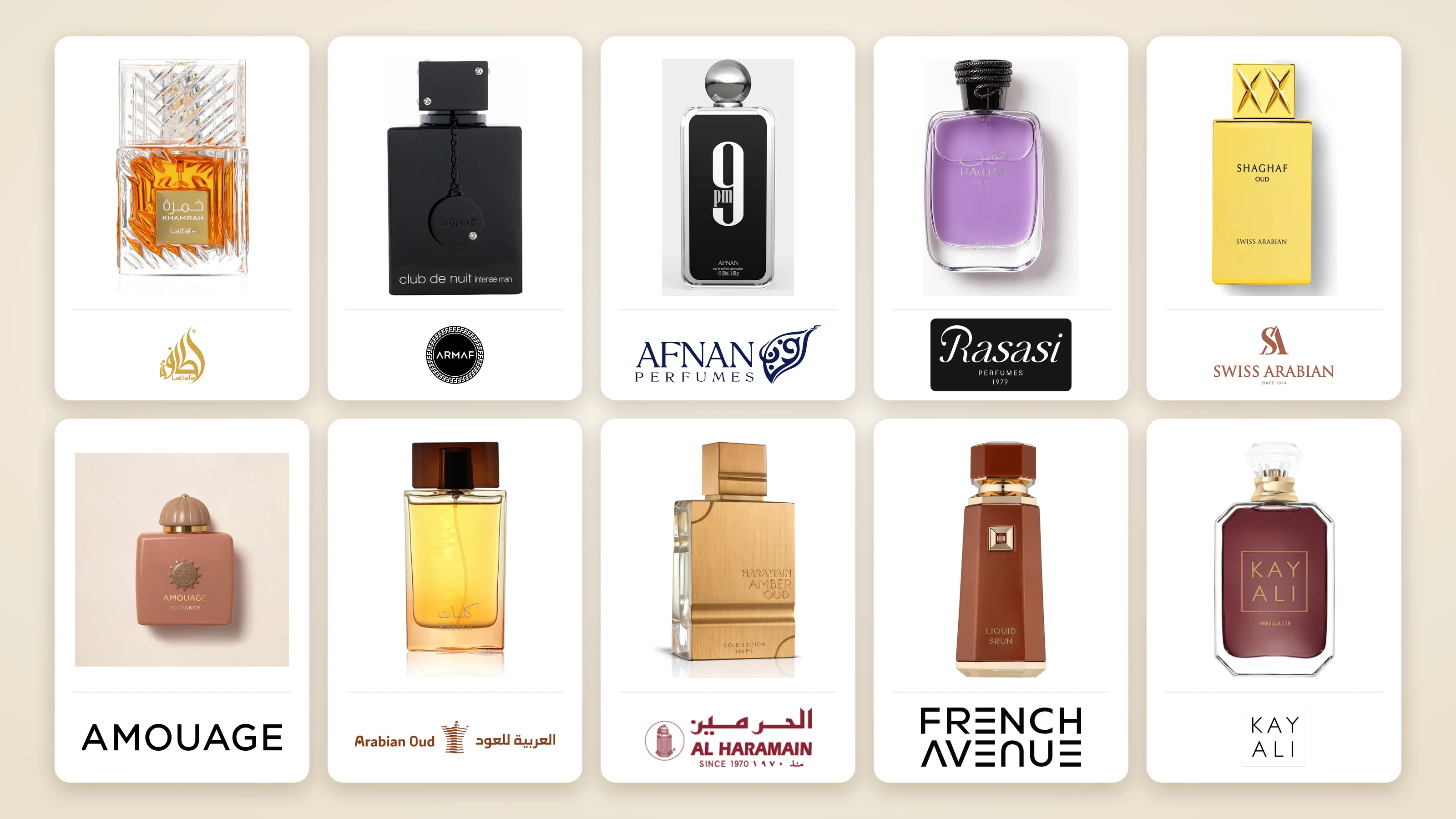
Arabian vs designer perfume: the real difference is who makes the perfume and how it reaches you. Arabian houses such as Lattafa, Armaf, Afnan and Rasasi are mostly family-owned makers from the Gulf that produce their own perfume and sell it under their own names, often online; many designer perfumes carry a fashion name and are made under licence by a beauty group, then sold in department stores and beauty chains. In style, Arabian houses lean to oud, amber, musk and gourmand notes at high concentration; designer houses cover every family. Neither is better by default. Here is a fair comparison, point by point.
The Comparison at a Glance
| Arabian houses | Designer houses | |
|---|---|---|
| Who makes it | Mostly the house itself, in its own factories (Sharjah, Dubai, Ajman, Riyadh, Muscat) | Often a beauty group under licence for the fashion name |
| Ownership | Mostly family-owned, selling under their own names | Fashion houses and beauty groups; licences common |
| Typical style | Oud, amber, musk, rose, saffron, gourmand | Every family; many fresh, floral and woody bestsellers |
| Strength | Eaux de parfum as standard; extraits and perfume oils common | Eaux de toilette and eaux de parfum; extraits for some lines |
| Formats | Sprays, perfume oils, bakhoor (incense) | Mostly sprays, plus body care |
| Where sold | Own stores, online, growing in department stores | Department stores, beauty chains, travel retail |
| Price | Lower price tier for most bestsellers; luxury at the top (Amouage, fine oud oils) | Mid to high; niche houses higher |
| Who signs the scent | Often the house; some credit outside perfumers | Often a named perfumer from a fragrance company |
Who Makes the Perfume
Arabian houses are, first of all, perfume makers. Swiss Arabian has made perfume in Sharjah since 1974; Rasasi opened its first factory in the Jebel Ali Free Zone in 1986; Global Travel Retail Magazine reported in 2024 that Sterling Perfumes, the maker of Armaf, runs a 550,000 square foot facility in Dubai. Lattafa and Al Haramain also make their own, in Sharjah and Ajman.
Designer perfume is often a licensing business, and it has worked that way for decades. A fashion house lends its name; a beauty group creates, makes and sells the perfume and pays royalties. Two examples from our research: The Estée Lauder Companies made Tom Ford's perfumes under a licence signed in 2005 and bought the brand in 2023; Coty took over the Calvin Klein perfume licence with Unilever's prestige fragrance business in 2005. The model gives designer perfumes a famous name, big launches and counters around the world.
How They Smell
Arabian perfumery grew from Gulf traditions: oud, rose, saffron, amber, musk and incense, worn generously. Euromonitor describes the category as "oud-, musk- and amber-forward perfumes rooted in Gulf tradition". Today's bestsellers add gourmand notes, such as dates, coffee, praline and vanilla in Lattafa Khamrah, and fresh lines too, such as Afnan 9 AM Dive.
Designer houses cover every family, from fresh citrus colognes to florals, aromatic fougères and orientals, and many of their bestsellers are lighter and fresher than the Arabian ones. Some Arabian bottles share a style with famous designer perfumes; our lists for Lattafa, Armaf, Afnan, Maison Alhambra and French Avenue put both houses' published notes side by side, and the Arabian perfume dupes chart shows them all at once.
How Strong They Are
Euromonitor describes Arabian fragrances as "high-concentration" and says demand for "strong, concentrated scents" is greatest in the Gulf. Eaux de parfum are the norm, extraits are common, and perfume oils such as dehn el oud and mukhallat (blends of oils) are a category of their own. Designer houses sell more eaux de toilette and save extraits for some lines. That is why many people find Arabian perfumes longer-lasting, though no study compares the two groups; see do Arabian perfumes last longer.
Where They Sell and Why Prices Differ
Arabian houses grew online. Euromonitor writes that their e-commerce sales "more than tripled" from 2023 to 2025, through "channels that require no physical retail presence", and that they had not yet entered specialist beauty chains such as Sephora or Ulta, though they had reached department stores in Mexico. Designer perfumes, by contrast, live on department store and beauty chain shelves worldwide.
Prices follow the model. Making your own perfume at scale, owning your name and selling online all keep costs down; Sterling's executive director told Global Travel Retail Magazine in 2024 that its fragrances sell "typically at about one-fifth the price of comparable luxury brands". Licences, counters and global campaigns cost more, and designer prices reflect that. The full reasoning is in why are Arabian perfumes so cheap. Not every Arabian perfume is cheap: Amouage is a luxury house, and fine oud oils are among the most precious materials in perfumery.
Quality: What You Can and Cannot Know
Neither label guarantees quality. Both groups use natural and synthetic materials, both publish notes rather than formulas, and both have outstanding and ordinary bottles. Designer houses bring long histories and perfumers from the big fragrance companies; Arabian houses bring decades of making in the Gulf, and some credit outside perfumers, as Lattafa does with Quentin Bisch for Teriaq. What you can judge is the scent on your skin, how long it lasts and whether the bottle is genuine. For the fair case for the Arabian side, read are Arabian perfumes good.
Which Should You Choose?
| If you want | Look first at | Why |
|---|---|---|
| Oud, amber, rich gourmands | Arabian houses | It is their home ground |
| Strength for the price | Arabian houses | Eaux de parfum and extraits at a lower price tier |
| A light, fresh or classic scent | Designer houses | More choice in fresh and floral families |
| A bottle you can test in any department store | Designer houses | Wider shelf presence |
| A luxury Arabian perfume | Amouage, fine oud oils | The top of the Arabian market |
Start with our complete guide to Arabian perfumes, or with the best Arabian perfumes for men and for women.
Let the Scent Decide in the Fragnatique App
The label matters less than the notes. In the Fragnatique app, the Perfect Match quiz asks which notes you love and avoid and when you wear perfume, then suggests perfumes for you, Arabian and designer alike; on the web, the perfume finder starts from your favourite notes. Saw a bottle and want to know what it is? The perfume scanner names it from a photo and shows its notes. It does not check whether a bottle is authentic.
Frequently asked
Are Arabian perfumes better than designer perfumes?
Neither group is better by default. The best Arabian perfumes are as carefully made as designer ones, and both groups have weaker bottles. Arabian houses win on strength, Gulf styles such as oud and on price; designer houses win on breadth of styles, wide availability and long-standing perfumers. The right choice depends on which scent you like.
Why are designer perfumes more expensive than Arabian perfumes?
Partly because of how they are made and sold: many designer perfumes are made under licence, so the maker pays royalties to the fashion house, and they sell through department stores and beauty chains with their own margins. Arabian houses mostly own their names, make their own perfume at large scale and sell widely online. Our article on why Arabian perfumes are so cheap explains each reason.
Do Arabian perfumes smell like designer perfumes?
Some share a style with famous designer perfumes, and our house lists set the published notes side by side. Many others are in styles of their own, such as oud and rose blends or date and coffee gourmands. Similar is never the same: materials, proportions and strength differ.
Do Arabian perfumes last longer than designer perfumes?
Many feel longer-lasting because they are eaux de parfum or extraits built on heavy base notes, and are often layered with perfume oils. But no independent study compares the two groups, and a designer extrait can outlast an Arabian eau de toilette.
Is Amouage an Arabian or a designer perfume?
Amouage is an Arabian house, founded in Oman in 1983 and based in Muscat, and it works at the luxury end of the market. It shows that Arabian perfume is not only a lower-priced category.
Should I buy an Arabian or a designer perfume?
Start from the scent. If you love oud, amber or rich gourmands, or want strength for the price, try the Arabian houses first. If you want a fresh, classic or very light scent, or a bottle sold in every department store, designer houses have more choice. Sample both before a full bottle.

Written by Fragnatique Team
Published