An AI perfume generator that ends in a manufacturing document.
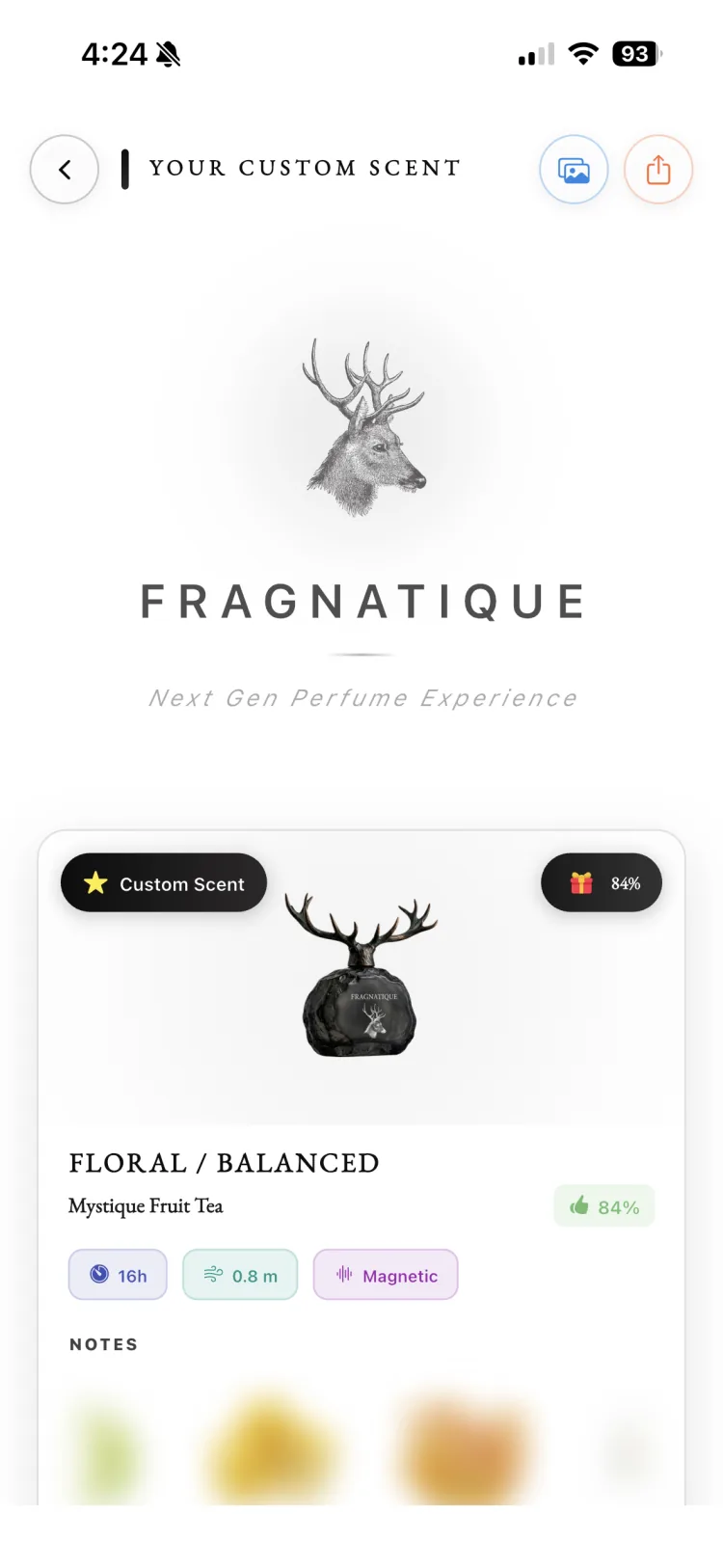
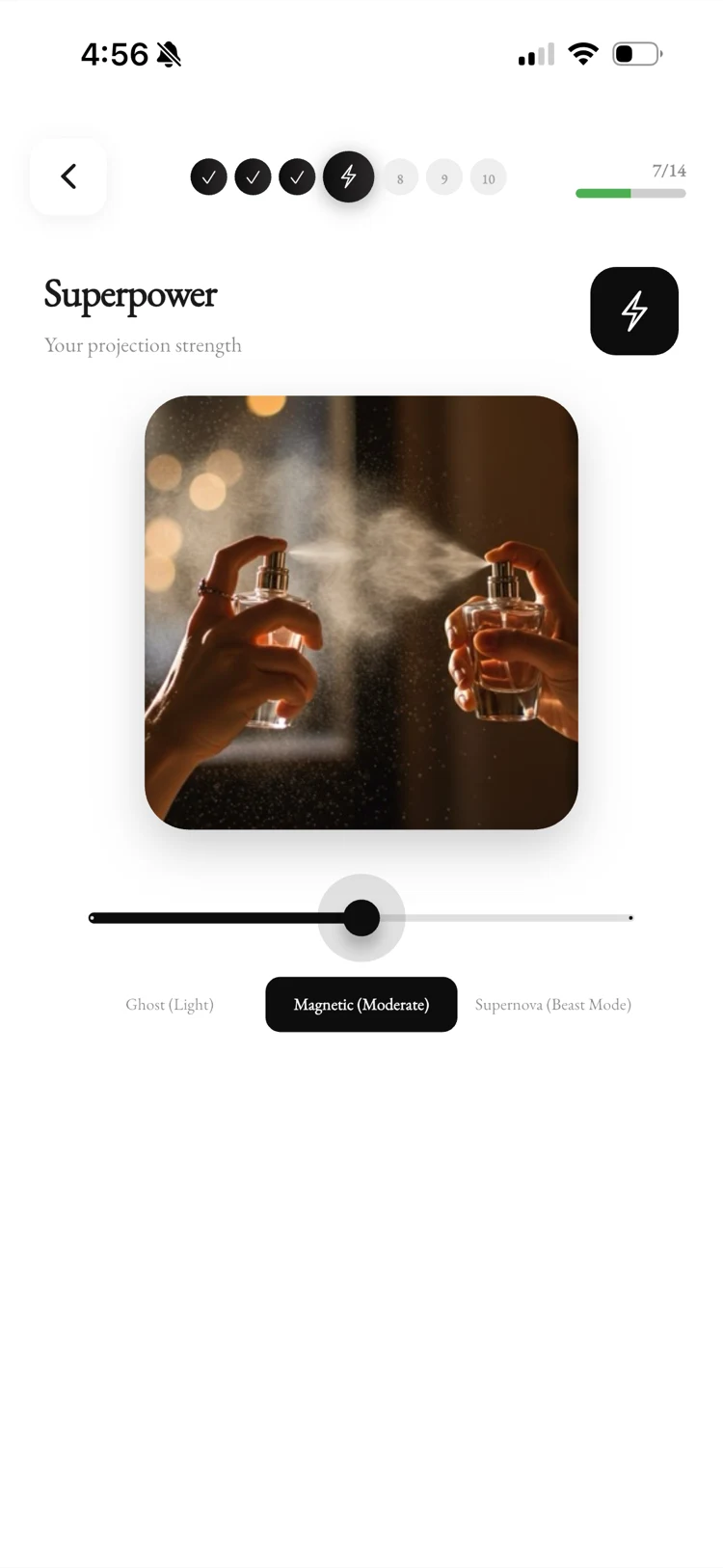
Most tools that let you create your own perfume stop at a mood board and a name. The Scent Lab inside Fragnatique keeps going. You answer a series of questions about character, mood and how strongly the scent should carry, and an AI engine returns a complete formula: ingredient ratios, a compliance check, an allergen declaration, a cost breakdown and a ninety day aging prediction, exported as a five page PDF a contract manufacturer can quote against.
The difference between a perfume maker that gives you a description and one that gives you a document is whether anyone can actually make the thing.
IFRA compliance · Cost analysis · Allergen declaration · Production recipe · Aging prediction.
What the five pages carry.
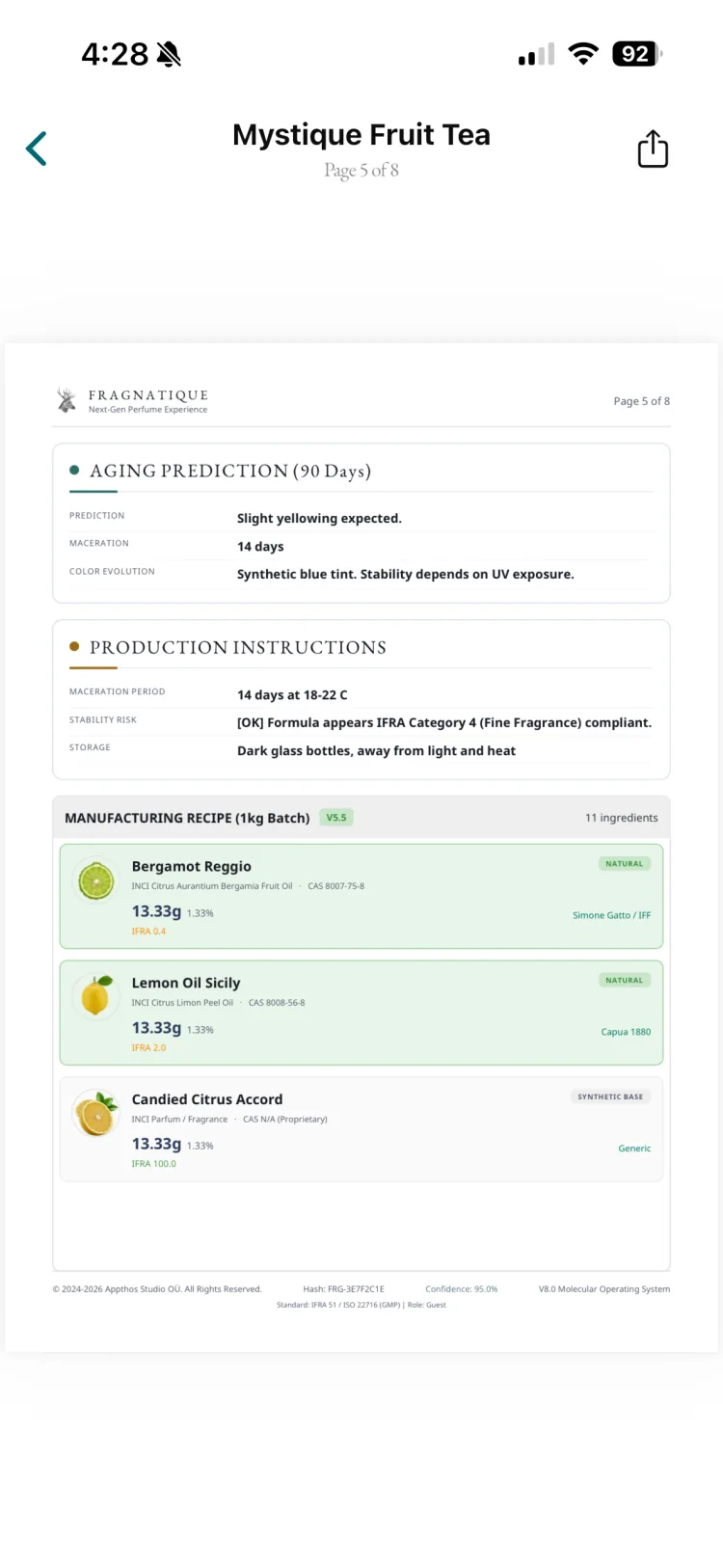
This is the whole argument for the Lab. A perfume creator that returns prose is a writing exercise; one that returns a bill of materials with CAS numbers against it is a brief. Everything below leaves the app in a single branded PDF, and the formula belongs to the person who composed it.
You do not need training to use it, and a perfumer can still read it.
The questions ask about character and mood rather than chemistry, so most people finish a first composition in one sitting and refine it afterwards. What arrives at the end is technical enough that someone with training can work from it directly. That is the gap this fills: blending workshops teach you to mix by hand and end with a bottle you cannot reproduce, while an AI perfume maker that only names a scent ends with nothing at all. The Scent Lab ends with a recipe, a compliance position and a cost, which is what a manufacturer actually asks for.
The Industry Consultant sits alongside it and reads the finished formula as a market proposition: a success prediction with reasoning, positioning notes, and the cost per 50ml carried through to a retail price and a margin. Fragnatique provides the IFRA check as guidance, and final responsibility for a commercial product rests with the manufacturer.
Questions about creating a fragrance.
Yes. The Scent Lab in Fragnatique is an AI-guided composer that carries a fragrance from first idea to finished formula in fourteen steps, asking about spirit, foundation, opening, heartbeat, texture, projection, and more. It returns a complete formula with ingredient ratios, a cost breakdown from batch to retail, a sensory and volatility profile, an allergen declaration, and a ninety-day aging prediction, exported as a five-page manufacturing PDF.
Five pages. The recipe names every material the way a supplier lists it, with its INCI name, its CAS number where one exists, its supplier attribution, and its weight in grams for a one kilogram batch beside its share of the whole. Around the recipe sit the check against IFRA Amendment 51, an allergen declaration giving a concentration for each declarable substance, production instructions covering maceration and storage, a sensory and volatility profile, a ninety-day aging prediction, and a cost analysis running from batch cost through a filled 50ml bottle to a retail price. A perfumer or contract manufacturer can quote against the document exactly as it leaves the Fragnatique app.
Every formula composed in the Fragnatique Scent Lab is checked against IFRA Amendment 51, published in 2023, which sets the usage limits the fragrance industry applies to restricted materials. The exported manufacturing PDF carries the allergen declaration and production safety notes alongside the recipe, so a perfumer or contract manufacturer can review it directly. Fragnatique provides the compliance check as guidance, and final responsibility for a commercial product rests with the manufacturer.
No. The fourteen steps ask about character, mood, and how strongly the scent should carry rather than about chemistry, and most people finish a first composition in a single sitting and refine it afterwards. What arrives at the end is technical enough for someone with training to work from, so you compose in plain language and still finish with a document a professional can read. Formulas composed in the Fragnatique Scent Lab belong to the person who made them.