Why Are Arabian Perfumes So Cheap? 5 Real Reasons
Why are Arabian perfumes so cheap? Own factories at huge scale, no licence fees, online sales and a value strategy. What houses and trade press say.
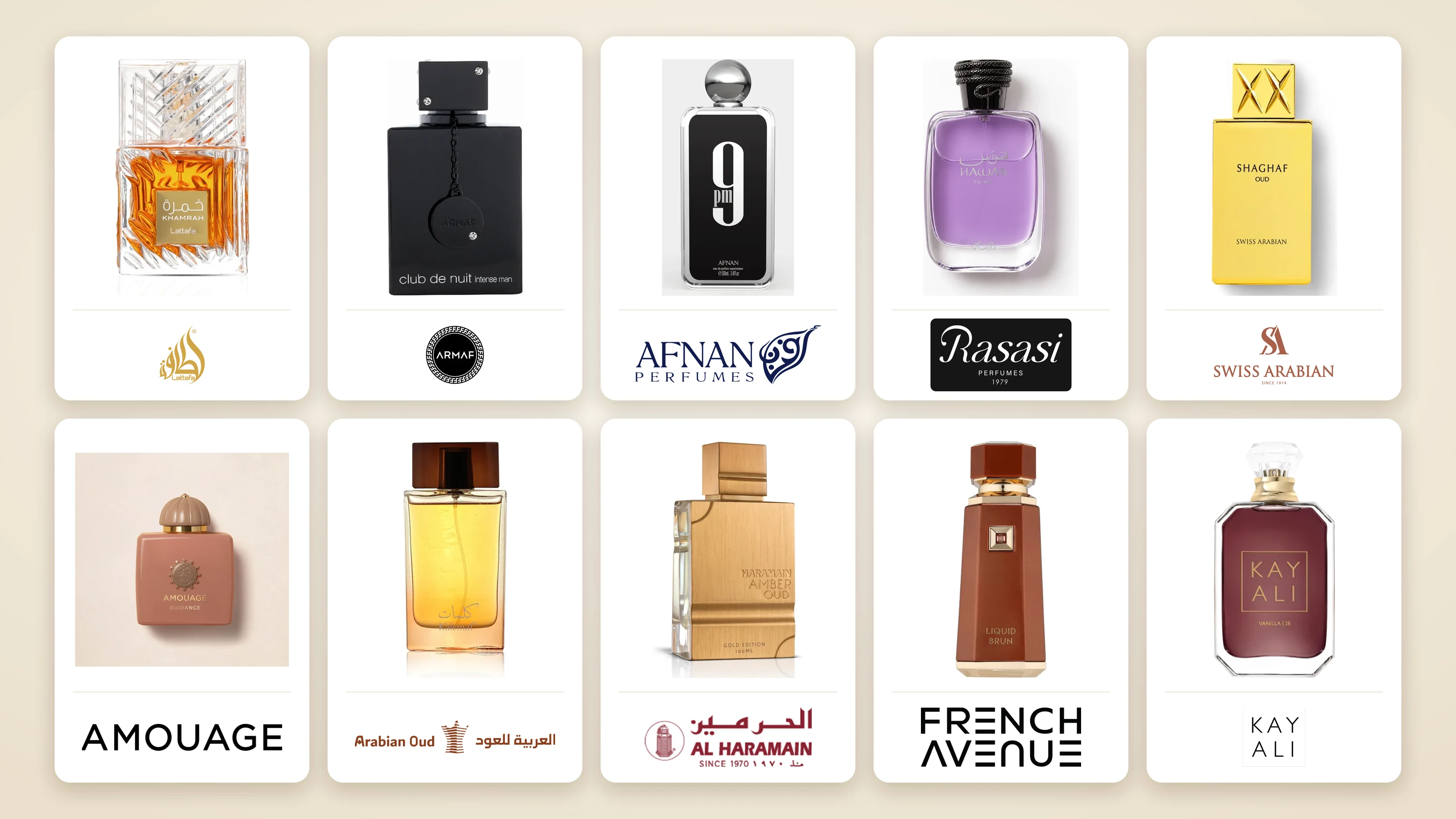
- 01Arabian perfumes are cheap mainly because the big houses make their own perfume in their own UAE factories at very large scale, own their brands instead of paying licence fees to a fashion house, and sell widely online.
- 02Armaf's maker says it now produces around 250,000 pieces a day; Sterling's executive director put its prices at about one-fifth of comparable luxury brands, in his words to Global Travel Retail Magazine.
- 03Cheap does not mean poor, and not every Arabian perfume is cheap: Amouage and the finest oud oils sit at the top of the market. No house publishes its costs, so part of the answer is informed reading, not accounting.
Why are Arabian perfumes so cheap? Mainly because the big houses make their own perfume in their own factories in the United Arab Emirates at very large scale, own their brands instead of paying licence fees to a fashion house, and sell widely online with lean margins by choice. Armaf's maker says it produces around 250,000 pieces a day, and its executive director has put its prices at about one-fifth of comparable luxury brands. Cheap does not mean poor, and not every Arabian perfume is cheap. Here are the five reasons, with what the houses and the trade press say, and where the facts run out.
Reason 1: They Make Their Own Perfume, at Huge Scale
The best known Arabian houses are manufacturers. They blend, fill and pack in their own plants, mostly in the UAE, and the numbers are large.
- Armaf. Its maker, Sterling Perfumes, runs a 550,000 square foot production facility in Dubai with 2,500 employees, Global Travel Retail Magazine reported in 2024. Armaf's own About page says production grew from "just 250 pieces per day" to "around 250,000 pieces per day".
- Lattafa. Its factory outlet sits in Emirates Industrial City, Sharjah, and its India store speaks of "over 150,000 bottles produced daily". It counts over 2,000 products.
- Swiss Arabian. Arab News reported in 2021 that the house had five plants on 165,000 square metres and made 35 million units a year.
- Fragrance World. The parent of French Avenue opened its own manufacturing facility in Ajman in 2018, by its own timeline.
Scale spreads the cost of every machine, mould and formula over millions of bottles. These figures come from the houses or from interviews they gave, so read them as their own accounts.
Reason 2: No Licence Fees to a Fashion House
Most Arabian houses own their names. Lattafa, Armaf's maker Sterling and Rasasi are family businesses, Afnan is led by its founder, and all of them make perfume under their own brands.
Many designer perfumes work differently. The perfume carries a fashion name, but a beauty group makes it under licence and pays the fashion house a royalty. Two examples from our own research: Tom Ford's perfumes were made by The Estée Lauder Companies under a licence signed in 2005, until it bought the brand outright in 2023 and stopped paying royalties; Calvin Klein's perfume licence passed to Coty with Unilever's prestige fragrance business in 2005. A licence is a normal, long-standing model, and it pays for a famous name; it is also a cost that a house selling its own name does not carry.
Reason 3: They Sell Online, Where Shelf Space Costs Less
Arabian houses grew fastest where there is no counter to rent. Euromonitor writes that Arabian fragrance e-commerce sales "more than tripled" between 2023 and 2025 and grew by 50% in 2025 alone, through "channels that require no physical retail presence". It gives Lattafa as the example: more than USD 63 million on TikTok Shop in a single year and over USD 100 million on Amazon. Euromonitor also notes that Arabian brands had not yet entered specialist beauty chains such as Sephora or Ulta.
Selling online and through their own stores keeps the chain between factory and buyer short. The houses do advertise, and some now use famous faces (Armaf signed the actor John Abraham in 2026; Afnan launched 9 PM Night Out with Ed Westwick), so this is about where they sell, not about selling without marketing.
Reason 4: Value Is the Strategy
The houses aim at a lower price tier on purpose, and say so.
- Sterling's executive director, Gautam Siyal, told Global Travel Retail Magazine in 2024 that its fragrances sell "typically at about one-fifth the price of comparable luxury brands".
- When Lattafa presented its Lattafa Pride line in 2022, it promised "high-class scents at very affordable prices", and the house sums up its view as "luxury products do not need to be expensive to be luxurious".
- Euromonitor lists a "strong value proposition" among the reasons the category grows.
A price set low by design is a business decision. It tells you about the house's market, not about the juice.
Reason 5: Modern Materials, Used Well
Perfume is mostly made of a mix of natural and synthetic materials, in Dubai as in Paris. A Gulf News feature in 2026 put it plainly: "synthetic ingredients, experts stress, are not shortcuts but essential tools". Synthetic materials cost less and vary less than many naturals, and every house uses them. The same feature shows the other end of the range: "Pure oud is quite expensive, priced higher than gold per gram." That is why genuine oud oils from houses such as Ajmal, Arabian Oud or Swiss Arabian are not cheap at all.
What stays private: how much each house spends on materials. No house, Arabian or Western, publishes its formulas or costs.
The Five Reasons Side by Side
| Reason | What it saves | Evidence | Source type |
|---|---|---|---|
| Own factories at scale | Cost per bottle | 250,000 pieces a day (Armaf); 150,000 bottles a day (Lattafa India) | The houses' own figures |
| No licence fees | Royalties to a fashion house | Designer licences such as Tom Ford with Estée Lauder until 2023 | Company announcements |
| Online sales | Retail space and margins | E-commerce sales more than tripled, 2023 to 2025 | Euromonitor |
| Value strategy | Margin by choice | "About one-fifth the price of comparable luxury brands" | Interview, Global Travel Retail Magazine |
| Modern materials | Cost of rare naturals | Synthetics "essential tools"; pure oud dearer than gold | Gulf News |
Cheap Is Not the Same as Poor, or as Counterfeit
A low price here is mostly about how perfume is made and sold. Many of these bottles are well made; some are less so, as with any house. Two cautions:
- Not every Arabian perfume is cheap. Amouage is a luxury house, and the finest oud oils are among the most precious perfume materials there are.
- Popular bottles attract counterfeits. A price far below the house's own store is a warning sign. Our guide on how to tell if a perfume is real shows what to check.
For the quality question in full, read are Arabian perfumes good; for the wider comparison, Arabian vs designer perfume. Our picks of the best cheap Arabian perfumes start from the bottles worth the money, and the complete guide to Arabian perfumes introduces every house.
Spend Less by Choosing Better
The cheapest perfume is the one you do not buy twice. In the Fragnatique app, the Perfect Match quiz asks which notes you love and avoid and when you wear perfume, then suggests perfumes for you; on the web, the perfume finder starts from your favourite notes. Saw a bottle at a good price and want to know what it is? The perfume scanner names it from a photo and shows its notes. It does not check whether a bottle is authentic.
Frequently asked
Why is Lattafa so cheap?
Lattafa makes its own perfume in Sharjah, at a scale its India store puts at over 150,000 bottles a day, and owns its brands outright, so it pays no licence to a fashion house. It also sells heavily online: Euromonitor reports more than USD 63 million on TikTok Shop in a single year and over USD 100 million on Amazon. Its stated idea is that luxury does not need to be expensive to be luxurious.
Are cheap Arabian perfumes good quality?
Many are. A low price here comes mostly from how the perfume is made and sold, not from what is inside. Quality still varies by bottle, as with any house, so sample before you buy a full bottle. Our article on whether Arabian perfumes are good covers the strengths and the limits.
Do Arabian perfumes use cheap ingredients?
No house publishes its formulas or costs, so nobody outside can say. Most modern perfumes, Arabian and Western, use a mix of natural and synthetic materials; a Gulf News feature in 2026 quoted experts saying synthetic ingredients are not shortcuts but essential tools. Natural oud is the exception that shows the range: Gulf News notes that pure oud can cost more than gold per gram.
Are all Arabian perfumes cheap?
No. Amouage, from Oman, is a luxury house, and houses such as Ajmal and Arabian Oud sell precious oud oils at high prices alongside everyday sprays. The cheap bottles are the mass-market eaux de parfum of houses like Lattafa, Armaf, Afnan and French Avenue.
Is a very cheap Arabian perfume a counterfeit?
Not necessarily, since the genuine bottles are already low in price. But counterfeits of popular Arabian perfumes exist, and a price far below the house's own store is a warning sign. Buy from the house or an authorised retailer and use the house's own checks, such as Lattafa's QR security label.
Are Arabian perfumes cheaper in Dubai?
The houses run their own stores in the UAE, and many are made there, but prices change by store, promotion and duty, so there is no simple rule. Compare the house's own store in your country with authorised retailers before buying.

Written by Fragnatique Team
Published