Perfumer biography7 perfumes on record, 1906 to 1933
Jacques Guerlain : Shalimar, Mitsouko and L'Heure Bleue
Known for3 works from the collection
IIn briefJacques Guerlain
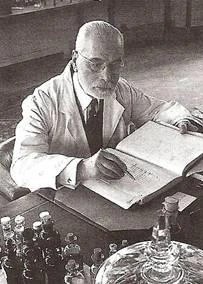
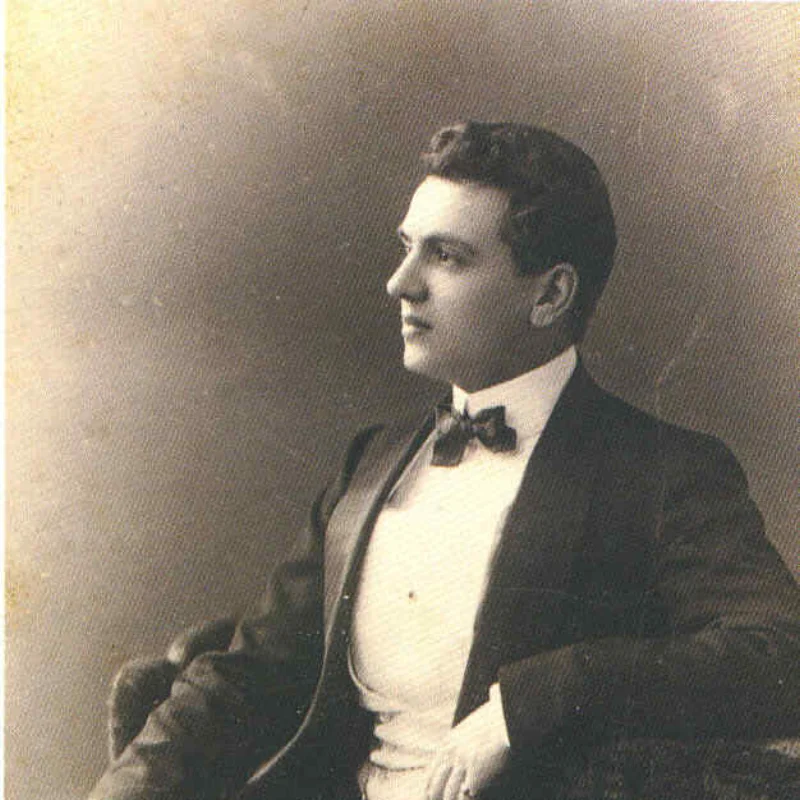
Jacques Guerlain, a French perfumer who lived from 1874 to 1963 according to the Osmothèque, created L'Heure Bleue (1912), Mitsouko (1919) and Shalimar (1925) for the house of Guerlain, according to Guerlain's own history of the house and LVMH.
Jacques Guerlain was discreet and gave no interviews, writes Sylvaine Delacourte, who worked for twenty years at Guerlain, so little is known of Jacques Guerlain's own words about the work; many of the perfumes are kept in their original form at the Osmothèque in Versailles, Delacourte adds.
- 7perfumes on record
- 1house
- 27years from 1906 to 1933
The file
- Lived
- 1874 to 1963Osmothèque
- Born
- Colombes, in the Guerlain family villaSylvaine Delacourte
- House
- Guerlain, the family house founded in 1828Guerlain
- Trained by
- Aimé Guerlain, an uncle, from the age of 16; organic chemistry at Charles Friedel's laboratory in ParisSylvaine Delacourte
- Head perfumer
- From 1899, after sharing the role with a brother, Pierre Guerlain, from 1897Sylvaine Delacourte
- Known for
- L'Heure Bleue1912, Mitsouko1919, Shalimar1925
- Honour
- Knight of the Legion of HonourSylvaine Delacourte
- Successor
- Jean-Paul Guerlain, a grandsonSylvaine Delacourte
Key takeaways
Jacques Guerlain lived from 1874 to 1963, says the Osmothèque, and was trained by an uncle, the perfumer Aimé Guerlain, from the age of 16, says Sylvaine Delacourte.
Jacques Guerlain created L'Heure Bleue in 1912, Mitsouko in 1919 and Shalimar in 1925, say Guerlain's own history of the house and LVMH.
LVMH calls Shalimar the first amber perfume in history, born when Jacques Guerlain added ethylvanillin to an existing Guerlain perfume.
Mitsouko came from several hundred trials with oakmoss and a peach-smelling molecule, says Sylvaine Delacourte, who spent twenty years at Guerlain.
Vol de Nuit (1933) takes its title from Antoine de Saint-Exupéry's 1931 novel, says Now Smell This.
Which perfumes did Jacques Guerlain create?
7 perfumes on record, 1906 to 1933, each on its plinth under its own light.
The seven perfumes below run from Après l'Ondée (1906) to Vol de Nuit and Sous le Vent (1933), all for Guerlain. No source read for this profile names a co-author for any of them.
Also named here
 N°5
The seven are a small part of a long career. Sylvaine Delacourte writes that more than 80 of Jacques Guerlain's perfumes remain known and that some estimates put the total above 300, and Now Smell This lists 29.
Après l'Ondée (1906) was Jacques Guerlain's first major commercial success, writes Sylvaine Delacourte, a tribute to nature after the rain that came from a walk in the countryside during a storm. Delacourte describes its powdery base of iris root, heliotrope and vanilla, and calls Après l'Ondée "the Mother of L'Heure Bleue".
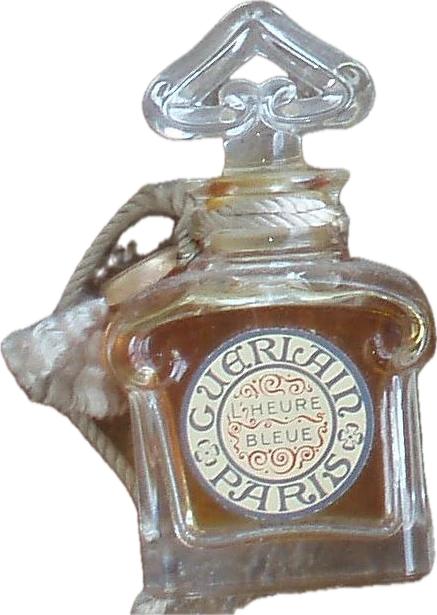
L'Heure Bleue (1912) was created by Jacques Guerlain "for his wife Lili", says Guerlain's history, "a spray of roses softened with iris, violet and vanilla" for the moment when "the night has not yet found its star". LVMH wrote in September 2026 that Jacques Guerlain was "captivated by the particular light he saw from the Pont-Neuf in Paris", and that orange blossom and iris remain at the heart of the composition. The "inverted heart" bottle was designed by Georges Chevalier for Baccarat in 1912, says LVMH.
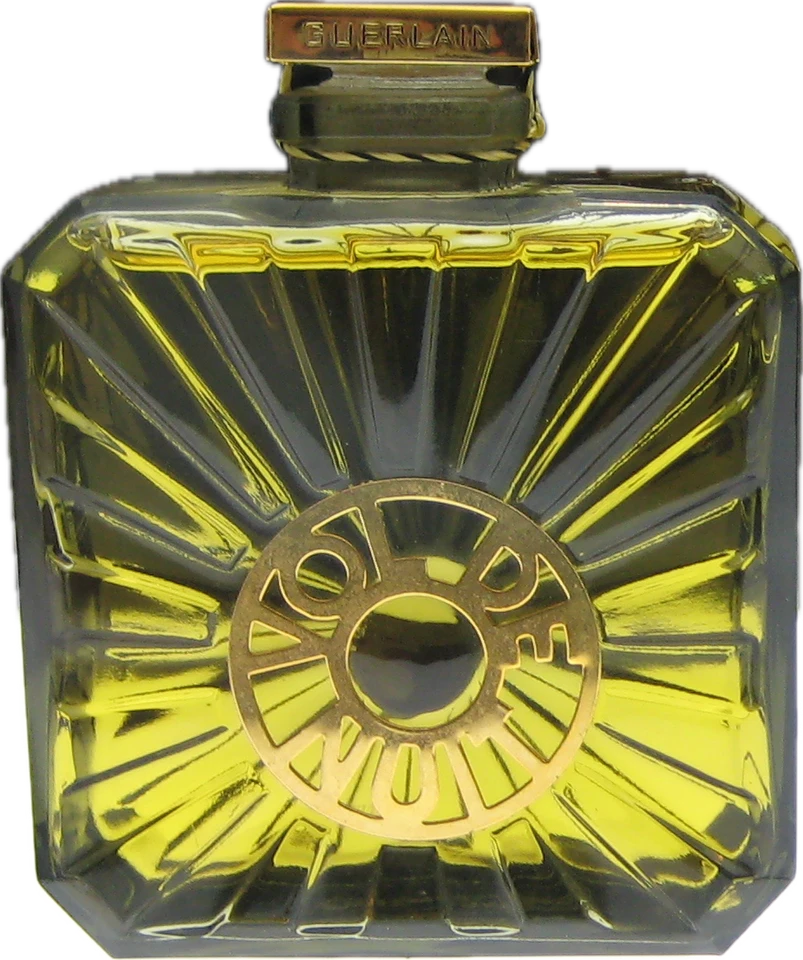
Vol de Nuit (1933) takes its name from the title of Antoine de Saint-Exupéry's 1931 novel, says Now Smell This, which lists notes of bergamot, galbanum, jasmine, iris and vanilla. Sous le Vent was an aromatic chypre in homage to Josephine Baker that moves "from tarragon to wet cinnamon", Now Smell This wrote in 2006.
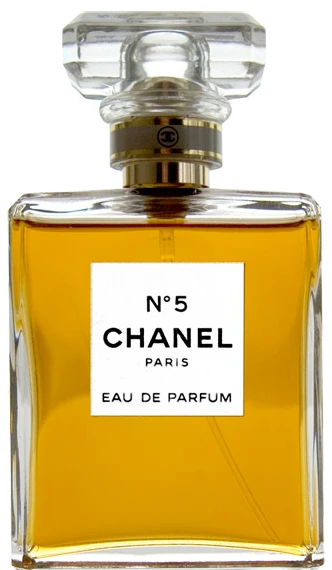
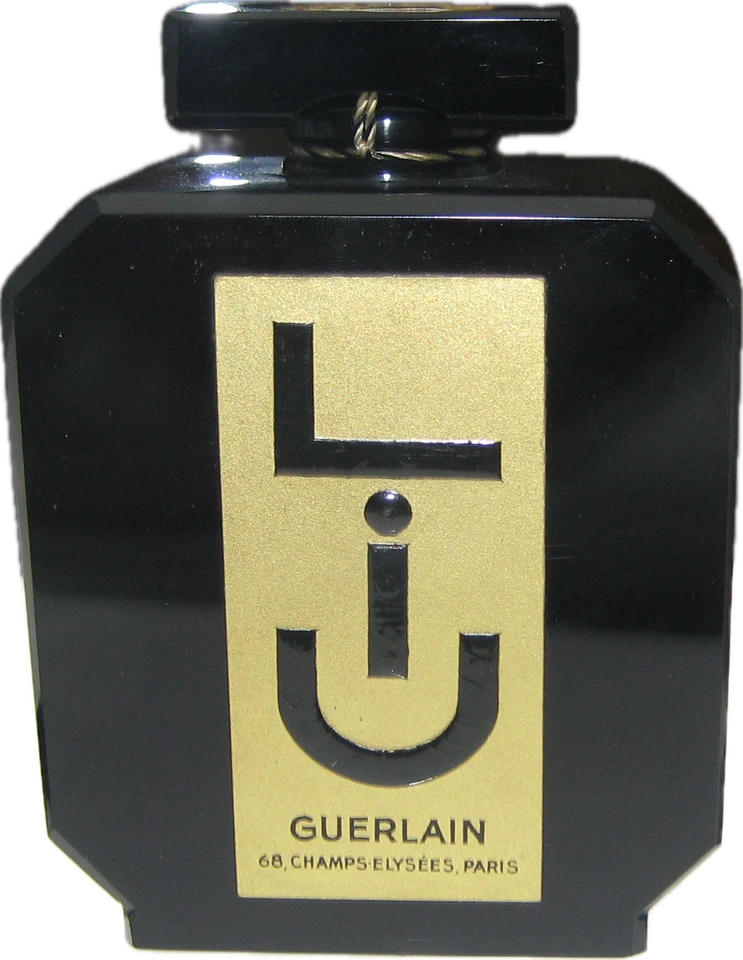
Liu (1929) takes its name from the slave girl in Puccini's opera Turandot and was Jacques Guerlain's first aldehydic floral, writes Sylvaine Delacourte, who adds that, as the story is told at Guerlain, it was born from a contest with Ernest Beaux, the creator of Chanel N°5.
IIIClose-upsTwo perfumes up close
Close-up 01
Who made Shalimar perfume?
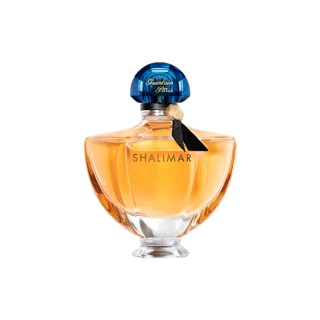
Shalimar was created by Jacques Guerlain in 1925, says LVMH, which calls Shalimar "the first amber perfume in history", and Guerlain's own history calls Shalimar "Jacques Guerlain's greatest success".
LVMH tells how Shalimar began. During a visit to a chemist friend, Justin Dupont, Jacques Guerlain discovered the compound ethylvanillin and poured a few drops into a bottle of Jicky, the Guerlain perfume of 1889 that Guerlain's own history credits to Aimé Guerlain, Jacques Guerlain's uncle. Journal du Luxe adds, in French, that Shalimar was born in Jacques Guerlain's workshop four years before its official launch at the 1925 International Exhibition of Decorative Arts in Paris, and Sylvaine Delacourte calls Shalimar "the culmination of four years of work".
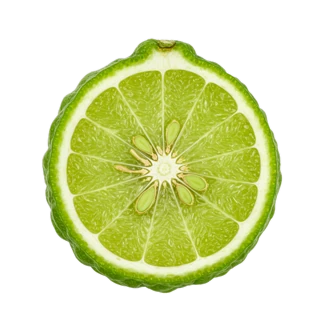
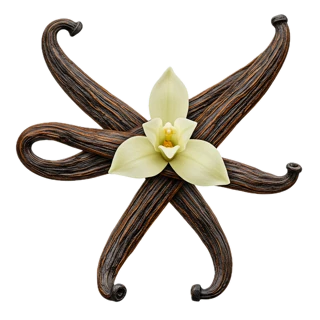
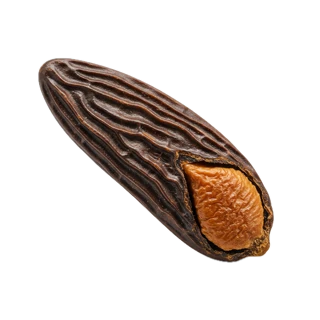
The name means "temple of love" in Sanskrit and pays tribute to Emperor Shah Jahan and Mumtaz Mahal, says Guerlain's history, and the perfume sits "between bergamot and vanilla". Journal du Luxe lists tonka bean and vanilla in the base, the foundation of the "Guerlinade", a base that was presented as a Guerlain signature at the 1925 launch, according to the same article. Fragnatique's list of popular vanilla perfumes places Shalimar among its peers.
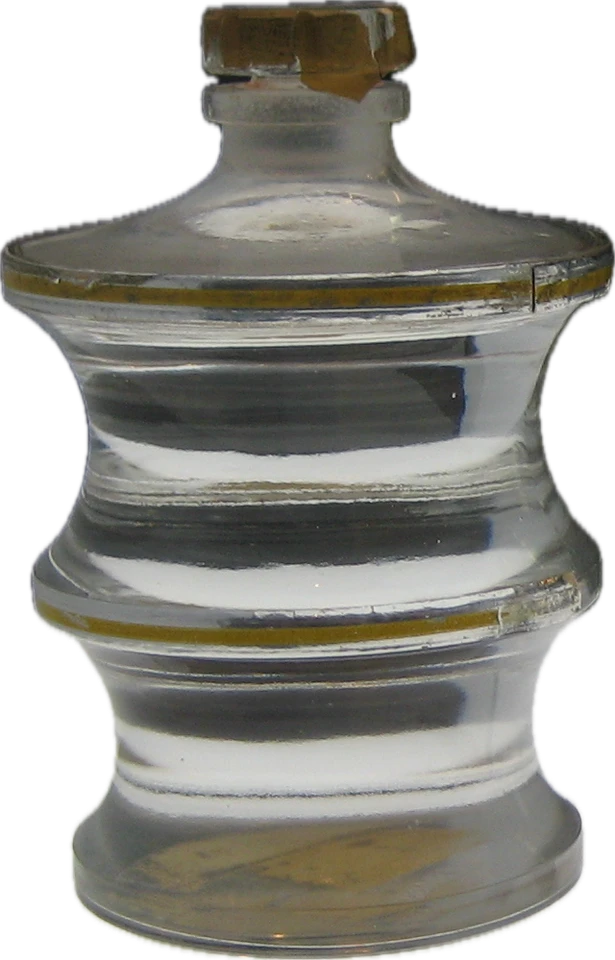
The bottle was designed by Raymond Guerlain, inspired by the basins of the Shalimar gardens, set on a pedestal and given a sapphire blue crystal stopper made by Baccarat, "a first in the era", says LVMH. Guerlain's history calls it "the first fragrance bottle with a foot". Shalimar turned 100 in 2025, and Guerlain marked the centenary with a new, more intense version, LVMH reported.
Also named here
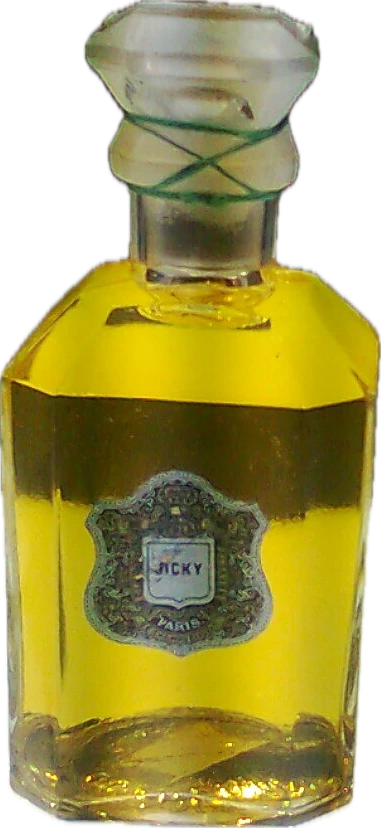 Jicky
Credited by LVMH, Guerlain, Now Smell This

Close-up 02
Who made Mitsouko?
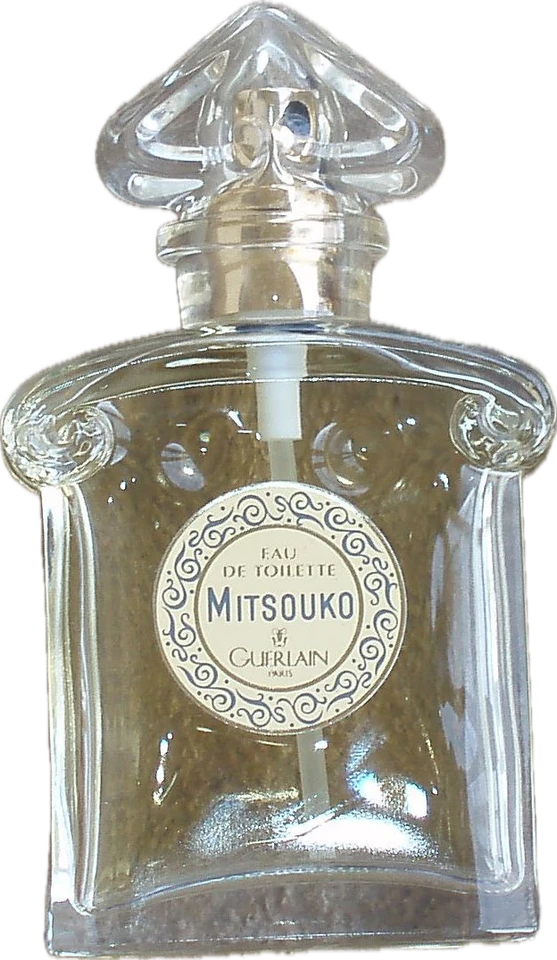
Mitsouko was created by Jacques Guerlain in 1919, say Guerlain's own history of the house and the Osmothèque, which presents Mitsouko in its workshop on the pioneers of perfumery.
Guerlain calls Mitsouko "a chypre whose name means mystery", made at a time "when Europe was fascinated by the Land of the Rising Sun", and quotes Jean-Paul Guerlain, Jacques Guerlain's grandson: Mitsouko "has the dreamy scent of a woman's skin". The name comes from the heroine of Claude Farrère's 1909 novel La Bataille, writes Sylvaine Delacourte.
Mitsouko is the result of several hundred trials with oakmoss and gamma-undecalactone, a molecule that smells of peach, also called C14, according to Sylvaine Delacourte, who adds that Guerlain now replaces the oakmoss with a natural moss from another tree. Delacourte also reports a saying at Guerlain that L'Heure Bleue and Mitsouko share the same bottle, "as if to open and close the parenthesis between the beginning and the end of the war". Fragnatique's guide to the earthy family covers oakmoss.
Credited by Guerlain, Osmothèque, Now Smell This
IVVoiceIn Jacques Guerlain’s words
What is Jacques Guerlain's signature style?
Few of Jacques Guerlain's own words survive, but Jean-Paul Guerlain, a grandson, passed on what Jacques Guerlain said about L'Heure Bleue and the months before the First World War, as Sylvaine Delacourte reports:
I wanted to capture these last moments of beauty and calm before the calamity of war. I felt something so intense, that I could only express it in a perfume.
The thread through Jacques Guerlain's perfumes is a set of ingredients the house now calls the Guerlinade. Sylvaine Delacourte, asked at Guerlain to define the word, found that "certain very noble raw materials had been recurring for 5 generations and especially in the compositions of Monsieur Jacques Guerlain", and names them: bergamot, jasmine, rose, iris, vanilla and tonka bean.
A line often credited to Ernest Beaux sums up the reputation: "When I use vanilla, I make crème caramel, when he uses vanilla, he makes Shalimar." Now Smell This, which prints the line, notes that its source is unknown and that it may be apocryphal.
Delacourte reads Mitsouko, seven years after L'Heure Bleue, as the archetype of a new post-war woman, in contrast with the soft floral amber of L'Heure Bleue. Jacques Guerlain collected Impressionist paintings, says Guerlain's history, and Sylvaine Delacourte links that passion for evening light to L'Heure Bleue. Delacourte describes Vol de Nuit as Guerlain's "most faceted, most sophisticated perfume", with a green facet that comes before the floral, spicy, leathery and woody ones.
Notes in this chapter
VLife12 dated years, 1874 to 1963
How did Jacques Guerlain become a perfumer?
Jacques Guerlain was born in 1874 in the Guerlain family villa in Colombes and studied in England and then at the École Monge in Paris, writes Sylvaine Delacourte. Aimé Guerlain, an uncle with no children, trained Jacques Guerlain from the age of 16 as apprentice and successor, and Jacques Guerlain then studied organic chemistry in Charles Friedel's laboratory at the University of Paris, according to Delacourte.
1874
Jacques Guerlain is born, says the Osmothèque.
1890
Jacques Guerlain composes a first perfume, says Sylvaine Delacourte.
1894
Jacques Guerlain is officially employed in the family business, says Sylvaine Delacourte.
1899
Jacques Guerlain takes on the role of head perfumer alone, after two years of sharing it with Pierre Guerlain, a brother, says Sylvaine Delacourte.
1906
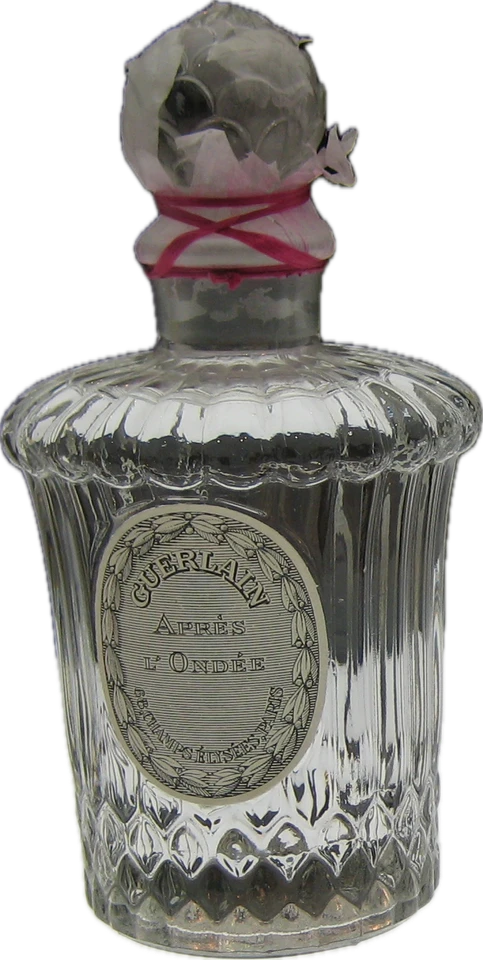
Après l'Ondée becomes Jacques Guerlain's first major commercial success, says Sylvaine Delacourte.
1912
1919
1925
1929
1933
1955
Jacques Guerlain composes a last perfume with Jean-Paul Guerlain, a grandson and successor, says Sylvaine Delacourte.
1963
Jacques Guerlain dies, says the Osmothèque.
Afterword
Many of Jacques Guerlain's major works are kept in their original form at the Osmothèque in Versailles, writes Sylvaine Delacourte, and Thierry Wasser and Frédéric Sacone re-weighed 50 of them for a workshop at the Guerlain house on the Champs-Élysées. Fragnatique's profile of Thierry Wasser covers Guerlain's perfumers today.
VIRecord
Where the accounts differ
The sources agree on the main perfumes and differ on several details of how they were made.
01
Year of Shalimar
One account
1925, when Jacques Guerlain created it (LVMH)
Another account
Born in the workshop four years before its 1925 launch (Journal du Luxe); "four years of work" (Sylvaine Delacourte)
02
How Shalimar began
One account
Ethylvanillin poured into a bottle of an 1889 Guerlain perfume, told as fact (LVMH)
Another account
The same story told as rumour, "il se murmure" (Journal du Luxe)
03
Raymond Guerlain
One account
Jacques Guerlain's nephew (LVMH)
Another account
Jacques Guerlain's cousin (Journal du Luxe)
04
Inspiration of L'Heure Bleue
One account
Made for Jacques Guerlain's wife (Guerlain); the light seen from the Pont-Neuf (LVMH)
Another account
A premonition of war, by Jean-Paul Guerlain's account (Sylvaine Delacourte)
05
Year of Sous le Vent
One account
1933
Now Smell This
Another account
1934
Sylvaine Delacourte
Where this page stands
For Shalimar, LVMH gives 1925 as the year of creation, while Journal du Luxe places the creation four years before the 1925 launch.
VIICircleThe people around Jacques Guerlain
Related perfumers
Five perfumers share the Guerlain story with Jacques Guerlain in the sources above.
In the story
Aimé Guerlain
Jacques Guerlain's uncle, who trained Jacques Guerlain from the age of 16, according to Sylvaine Delacourte, and created Jicky (1889), the perfume behind Shalimar, according to Guerlain and LVMH.
In the story
Jean-Paul Guerlain
Jacques Guerlain's grandson and successor, who composed a last perfume with Jacques Guerlain in 1955, according to Sylvaine Delacourte.
In the story
Ernest Beaux
the perfumer to whom Now Smell This attributes a line about Shalimar, while noting that its source is unknown.
In the story
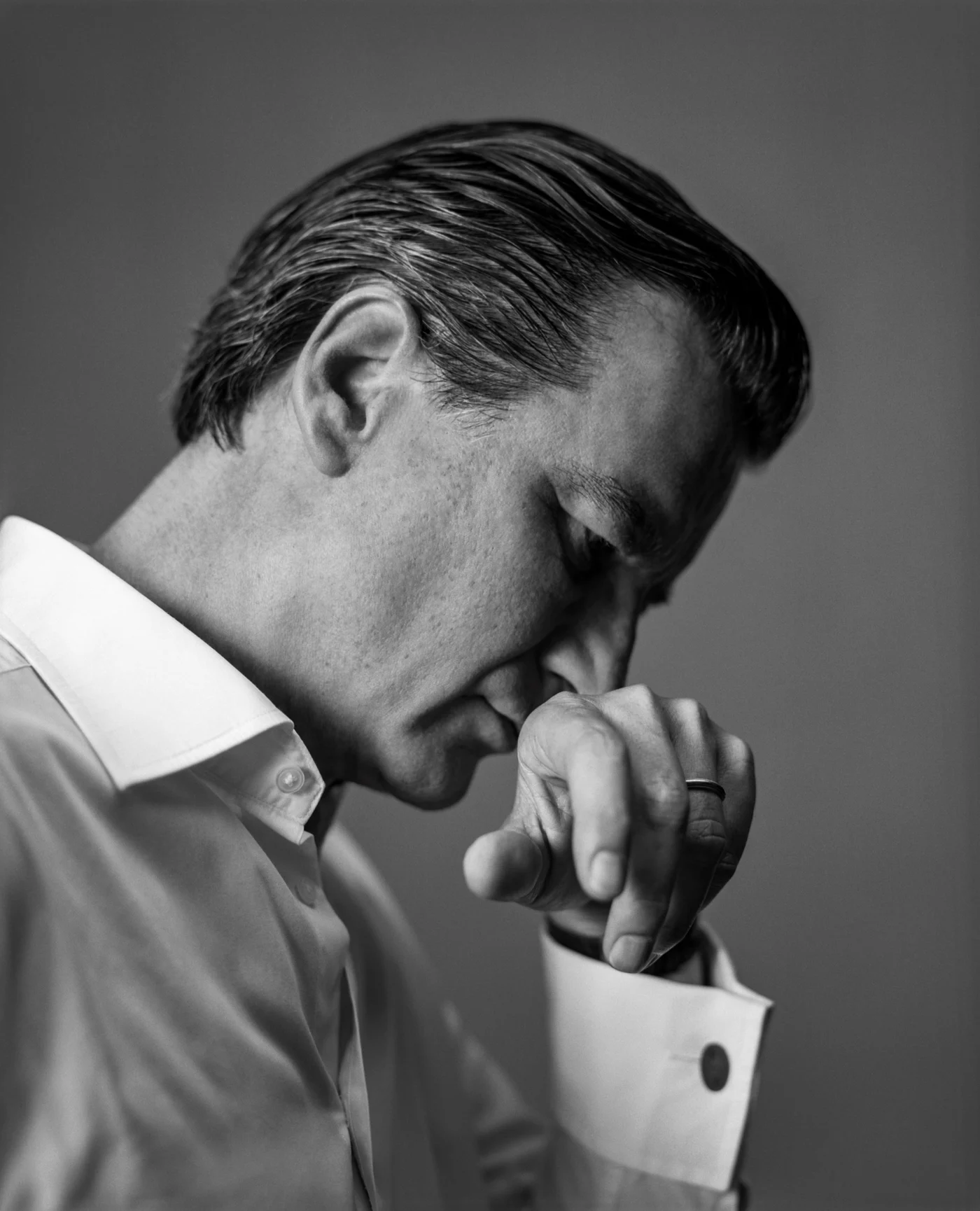
Thierry Wasser
re-weighed 50 of Jacques Guerlain's perfumes with Frédéric Sacone for Guerlain's Champs-Élysées house, according to Sylvaine Delacourte.
In the story
Delphine Jelk
Guerlain's Director of Fragrance Creation, who made the 2026 interpretation of L'Heure Bleue, according to LVMH.
VIIIQuestions5 short answers
Frequently asked
Who made Shalimar perfume?
Shalimar was created by Jacques Guerlain for Guerlain in 1925, according to LVMH, which calls it the first amber perfume in history, and Guerlain's own history calls Shalimar Jacques Guerlain's greatest success. LVMH says the bottle was designed by Raymond Guerlain and given a sapphire blue crystal stopper made by Baccarat.
Who made Mitsouko?
Mitsouko was created by Jacques Guerlain in 1919, according to Guerlain's own history of the house and the Osmothèque. Sylvaine Delacourte writes that Mitsouko is the result of several hundred trials with oakmoss and the peach-smelling molecule gamma-undecalactone, and that the name comes from the heroine of Claude Farrère's 1909 novel La Bataille.
Which perfumes did Jacques Guerlain make?
Perfumes credited to Jacques Guerlain include Après l'Ondée (1906), L'Heure Bleue (1912), Mitsouko (1919), Shalimar (1925), Liu (1929), Vol de Nuit (1933) and Sous le Vent, all for Guerlain, according to the Osmothèque, Guerlain, LVMH, Now Smell This and Sylvaine Delacourte. Sylvaine Delacourte writes that more than 80 of Jacques Guerlain's perfumes remain known and that some estimates put the total above 300.
Did Jacques Guerlain make Jicky?
No. Guerlain's own history of the house credits Jicky (1889) to Aimé Guerlain, the uncle of Jacques Guerlain. LVMH says Jacques Guerlain later poured ethylvanillin into a bottle of Jicky, the start of Shalimar.
Who made L'Heure Bleue?
L'Heure Bleue was created by Jacques Guerlain in 1912, according to Guerlain's own history of the house and LVMH. Guerlain says Jacques Guerlain made it for Jacques Guerlain's wife, Lili, and LVMH says the light seen from the Pont-Neuf in Paris inspired it. In 2026, Guerlain released a new interpretation by Delphine Jelk, while the original stays in the Légendaires collection, LVMH reported.
Part of Eau Facts, the Fragnatique team's series on fragrance history and science, also told in short videos on Instagram at @eaufacts. Researched from the sources named in the text, drafted with AI assistance and checked against each source before publishing.

Written by Fragnatique Team
Published
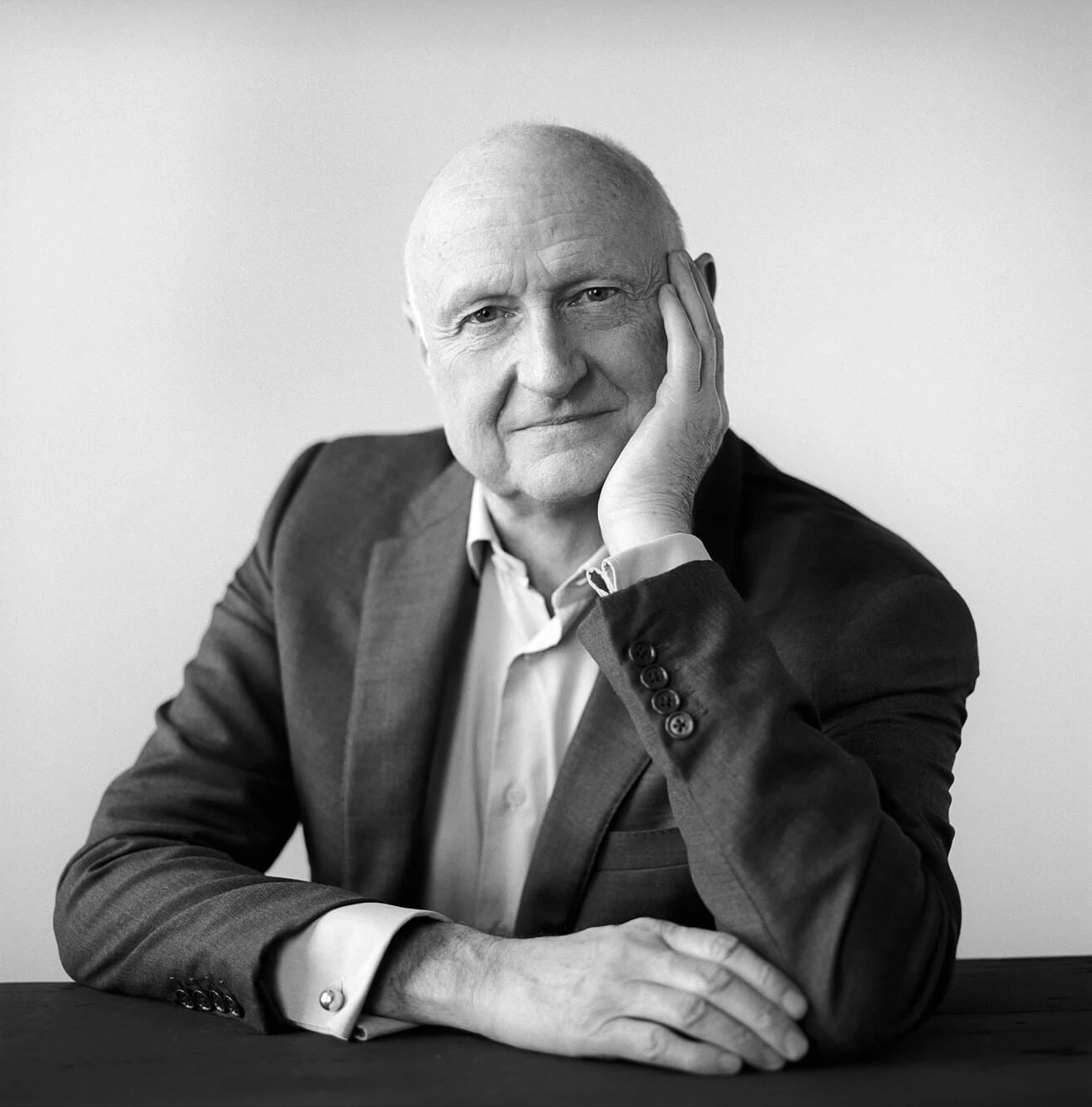
Picture credits Jacques Guerlain: photograph published by the Osmothèque in its Olfactory Workshops catalogue, captioned "Jacques GUERLAIN 1874 - 1963". Bottle and note pictures: Fragnatique.