Famous Perfumers in History and the Perfumes They Made
From Tapputi, named on an Assyrian tablet of 1239 or 1229 BC, to Ernest Beaux, whom Chanel credits with N°5 in 1921: famous perfumers, with their sources.
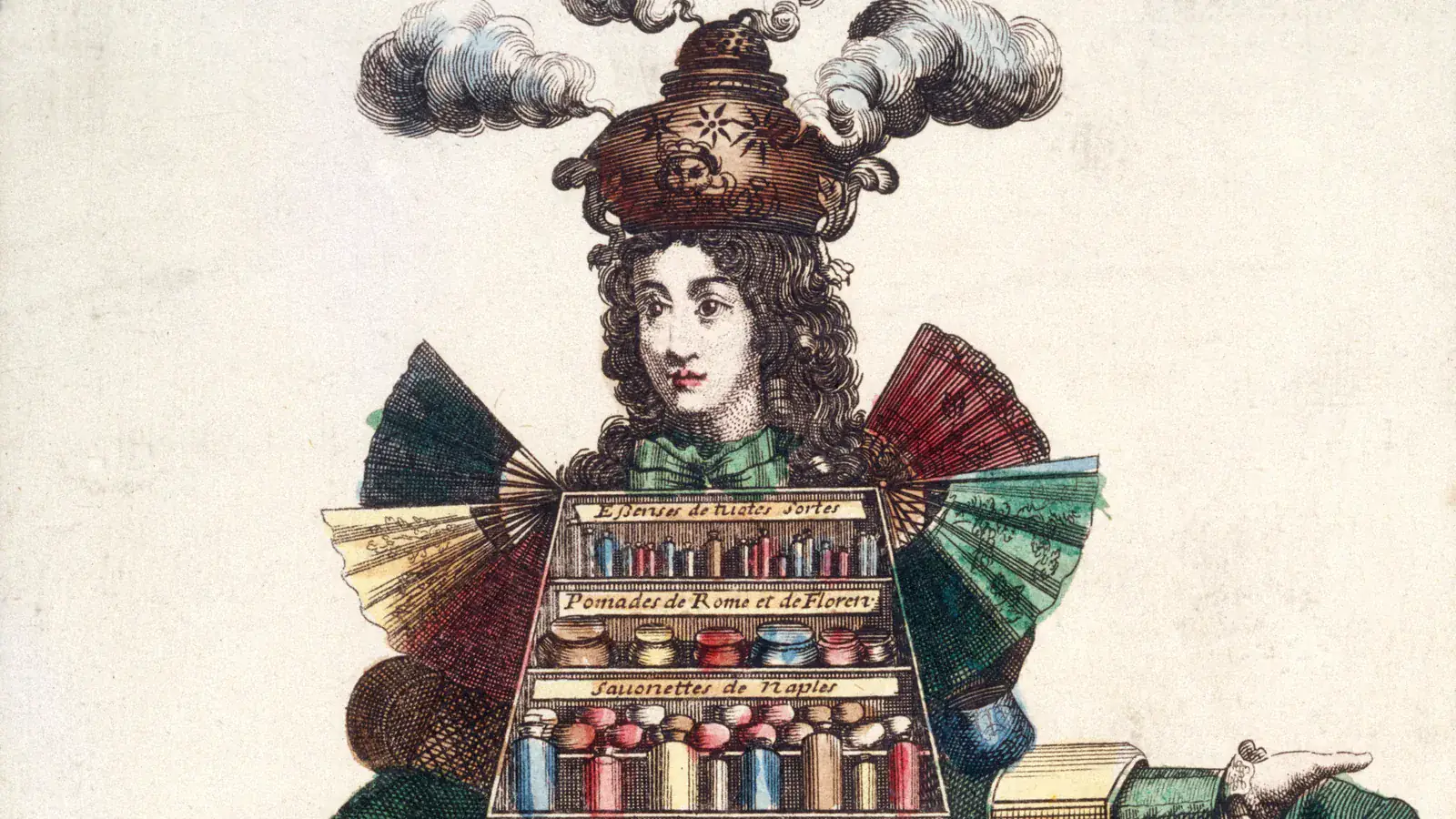
- 01ORACC's edition of the tablet KAR 220 credits a scented oil for the king to Tapputi, the perfume maker; the copy dates to 1239 or 1229 BC.
- 02Houbigant says Paul Parquet created Fougère Royale in 1882, naming the fougère family; the Osmothèque dates the perfume to 1884.
- 03Chanel says Ernest Beaux composed N°5 for Gabrielle Chanel in 1921, with an unprecedented use of aldehydes.
- 04Givaudan says Jean Carles founded its perfumery school in 1946 and counts Miss Dior among his perfumes; Dior's own history names the perfumer Paul Vacher.
- 05Edmond Roudnitska composed Hermès's first perfume, Eau d'Hermès, in 1951 and Dior's Eau Sauvage in 1966, according to the two houses.
A famous perfumer, in this guide, is one whose name a dated record ties to a perfume: a clay tablet, a patent office's history, a house's own account, a supplier's list. Eight such names follow, from an Assyrian perfume maker of the 13th century BC to the master perfumer of Louis Vuitton, in date order rather than as a ranking.
Each name links to a longer article where we have one. Where the sources disagree, on a year or on who deserves the credit, we say which source we follow and why.
Who are the famous perfumers in history?
On the records we checked, eight perfumers can be tied by name to a perfume: Tapputi, Johann Maria Farina, Paul Parquet, Ernest Beaux, Jean Carles, Edmond Roudnitska, Alberto Morillas and Jacques Cavallier Belletrud. The table gives each one's working years as the sources state them, the perfume they are known for and where the claim comes from.
| Perfumer | Years active (as sourced) | Known for | Perfume and year | Source | Read more |
|---|---|---|---|---|---|
| Tappūti-Bēlat-ēkalle (Tapputi) | Named on a tablet copied in 1239 or 1229 BC | Oldest dated perfume recipe that names its maker | Reed oil scented for a king | ORACC edition and eponym table | Tapputi's tablet |
| Johann Maria Farina | Lived 1685 to 1766; joined the Cologne firm in 1714 | A citrus fragrance water without musk | Eau de Cologne, named after his city; no single year given | DPMA | The first eau de Cologne |
| Paul Parquet | Joint owner of Houbigant from 1880; succeeded in 1912 | Gave a whole scent family its name | Fougère Royale: 1882 for the house, 1884 for the Osmothèque | Houbigant; Osmothèque | What is a fougère? |
| Ernest Beaux | Composed for Chanel in 1921 | Aldehydes used as never before, says Chanel | Chanel N°5 (No. 5), 1921 | Chanel | N°5 and its sales legend |
| Jean Carles | Roure perfumer; founded his school in 1946 | A training method still standard in perfumery | Miss Dior, 1947, by Givaudan's credit (Dior names Paul Vacher) | Givaudan; Harper's; Dior | The Jean Carles method |
| Edmond Roudnitska | Composed for Hermès in 1951 and for Dior in 1966 | Hermès's first perfume and Dior's first for men | Eau d'Hermès, 1951; Eau Sauvage, 1966 | Hermès; Dior | Hedione and Eau Sauvage; Eau d'Hermès |
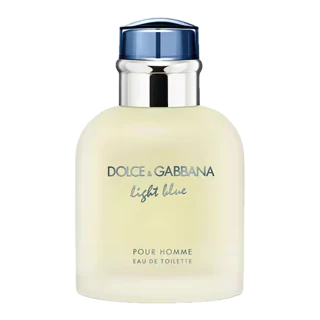
| Alberto Morillas | Joined Firmenich in 1970; master perfumer from 1998 | Men's scents for three fashion houses in three decades | Acqua di Giò pour Homme, 1996; Light Blue Homme, 2007; Dylan Blue pour Homme, 2016 | Fragrance Foundation; dsm-firmenich list | Alberto Morillas |
| Jacques Cavallier Belletrud | Louis Vuitton's master perfumer in 2020 | A new perfume under the name of a lost one | Heures d'Absence, 2020 | Louis Vuitton | The lost Heures d'Absence |
How were these names chosen?
Each name had to pass one test: a primary or house source ties the person to a perfume by name. That leaves out many celebrated perfumers whose records this series has not yet checked, so the list is a start, not a canon. Two of the eight are living, and for them we keep to published work.
The credits come in different voices, and we keep each claim with its speaker. Miss Dior shows how far they can part. LVMH says it was "created in 1947 by Christian Dior himself"; Dior's own history says the couturier commissioned it from the perfumer Paul Vacher; Givaudan lists it among Jean Carles's perfumes. Each speaks for its own side, none of the three cites a document from 1947, and so the post gives all three rather than choosing one. For the long view, from the oldest records to modern law, our timeline of perfume history sets these names among the events around them.
What did Tapputi make?
A scented oil for an Assyrian king. Her recipe survives on a clay tablet from Assur, cataloged as KAR 220. In ORACC's 2021 edition of the tablet, the colophon dedicates the oil to the king's head and credits the method to Tappūti-Bēlat-ēkalle, whom it calls the perfume maker. It also says the text was copied from another tablet, and it names the year by the official then in office; ORACC's eponym table gives two possible years for him: 1239 and 1229 BC.
She was not the first perfumer on record. Robert Middeke-Conlin's 2014 study of the aromatics industry of Larsa shows that an official named Lipit-Irra headed the perfumer's workshop of that early Old Babylonian kingdom by King Sumuel's fifth year; his record is an oil delivery, not a recipe. The Met's collection record dates the era, which it calls the Isin-Larsa period, to roughly 2000 to 1750 BC.
An Egyptian recipe is older than hers too: kyphi, in Papyrus Ebers, which its owner, Leipzig University Library, dates to the final quarter of the 16th century BC. In Dora Goldsmith's translation, printed in 2021, it credits no maker. That leaves Tapputi's as the oldest dated perfume recipe that names its maker, as our article on Tapputi's tablet shows.
Who created eau de Cologne?
Johann Maria Farina did, by the account of the German patent office. The DPMA's brand history of Farina gives his life as 1685 to 1766. In 1714 he joined the Cologne firm his elder brother had founded in 1709. He developed a fresh fragrance water that differed, the office says, from the heavy and very costly perfumes of the nobility, and that was built on bergamot, lemon and orange rather than on musk. The name he eventually gave it, Eau de Cologne, honored the city he had adopted.
The office credits the steady quality of his products to careful buying of raw materials, an orderly workshop and, not least, the perfumer himself:
thanks to his skills as a perfumer, i.e. thanks to his unique nose.
Deutsches Patent- und Markenamt, Farina brand history
It goes so far as to credit him, in effect, with inventing perfume as a brand, and says the firm still follows his original recipe. Eau de Cologne ruled the perfume trade until the end of the 19th century at least, by the same account. Our article on the first eau de Cologne follows the brand through its imitators, and our survey of the oldest houses places the firm among its rivals.
What did Paul Parquet create?
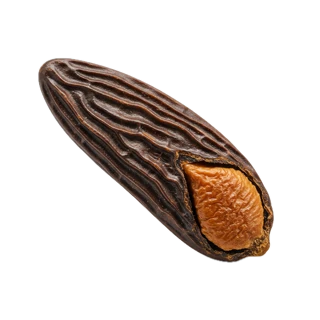
Fougère Royale, which named a whole family of scents. Houbigant's history of the house says Parquet became joint owner of the Paris firm in 1880 and created Fougère Royale in 1882. It also says no family is more popular in men's fragrance today, a claim we report as the house's own. The name means fern in French, yet there is no fern in the accord: the Osmothèque's notes on coumarin and the tonka bean list bergamot, lavender, geranium, coumarin and oak moss. Coumarin is more than 80 percent of the tonka bean, a perfumer says there.
The sources split on two points. In the Osmothèque's account Fougère Royale belongs to 1884; a 1994 article in the trade journal Perfumer & Flavorist gives 1882, the house's year, which we follow. Houbigant also credits Parquet with being the first perfumer to isolate coumarin from tonka bean, but by the Osmothèque's dates coumarin was isolated in 1820 and synthesized in 1868, before he joined the firm.
Fougère Royale also broke the usual order, the 1994 article says: developed for soap first, it became a fine fragrance, toilet water and cologne only later. Houbigant also credits Parquet with Le Parfum Idéal, made for the Paris Exposition Universelle of 1900, and says Robert Bienaimé took over from him in 1912. Our guide to the fougère family follows it from soap to men's fragrance.
Who created Chanel N°5?
Ernest Beaux, in Chanel's account. The house's N°5 Eau de Parfum page says Gabrielle Chanel asked him for a perfume for women in 1921. It calls him by the trade's word for a perfumer, the nose, and says his answer used aldehydes as no perfume had before. In N°5, the page adds, aldehydes "create a unique presence".
The name, by the same account, comes from the sample she picked, the fifth. The house also names a successor at the bench: Jacques Polge, its perfumer from 1978, reworked Beaux's composition into an eau de parfum in 1986.
A sales legend follows N°5: that no perfume has ever sold more. Our check of the N°5 sales claim found no published all-time sales figure to support it, and sets out what the published numbers do show.
Who was Jean Carles?
A Roure perfumer who changed how perfumers are taught. Givaudan's history, "Perfumery: art or science?", says he founded its perfumery school in 1946, and that his method, which grouped raw materials by how alike or how different they smell, is still the standard in perfumery training. It quotes a line he wrote:
Perfumery is an art, not a science.
Jean Carles, as quoted by Givaudan
Harper's Magazine's 2021 essay "The Odor of Things" quotes his verdict on the old way: perfumers worked "in haphazard fashion, in the expectation of a potential miracle". It also shows him sorting materials by how fast they fade, the tiers of our notes pyramid guide.
Both sources tie him to Miss Dior. Givaudan counts it, with Schiaparelli's Shocking, among his creations, and notes that the original was later renamed Miss Dior Eau de Toilette Originale; Harper's places his Miss Dior in the 1940s. The house tells it differently: Dior's page on its founder as perfumer says the couturier turned to the perfumer Paul Vacher for Miss Dior, to accompany his first collection, shown on 12 February 1947. LVMH's article on six iconic fragrances of the group calls it Dior's first fragrance, inspired by the couturier's "cherished sister", Catherine (her story is in our Miss Dior article). Harper's adds a report, not a finding: it is "widely believed" that Carles had lost his sense of smell by the 1940s and worked from memory.
Givaudan pairs him with a colleague who worked the other way: Germaine Cellier, a trained chemist in the composition laboratory from 1930, whom the company credits with Balmain's Vent Vert and Piguet's Fracas.
Which perfumes did Edmond Roudnitska make?
Two firsts for two houses: Eau d'Hermès in 1951 and Eau Sauvage for Dior in 1966. The Hermès page for Eau d'Hermès calls it "the House's very first fragrance", created by Roudnitska in 1951, and says it evokes the inside of a Hermès bag where a perfume's scent lingers, with lemon petitgrain, cardamom and cinnamon. It was a long wait: the Hermès registration document for 2021 dates the house to a Paris harness workshop opened in 1837 and says the fragrance "marks the founding of a new métier", 114 years later by our arithmetic. Our article on Eau d'Hermès tells that story.
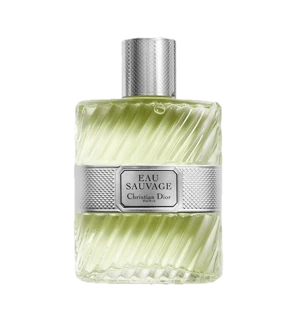
Fifteen years later came Eau Sauvage, which Dior's Eau Sauvage page calls the house's first men's fragrance, composed by Roudnitska in 1966 in Cabris, in the hills of the Grasse hinterland. The University of Bristol's Molecule of the Month profile of Hedione says he used that jasmine-smelling molecule at 2.5 percent, partly because it was very expensive at first; as costs came down, doses rose, to 65 percent in Comme des Garçons' Odeur 53 of 1998. Firmenich, whose scientist discovered Hedione in 1958 by the company's dating (Bristol gives 1959), says on its ingredient sheet that it does not necessarily make a perfume stronger but makes it more noticeable and diffusive. Our article on Hedione and Eau Sauvage explains the effect.
Which perfumes did Alberto Morillas make?
Hundreds, among them three men's scents for three fashion houses in three decades: Acqua di Giò pour Homme for Giorgio Armani in 1996, Light Blue Homme for Dolce & Gabbana in 2007 and Dylan Blue pour Homme for Versace in 2016. All three are on the list of his wins that dsm-firmenich links from its profile of him, with Calvin Klein's CK One (1994) and Flower by Kenzo (2000) among the others; LVMH's fragrance guide also credits him with Flower by Kenzo.
His route into perfumery began with a magazine. The Fragrance Foundation's 2013 tribute, written for the evening it gave him its Lifetime Achievement Award, says he was 18 when an article about Guerlain in French Vogue showed him that perfumer was "a real job". He studied at the School of Beaux Arts in Geneva for two years, joined Firmenich in 1970 and became master perfumer in 1998. The Foundation calls him largely self-trained; dsm-firmenich says he was the first perfumer to receive that award.
The count of his perfumes grows with the years: 284 attributed creations "at last count" for the Foundation in 2013, nearly 700 in a 2023 magazine interview republished by his own house, Mizensir. Our profile of Alberto Morillas follows those three scents, and CK One has an article of its own.
Who is Louis Vuitton's master perfumer?
Jacques Cavallier Belletrud, by the house's own title. Louis Vuitton's article on Heures d'Absence uses it while telling the story of the perfume the house launched in 1927, its debut in the field. Heures d'Absence took its name from the country home the Vuitton family had bought; its design celebrated the new ways of traveling, and its original formula is lost.
Louis Vuitton's 2020 press text, as reprinted by Tag-Walk, is blunter: no one knows what the original perfume smelled like. It describes the 1927 bottle, engraved with an airplane, in a box shaped like a kilometer marker. Cavallier Belletrud kept the name and wrote a new bouquet for it, with jasmine from Grasse, sambac jasmine, May rose and mimosa, on sale from 27 February 2020. Our article on the lost Heures d'Absence follows the old name to the new bottle, and a separate guide sets the debut perfumes of Chanel, Dior, Hermès and Louis Vuitton side by side.
How do perfumers train?
Usually through some form of Jean Carles's method, which trainee perfumers now study in one version or another, according to Harper's. It was not always so. When Carles began his training early in the 20th century, the essay says, the perfumers of Grasse, the revered "so-called nez, or noses", came up through an apprenticeship of several years, and the secrets of the method were handed down with care. Carles set out to turn that secret craft into a system.
The school he opened is now Givaudan's Perfumery School. In Givaudan's 70th-anniversary piece on the school, eight students began almost every day with a test named after him, telling a single ingredient apart within a palette of some 500, and the school still accepted only a tiny number of students a year. Students were also sent out of the laboratory to meet raw materials where they grow, in citrus groves and cistus plantations.
Not every perfumer comes through a school. Alberto Morillas trained at an art school and was hired by Firmenich as a beginner, according to the 2023 interview his house republished; The Fragrance Foundation calls him largely self-trained. What the Carles test asks of a student, and how his method orders the raw materials, is the subject of our article on the Jean Carles method. To see the other half of the craft, a formula written out, our Scent Lab will draft one for you.
Part of Eau Facts, the Fragnatique team's series on fragrance history and science, also told in short videos on Instagram at @eaufacts. Researched from the sources listed above, drafted with AI assistance and checked against each source before publishing.
Frequently asked
- Who was the first known perfumer?
- The earliest perfumer named in the records we checked is Lipit-Irra, who headed the perfumer's workshop of the kingdom of Larsa by King Sumuel's fifth year, in the Isin-Larsa period of about 2000 to 1750 BC. His record is an oil delivery, not a recipe. The oldest dated perfume recipe that names its maker is later: Tapputi's, on an Assyrian tablet copied in 1239 or 1229 BC.
- What is a nose in perfumery?
- A nose is a perfumer, the person who composes a fragrance; the word translates the French nez. Harper's Magazine uses it for the revered perfumers of early 20th century Grasse, and houses still use it today. Chanel calls Ernest Beaux the nose who presented N°5 in 1921, and Germany's patent office credits the steady quality of Johann Maria Farina's eau de Cologne partly to his unique nose.
- How do you become a perfumer?
- One route is a fragrance company's own school. Givaudan's, opened by Jean Carles in 1946, admits only a few students each year, and they practice identifying single raw materials, from a palette of some 500, almost every day. Another route runs through the industry itself: Alberto Morillas studied at an art school in Geneva, joined Firmenich in 1970 and is described as largely self-trained.
Explore Fragnatique