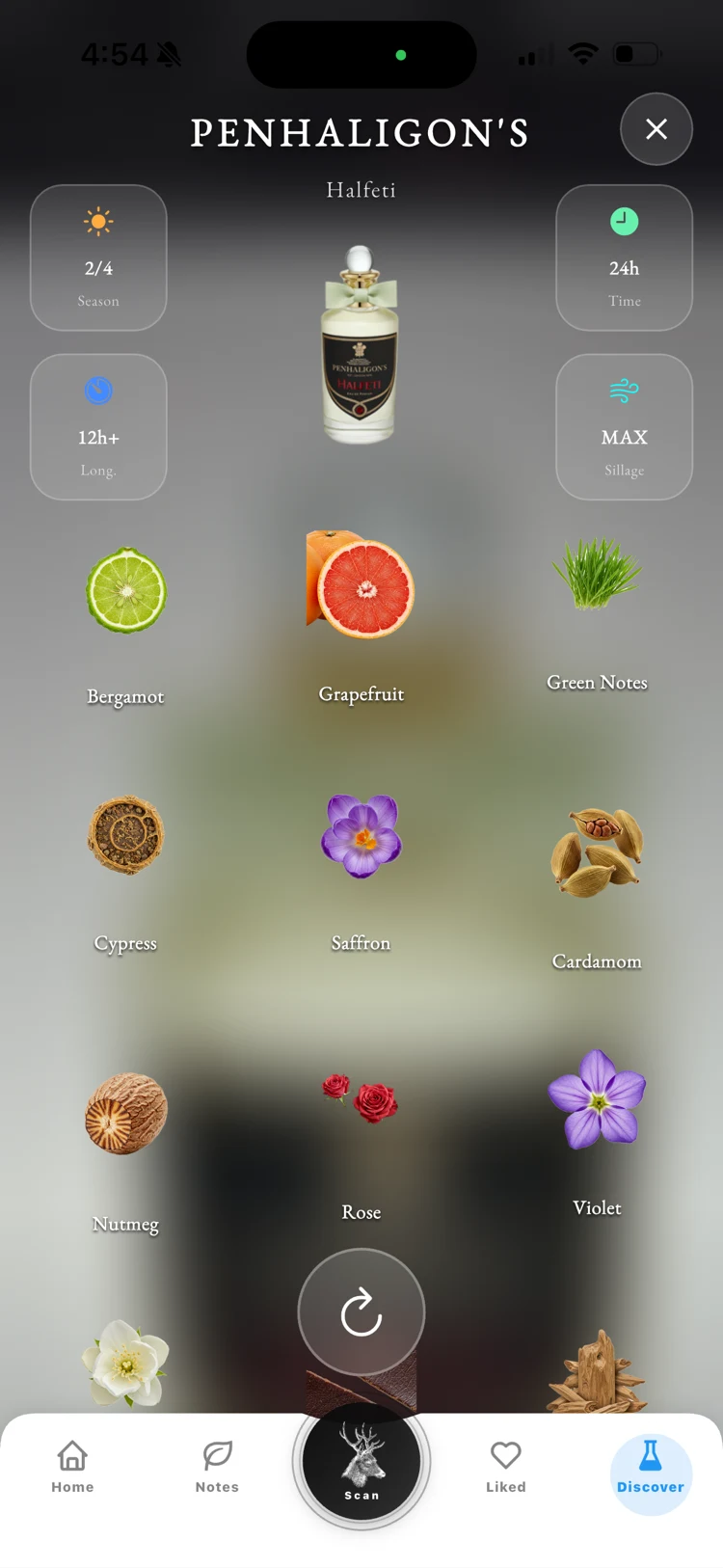
Perfume scanner apps can name a bottle from a single photo, which leads to an obvious follow-up: can they also tell whether it is real? People buying from marketplaces, second-hand sellers or discount sites want to know what a scan proves, what it does not, and which checks actually help.
This guide sets out what photo recognition can and cannot establish, and the practical checks that remain.
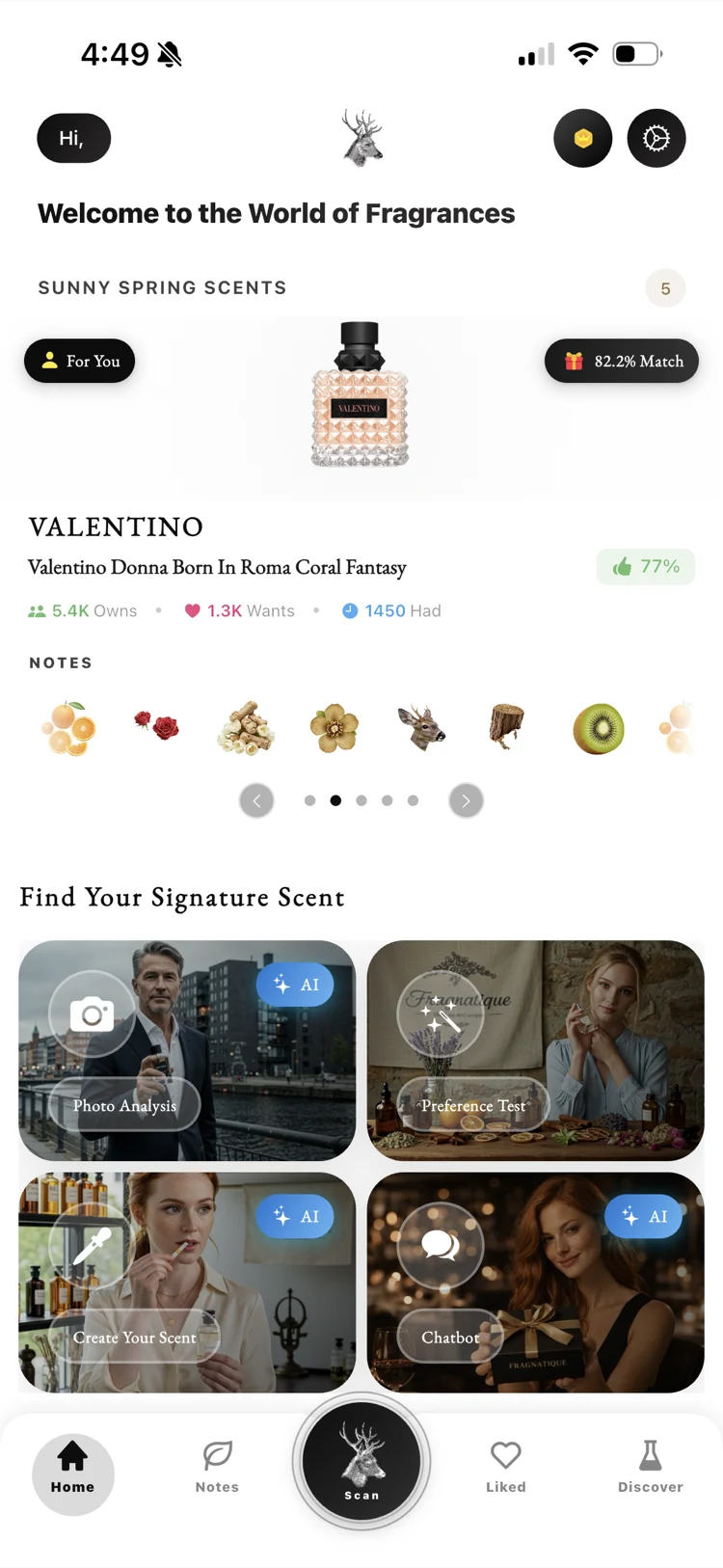
Start from a short profile quiz
Beginners get the most out of the app by finishing the profile quiz first. A few minutes of questions, then a ranked shortlist with the reasoning attached, so the first purchase is an informed one rather than a blind buy.
Open it on iOS1 answer
Most useful answer firstMost useful answer
Short answer: no, not reliably. A photo-based scanner answers one question: which perfume is this bottle meant to be? It does that by recognising the label, shape and cap. A counterfeit is made to look like exactly that, so a good fake and a genuine bottle can produce the same result. Be wary of any app that claims a photo alone proves authenticity.
What a scan does tell you
- The house and the release the bottle presents itself as.
- What that perfume should contain and smell like: its notes, family and character, which gives you a reference to compare against.
- Occasionally, that something is off: a bottle that cannot be matched to any known release, or a label that matches nothing the house has made.
What protects you best: where you buy
The strongest single safeguard is the seller. Buying from the brand itself or an authorised retailer removes most of the risk. Prices far below the usual market, sellers with no return policy and listings that use only stock photos are the common warning signs.
Physical checks that help
None of these is proof on its own; together they build a picture.
- Packaging quality. Genuine boxes are usually precisely cut and printed, with sharp text and correct spelling. Loose cellophane, glue marks and blurred print are warning signs.
- Batch code. Most houses print or etch a batch code on the base of the bottle and on the box. The two should match, and the code should look applied by the factory, not stuck on.
- Bottle and cap. Weight, glass clarity, seams, the fit of the cap and the quality of the sprayer often differ on copies. Compare with photos from the brand's own site.
- The liquid. Unusual colour, particles or a level well below the stated volume are red flags.
- The smell over time. A fake may get the opening roughly right and then fade fast or turn harsh in the drydown. Compare with a tester in a shop if you can.
Why this matters beyond money
Counterfeit cosmetics are made outside any safety system. Their contents are unknown, so they may contain materials or levels that genuine perfume made under the IFRA Standards and cosmetics law would not. If a perfume of uncertain origin irritates your skin, stop using it.
Fakes versus dupes
A counterfeit pretends to be the original, using its name and branding. A dupe or "inspired by" perfume is sold under its own name and aims to smell similar. Dupes are a legitimate category in many markets; counterfeits are not.
In Fragnatique
Our perfume scanner identifies the house and the release and shows the notes and character of the perfume, which is useful as a reference when you smell a doubtful bottle. It does not verify authenticity, and our guide to perfume AI says so in plain terms: a scanner tells you which perfume a bottle is meant to be, not that it is genuine or that the perfume inside is still good.