Floris London: How a Jermyn Street Comb Maker Became a Perfumer
Floris says it began in London's St James's in 1730; the Survey of London records it on Jermyn Street from 1799, and its first royal warrant was for combs.
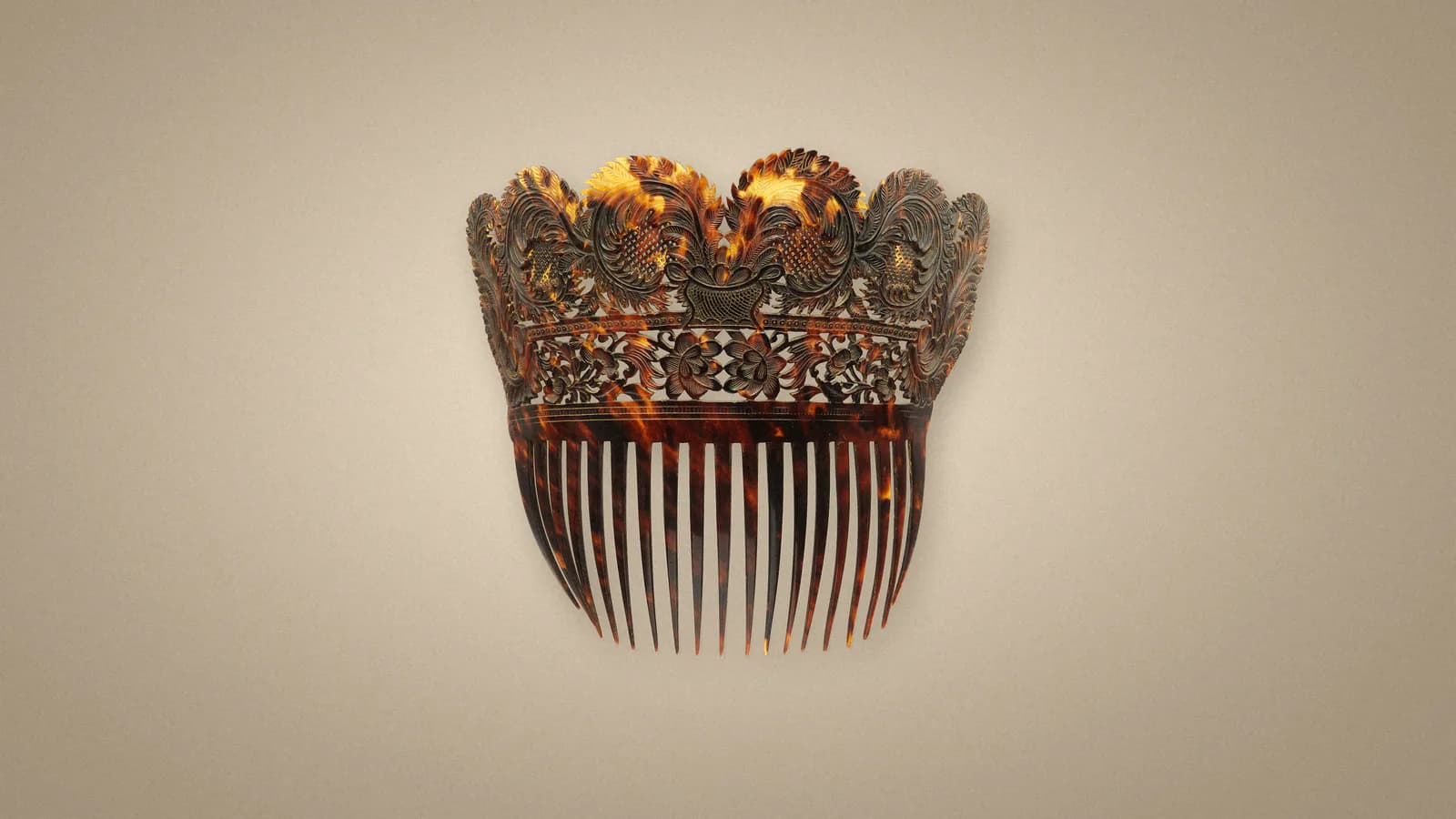
- 01Floris says Juan Famenias Floris and his wife, Elizabeth, began selling perfume, combs and shaving products in London's St James's in 1730.
- 02Floris's first royal warrant, in 1820, named it 'Smooth-pointed comb maker to HM King George IV', according to the house's own history.
- 03The Survey of London, drawing on parish ratebooks, records Floris at No. 88 Jermyn Street from 1799 and at No. 89, its shop today, from 1810.
- 04The National Archives catalogues an 1855 will of John Floris, described as a 'Perfumer of Jermyn Street', 35 years after the comb warrant.
- 05Companies House lists Floris of London Holdings Limited as holding 75 percent or more of J.Floris Limited, the company behind the Jermyn Street shop.
Floris sells perfume from a listed building in St James's, under a royal coat of arms, and the press has called it Britain's oldest perfumer. Its first royal title, though, was for combs. This chapter of our check of the oldest perfume houses sets the house's story beside the public record.
When was Floris founded?
In 1730, according to the house, although no record from that year appears in any source we read. The Floris house history says Juan Famenias Floris and his wife, Elizabeth, "began selling perfume, combs and shaving products" in St James's that year. The shop they opened at 89 Jermyn Street, it adds, is still run by their descendants.
The founder came from Menorca, says the house's own text in the Royal Warrant Holders Association (RWHA) directory, which spells the island Minorca. The Rake's 2018 profile of Floris tells the start differently: he founded the company "initially as a barber and comb-maker", then found a better market for his scents.
Both accounts come from the family: The Rake interviewed the ninth-generation head of the firm, and neither text cites a document from 1730. By our arithmetic, Floris turns 296 in 2026 if the house's date holds, and the earliest independent record we found, from 1799, comes 69 years later.
What was Floris's first royal warrant for?
Combs. The house dates its first royal warrant to 1820 and prints the title in its history:
Smooth-pointed comb maker to HM King George IV
Floris London, house history, entry for 1820
The house's page on its royal warrants gives the same year and calls Floris the king's "Smooth Pointed Comb Makers". Finely made combs were a Floris specialty at the time, the history says, along with toothbrushes and mouthwashes for an elite clientele.
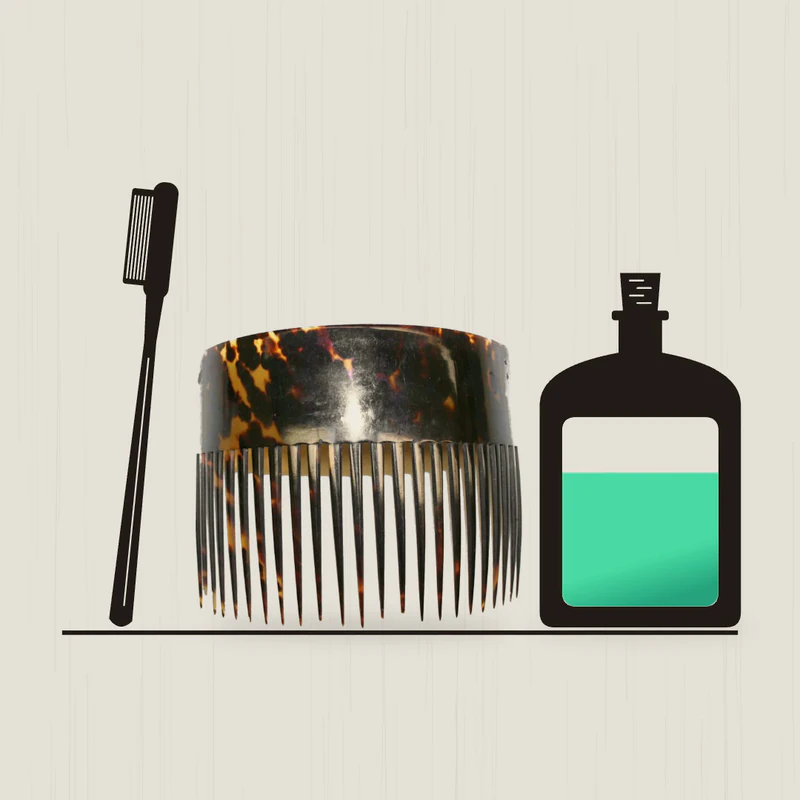
The title names the trade the king's household bought, not everything on the shop's shelves. No Floris comb of the period appears in our sources, so the combs in our pictures are open-access museum pieces, such as an early 19th-century tortoiseshell comb at The Met, not the house's own.
What is a royal warrant?
It is a mark of recognition for a regular supplier to the Royal Household, not an award for a product. The royal family's website defines it this way:
...a mark of recognition to people or companies who have regularly supplied goods or services to the Royal Household.
The Royal Household, "Royal warrants", royal.uk
A warrant is first granted for up to five years to a named person at the company, says the royal family's page on warrants. It gives the holder "nothing more than a right to display the Royal Arms", with no claim to exclusive supply, and every warrant is reviewed in the year before it expires. The page counts more than 800 holders today. A comb maker was in good company: the same page notes that the Royal Kalendar of 1789 listed a Pin Maker, a Mole Taker, a Card Maker and a Rat Catcher among the court's tradesmen.
The sources differ on one rule: Floris's explainer asks for at least five consecutive years of supply, the royal page for five years out of seven, including the 12 months before applying. The Royal Household runs the scheme, so its page is the stronger source.
When did Floris become a perfumer?
On paper, by 1855 at the latest. The National Archives catalogues a will of 2 July 1855 for John Floris, "Perfumer of Jermyn Street", 35 years after the comb warrant (our arithmetic). The house's royal history page claims an earlier perfume, Bouquet de La Reine, gifted to Queen Victoria on her wedding day in 1840. Since the house says perfume was on its shelves from 1730, the change may lie more in the records than in the shop.
The warrants followed the same turn. The RWHA's directory record for Floris, archived in 2016, lists two: Perfumers to Queen Elizabeth II, granted in 1971, and Manufacturers of Toilet Preparations to the Prince of Wales, granted in 1984. The house says King Charles III granted it a warrant under that second title in 2023, and that toilet preparations cover fine fragrance, skincare and grooming products.
| Year | What happened | Source |
|---|---|---|
| 1730 | Juan Famenias Floris and Elizabeth start selling perfume, combs and shaving products in St James's | Floris house history |
| 1799 | Floris occupies No. 88 Jermyn Street, until 1851 | Survey of London |
| 1810 | Floris occupies No. 89, its shop today | Survey of London |
| 1820 | First royal warrant: smooth-pointed comb maker to George IV | Floris house history |
| 1840 | Bouquet de La Reine, a perfume gifted to Queen Victoria on her wedding day, by the house's account | Floris, royal warrants page |
| 1851 | Shop fittings linked to the Great Exhibition (the house files this under 1852) | Historic England; Survey of London |
| 1855 | Will of John Floris, "Perfumer of Jermyn Street" | The National Archives, PROB 11/2216/1 |
| 1875 | Joseph Floris registers a design from 89 Jermyn Street, catalogued as a perfume tag with a question mark | The National Archives, BT 43/58/290156 |
| 1878 | Mary Anne Floris and her husband, James R. D. Bodenham, take over from her brother Joseph | Floris house history |
| 1948 | J.Floris Limited is incorporated | Companies House |
| 1971 | Warrant as perfumers to Queen Elizabeth II | RWHA directory, 2016 |
| 1974 | 89 Jermyn Street is listed at Grade II | Historic England |
| 1984 | Warrant as manufacturers of toilet preparations to the Prince of Wales | RWHA directory, 2016 |
| 2018 | Floris of London Holdings Limited is recorded as the controlling shareholder | Companies House |
| 2023 | Warrant from King Charles III as manufacturers of toilet preparations | Floris; RWHA directory, 2025 |
Is Floris the oldest perfume house in London?
It may be, but the title is a press label, not a record. The Rake called Floris "Britain's oldest perfumer" in 2018, reasoning from the 1730 founding date. Country Life's February 2026 visit to the shop chose a safer phrase, "one of London's oldest perfumers", while the house's warrant page calls Floris "Britain's oldest fragrance retailer".
We found no register or official body that ranks perfume houses by age. Every version of the claim rests on 1730, and that date comes from the house alone. The earliest independent record we found puts Floris on Jermyn Street in 1799; the first period document we found that calls a Floris a perfumer is from 1855.
Our verdict: unproven. Floris may well be London's oldest perfume house, but the paper trail we could check is younger than the story. Founding dates get the same test in our articles on Farina and the first eau de Cologne, Santa Maria Novella's two birth years and Guerlain's Eau de Cologne Impériale.
Who owns Floris today?
Most likely the founders' family: the house says their descendants still run it, and Companies House points the same way. Companies House's record for J.Floris Limited shows an active private company, incorporated on 31 March 1948 and registered at 89 Jermyn Street. Its registered business is the retail sale of cosmetic and toilet articles.
Since 19 January 2018, the company's register of persons with significant control has named Floris of London Holdings Limited, with 75 percent or more of the shares and votes. The holding company's own register lists a single individual with 75 percent or more, under the surname Bodenham.
That name leads back to the founders. The house history says Mary Anne Floris married James R. D. Bodenham, and that the couple took over the business from her brother Joseph in 1878. It describes its perfumery director in 2018 as a ninth-generation family member. Companies House itself warns that it does not check the accuracy of what companies file.
Where is the Floris shop?
At 89 Jermyn Street, St James's, London SW1Y 6JH, which is also the company's registered office. Historic England's list entry for the building describes a terrace house of about 1675, rebuilt in the early 19th century and listed at Grade II on 4 October 1974. Its early 19th-century shop front sits under a fascia topped by a coat of arms.
Public records tell a more complicated story. The Survey of London's chapter on Jermyn Street, published in 1960 from the parish ratebooks and Post Office directories, places Floris at No. 88 from 1799 to 1851 and at No. 89 since 1810. No. 88 had been home to Isaac Newton from 1696 to 1700, the chapter adds.
On the address, the Survey is the stronger source: it cites the records, while the house's 1730 shop at No. 89 rests on its own telling. The Survey does not say where Floris traded before 1799.
The Great Exhibition story comes in three versions. The house says its Spanish mahogany cabinets were bought at the exhibition and files the purchase under 1852. Historic England speaks of fittings "from the 1851 Great Exhibition", while the Survey calls them "modelled on an original show-case acquired" there. The two independent sources agree on 1851; we follow the Survey's more careful wording. For the scents on those shelves, our guide to the eight fragrance families is a useful key.
Part of Eau Facts, the Fragnatique team's series on fragrance history and science, also told in short videos on Instagram at @eaufacts. Researched from the sources listed above, drafted with AI assistance and checked against each source before publishing.
Frequently asked
- What is Floris London?
- Floris London is a British perfume house with its shop at 89 Jermyn Street in St James's, London, run through the company J.Floris Limited. The house dates itself to 1730, when it says its founders began selling perfume, combs and shaving products. Companies House lists the company's business as the retail sale of cosmetic and toilet articles, and its current royal warrant names it a manufacturer of toilet preparations.
- Who founded Floris?
- Juan Famenias Floris and his wife, Elizabeth, according to the house, which dates their first trade in St James's, London, to 1730. The house's text in the Royal Warrant Holders Association directory says he came from Menorca, and The Rake's 2018 profile says he began as a barber and comb maker. The earliest independent record we found, the parish ratebooks used by the Survey of London, places Floris on Jermyn Street in 1799.
- Does Floris still hold a royal warrant?
- Yes. In its directory, as archived in August 2025, the Royal Warrant Holders Association lists Floris as holding a warrant from the King as Manufacturers of Toilet Preparations, and the house says King Charles III granted it in 2023. A warrant is not permanent: the royal family's website says it is first granted for up to five years and reviewed in the year before it is due to expire.
- What did Floris sell besides perfume?
- Combs, above all. The house says it sold combs and shaving products from 1730 and that, by the time of its first royal warrant in 1820, finely made combs were a specialty, sold along with toothbrushes and mouthwashes. That warrant named Floris smooth-pointed comb maker to King George IV. Its current warrant covers toilet preparations, which the house describes as fine fragrance, skincare and grooming products.

Explore Fragnatique