Santa Maria Novella: Why the Florence Pharmacy Has Two Birth Years
Santa Maria Novella says it began in 1221, when Dominican friars planted an herb garden in Florence, and that its public pharmacy opened on 15 October 1612.
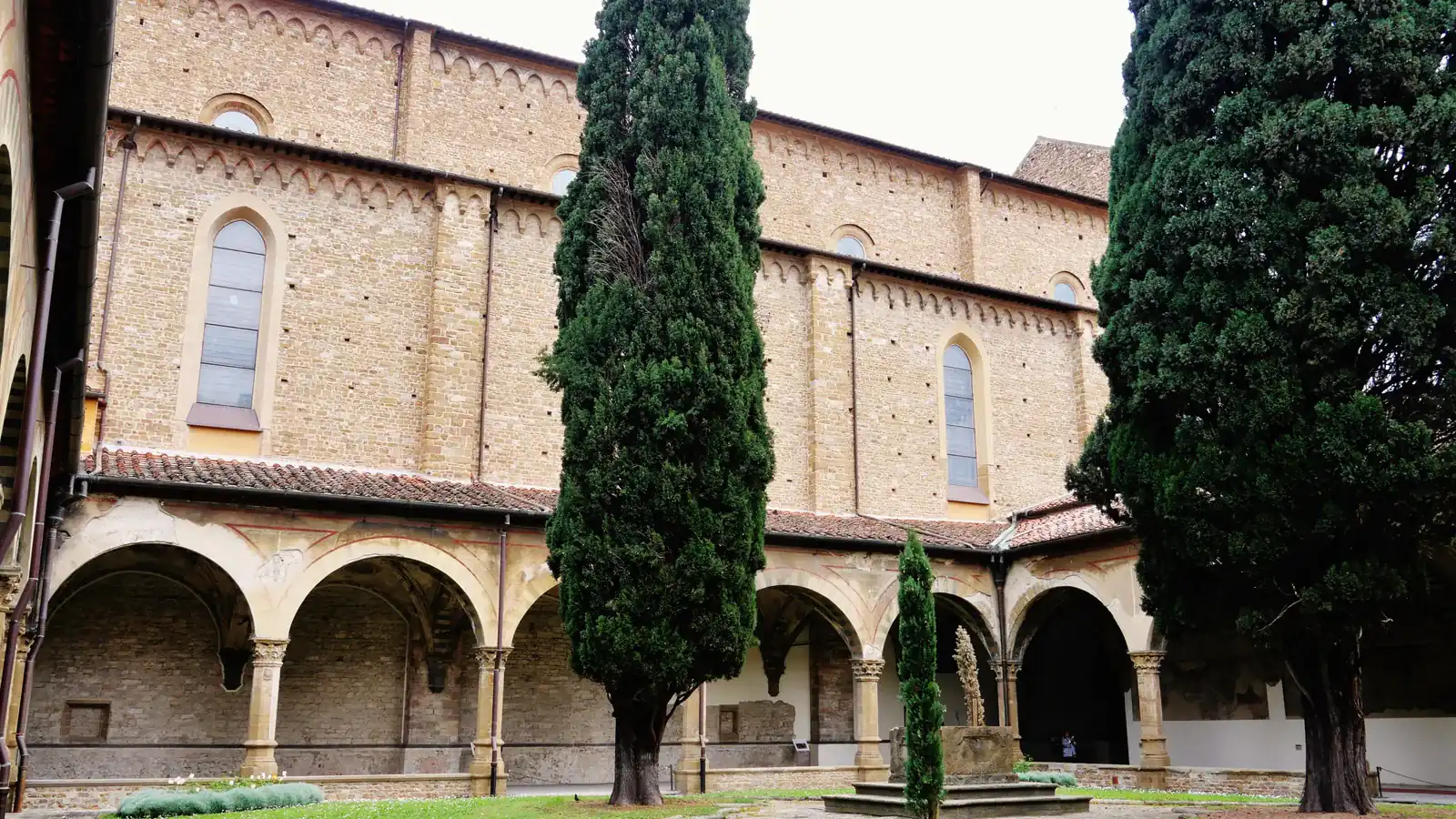
- 01Santa Maria Novella counts its history from 1221, when twelve Dominican friars took a site in Florence and planted a medicinal garden for their infirmary, the house says.
- 02On 15 October 1612 the convent's council voted for a public pharmacy, the house says; the Museo Galileo also gives 1612 as the pharmacy's official birth.
- 03Santa Maria Novella's two dates explain two anniversaries: the 400th in 2012, reported by Patek Philippe Magazine, and the 800th year the house marked in 2021.
- 04The house's earliest confirmed scented product is rose water, sold by 1381, which it says was mainly medicinal: used to disinfect rooms in plague epidemics and taken diluted in wine.
- 05Italmobiliare, an Italian investment holding company, entered in January 2020, owned all of Santa Maria Novella from October 2021 and listed a 95 percent stake at 30 June 2026.
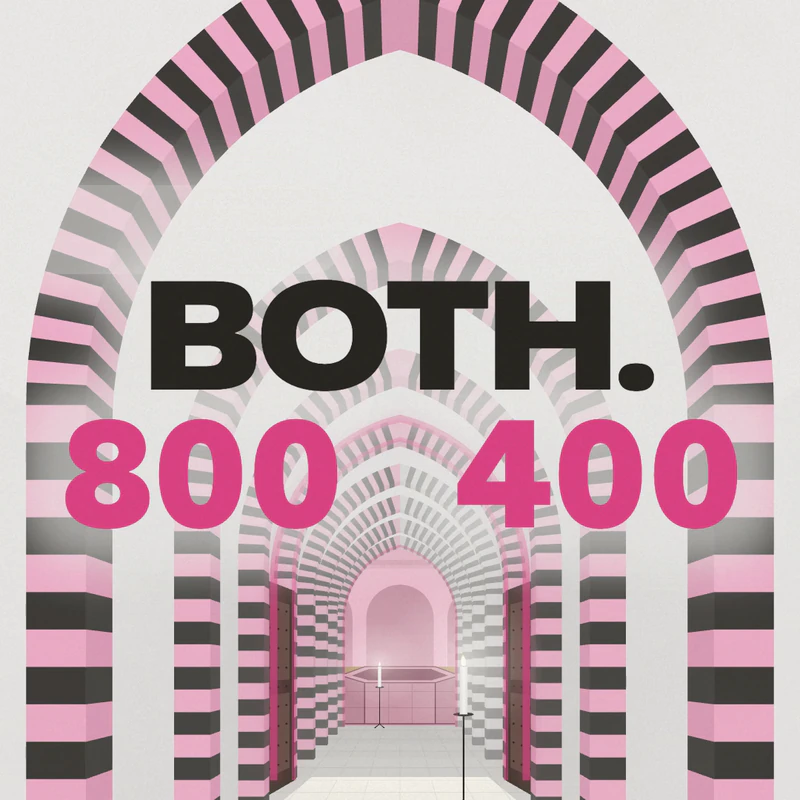
In 2012, restored rooms at Santa Maria Novella reopened for its 400th anniversary, Patek Philippe Magazine reports. In 2021, the house marked its 800th year. Both counts are honest: one starts at a friars' herb garden, the other at a pharmacy opened to the public. This is the record, date by date, for our check of the oldest perfume houses.
What is Santa Maria Novella?
Santa Maria Novella is the short name of the Officina Profumo-Farmaceutica di Santa Maria Novella, a Florence house that makes perfume, cosmetics and herbal preparations. It still sells them in rooms of the old Dominican convent at Via della Scala 16. The house's guide to the building says it has worked as a public pharmacy since 15 October 1612.
Its owner, Italmobiliare, lists the range as perfumes, cosmetics, home fragrances, liqueurs and ancient preparations, sold in more than 30 countries but still made and developed in Florence. The Museo Galileo translates the long name as Perfume and Pharmaceutical Works.
The name is older than the pharmacy. The basilica's history traces it to an oratory among vineyards, Sancta Maria inter vineas, known as Santa Maria Novella from the tenth century. Three places are easy to confuse. The Dominican basilica stands on Piazza Santa Maria Novella, where the friars still lead worship. The railway station is Firenze Santa Maria Novella. The pharmacy is a private company with its own door on Via della Scala.
Was it founded in 1221 or 1612?
Both years are real; they mark different beginnings. In 1221, says the house's history page, twelve Dominican friars obtained formal use of a site just outside Florence's inner walls. There they planted the Hortus Conclusus, or Orto dei Semplici, an enclosed garden of medicinal plants for the community's infirmary. The house counts its age from there:
It is from this point that the institution's continuity is counted.
Officina Profumo-Farmaceutica di Santa Maria Novella, "Our Story", entry for 1221
The public pharmacy came 391 years later (our arithmetic). On 15 October 1612, the same page says, the convent's council voted to open one. A closed monastic laboratory began to serve clients from outside. The Museo Galileo's itinerary of Tuscan science sites, last updated in 2008, starts the clock there:
The Pharmacy, however, was officially born in 1612, on the suggestion of the Grand Duke of Tuscany.
Museo Galileo, Scientific Itineraries in Tuscany
The anniversaries follow: 1612 plus 400 is 2012, and 1221 plus 800 is 2021, nine years apart (our arithmetic). Other years have a claim too.
| Date | What began | Source |
|---|---|---|
| 1221 | The friars' medicinal garden, for their infirmary | House history |
| 1381 | The first confirmed sale of perfumed waters, rose water among them | House history; Museo Galileo |
| 1541 | The first book of accounts, with the pharmacy run as a business | Patek Philippe Magazine |
| 15 October 1612 | The public pharmacy, voted by the convent council | House history; Museo Galileo |
| 1743 | The manuscript with the earliest Pot Pourri recipe | House history |
| 1871 | A secular private firm, after the 1866 suppression of religious orders | House history |
| 2012 | The 400th anniversary, with restored rooms reopened | Patek Philippe Magazine |
| 2021 | The 800th year, and full ownership by Italmobiliare | House history; Italmobiliare |
What did the friars make first?
Medicine. The garden supplied the infirmary, and even the first scented product on record was meant to heal. The house dates its earliest confirmed aromatic production to 1381: a documented sale of perfumed waters, among them Acqua di Rose, distilled from damask rose. The Museo Galileo gives the same year for the first documents on its perfume making.
According to the house, that rose water was mostly medicine: it disinfected rooms in plague epidemics and was taken, diluted in wine, as a remedy. Today its scent belongs to the floral family.
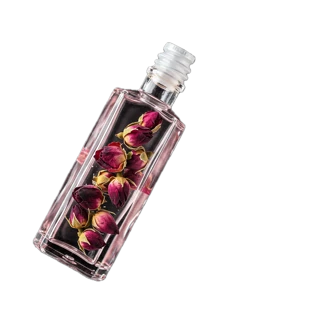
From 1612 the old sacristy stored rose water and herb distillates, the building guide says. Customers brought their own pitchers to fill until the end of the 19th century. The house's Pot Pourri page describes buds, blossoms, roots and leaves matured in terracotta jars, and traces the earliest documented recipe to a 1743 manuscript by Fra' Cosimo Bucelli. Italmobiliare's release of 7 September 2020 dates the blend earlier, to the mid-17th century.
A royal story comes next. On its Acqua della Regina page, the house says this citrus water was composed in 1533 for Catherine de' Medici. She took it to France, it adds, when she married the future Henry II. The page lists Italian citrus and petitgrain, then neroli, rosemary, cloves and lavender, over musk, and calls it the oldest fragrance in the house's history. The history page words it more carefully, as the fragrance "associated with this event". We found no 16th-century record of the commission, so it remains the house's tradition.
Patek Philippe Magazine repeats that the water is "thought to be the first eau de Cologne". The name came later. Germany's patent and trade mark office says Johann Maria Farina named his scent after Cologne, where the family firm was founded on 13 July 1709. That story is told in what eau de Cologne is.
Is it the oldest pharmacy in the world?
No source settles it, because each claim counts a different beginning. Even the owner words it three ways. Italmobiliare's 2020 and 2021 releases say "one of the oldest pharmaceutical laboratories in the world". Its portfolio page says "considered the oldest pharmacy in the world", and its 2026 profile says "the oldest pharmaceutical laboratory in Europe". The Museo Galileo writes "one of the oldest, still operating pharmacies in the world".
Two other pharmacies carry dated claims. A 2006 article in Acta medico-historica Adriatica says the Friars Minor pharmacy in Dubrovnik has worked continuously since 1317, which gives it, the author writes, "the longest tradition in the world". A 2023 paper in Pharmazie says Tallinn's Town Hall Pharmacy, the Raeapteek, was first mentioned on 8 April 1422. Its authors call it, "to our best knowledge", Europe's oldest community pharmacy on the same premises since the beginning.
| Pharmacy | Year | What the year counts | Who says it |
|---|---|---|---|
| Santa Maria Novella, Florence | 1221 | The friars' garden and infirmary | The house |
| Friars Minor, Dubrovnik | 1317 | The start of continuous activity | Acta medico-historica Adriatica, 2006 |
| Raeapteek, Tallinn | 1422 | The first mention in the records | Pharmazie, 2023 |
| Santa Maria Novella, Florence | 1612 | The opening to the public | The house; Museo Galileo |
By our arithmetic, Santa Maria Novella is the oldest of the three counted from the garden, and the youngest counted from the public door. Our verdict follows the Museo Galileo: one of the oldest. The same counting problem follows Floris in London, and even the oldest dated perfume recipe that names its maker.
Who owns Santa Maria Novella today?
Italmobiliare, an Italian investment holding company. Its company profile with data at 30 June 2026 puts the stake at 95 percent and the entry at January 2020. It does not say who holds the other 5 percent.
The buyer's own releases show the steps. Already holding 20 percent, Italmobiliare exercised an option on another 60 percent on 18 August 2020. The deal closed on 7 September 2020 for 120 million euros, under agreements signed on 8 January 2020. Eugenio Alphandery kept 20 percent. On 11 October 2021, Italmobiliare bought the remaining 20 percent for 40 million euros and took full control.
Earlier changes of ownership are on record too. In September 1813, after France had annexed Tuscany, a friar director bought the pharmacy from the French government to save it, the house says. He returned it to the Dominicans in 1817. After Italy suppressed religious orders in 1866, the house's history goes on, Cesare Augusto Stefani registered it as a private firm in 1871. Patek Philippe Magazine says his family kept it for four generations. Toward the end of the 1980s, Alphandery, an engineer and long-time customer, bought it.
Can you still visit the pharmacy in Florence?
Yes. The original shop at Via della Scala 16 is open to visitors. When we read the house's store page on 23 October 2026, it listed opening hours of 9:30 to 20:00, every day. The house counts about 3,000 visitors a day.
The building guide walks through the rooms. The main sales hall, the Sala dei Principi, was fitted into a former chapel from 1848 for travelers on the Grand Tour. The Antica Spezieria, the sales room from 1612 to 1848, is now the herbal shop. Portraits of every director since 1612 hang in the Sala Verde. The Museo Galileo describes collections of pharmacy jars, glassware and scientific instruments from the 17th to the early 20th century.
Production has left the building: Italmobiliare said in August 2020 that it runs in a plant on the outskirts of Florence. Patek Philippe Magazine reports that a recreation of the friars' enclosed herb garden opened in May 2014. The basilica next door is a separate visit, with its own tickets from the Opera per Santa Maria Novella.
Part of Eau Facts, the Fragnatique team's series on fragrance history and science, also told in short videos on Instagram at @eaufacts. Researched from the sources listed above, drafted with AI assistance and checked against each source before publishing.
Frequently asked
- Is the pharmacy the same as the Santa Maria Novella church?
- No. They share a name and a convent complex in Florence, but they are separate. The basilica on Piazza Santa Maria Novella is a Dominican church where the friars still lead worship, visited with its own tickets. The pharmacy, the Officina Profumo-Farmaceutica di Santa Maria Novella, is a private company majority owned by Italmobiliare, with its own entrance at Via della Scala 16. The railway station Firenze Santa Maria Novella shares the name too.
- What is Acqua della Regina?
- It is a citrus fragrance that Santa Maria Novella says was composed in 1533 for Catherine de' Medici, who took it to France when she married the future Henry II. The house lists Italian citrus and petitgrain, then neroli, rosemary, cloves and lavender, over musk, and calls it the oldest fragrance in its history. The royal origin is the house's tradition: we found no 16th-century record of the commission.
- Where is the Santa Maria Novella pharmacy?
- In Florence, at Via della Scala 16, in rooms of the old Dominican convent of Santa Maria Novella. The building has worked as a public pharmacy since 15 October 1612, the house says, and its store page listed daily opening hours of 9:30 to 20:00 on 23 October 2026. Production now runs in a plant on the outskirts of Florence, Italmobiliare said in 2020, and the house sells in more than 30 countries.
- What is in Santa Maria Novella potpourri?
- Buds, blossoms, roots and leaves matured in terracotta jars, according to the house, which traces the earliest documented recipe to a 1743 manuscript by Fra' Cosimo Bucelli. Its scent opens on bergamot, bitter orange and laurel, with lavender, thyme, rosemary and clove at the heart over cedarwood, patchouli and balsam of Peru. Italmobiliare's 2020 release describes berries, leaves and petals from the Florentine hills and dates the blend to the mid-17th century.

Explore Fragnatique