The Oldest Perfume Houses in the World, Checked Date by Date
Florence's Santa Maria Novella perfumery counts from 1221; Germany's patent office says Farina (1709) is likely the oldest perfume factory still running.
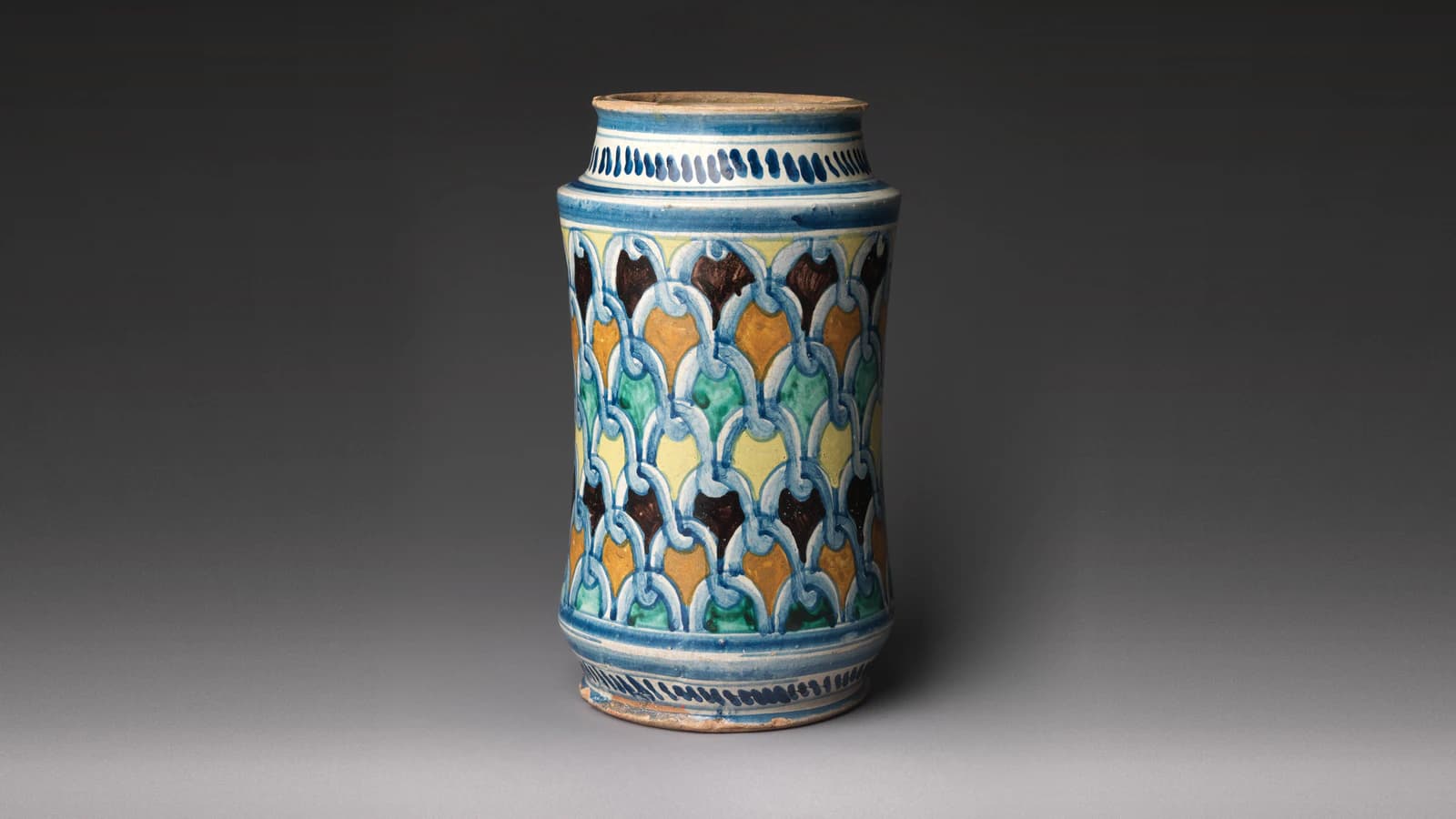
- 01Santa Maria Novella in Florence counts its continuity from 1221, when Dominican friars planted an infirmary garden; its public pharmacy dates from 15 October 1612, the house says.
- 02Germany's patent office says Farina, founded in Cologne on 13 July 1709, is assumed to be the world's oldest perfume factory still in existence.
- 03Floris dates itself to 1730, and its first royal warrant, in 1820, named it a comb maker; the Survey of London first records it on Jermyn Street in 1799.
- 04By the year each house claims: Santa Maria Novella 1221, Farina 1709, Floris 1730, Caswell-Massey 1752, L.T. Piver 1774, Houbigant 1775, Guerlain 1828 and Ajmal 1951.
- 05Farina, Floris and, by 2021 press reports, Ajmal are still owned or run by their founding families; Guerlain belongs to LVMH, and 95 percent of Santa Maria Novella to Italmobiliare.
Ask for the oldest perfume house in the world and the honest reply is a question: oldest at what? A house can date itself from a friars' garden, a pharmacy counter opened to the public, a company founded on a known day or a sign hung over a shop door, and the choice can change the winner.
For the longer story, from Egypt's Pyramid Texts to the present day, see our sourced history of perfume.
What is the oldest perfume house in the world?
Santa Maria Novella in Florence has the earliest date of any house still trading that we checked: it counts its age from 1221. That year, according to Santa Maria Novella's own history, a community of twelve friars of the Dominican order gained formal use of land just outside the city's inner walls. There they laid out a botanical garden to supply their infirmary. Its oldest firm evidence of scent made for sale comes from 1381, a year the Museo Galileo's guide to the pharmacy also gives.
Ask instead for the oldest perfume maker founded as a company, and the answer moves north to Cologne. The DPMA, Germany's patent and trade mark office, dates Farina to 13 July 1709 and says it "is assumed to be the world's oldest perfume factory still in existence". The office hedges its claim, and so do we: probably the oldest, not certainly.
Eight houses that still sell perfume, by the year each counts from:
| House | City | Counts from | What began that year | Sources |
|---|---|---|---|---|
| Santa Maria Novella | Florence | 1221 | Dominican friars plant an infirmary garden; the public pharmacy follows in 1612 | Santa Maria Novella history; Museo Galileo |
| Farina | Cologne | 13 July 1709 | A firm dealing mainly in fashion goods opens, says the DPMA | DPMA brand history; Farina history |
| Floris | London | 1730 | The founders begin selling perfume, combs and shaving goods, the house says; first independent record 1799 | Floris history; Survey of London |
| Caswell-Massey | Newport, Rhode Island | 1752 | The business starts as Dr. Hunter's Apothecary, by its own account | Caswell-Massey, Our Story |
| L.T. Piver | Paris | 1774 | The house is founded in Paris, it says; its perfumes are now made in Chartres | L.T. Piver |
| Houbigant | Paris | 1775 | Jean-François Houbigant opens a shop under a painted basket of flowers | Houbigant history |
| Guerlain | Paris | 1828 | Pierre-François-Pascal Guerlain's first boutique opens, on the rue de Rivoli | Guerlain history; LVMH |
| Ajmal | Mumbai, now Dubai | 1951 | The founder opens his first shop, in Crawford Market, with 500 rupees | Ajmal, About Us; The Moodie Davitt Report |
Each linked name leads to our full article on that house or, for Houbigant, on its Fougère Royale. The rows for Caswell-Massey and L.T. Piver rest on the houses' own pages.
Every house in the table sells perfume today, but not every founding year marks the first bottle. Farina's firm sold mostly fashion goods in its first years, by the DPMA's account. Guerlain's first boutique drew Parisians and English visitors for creams and makeup as well as fragrance, its own history says.
How do you date a perfume house?
Each house dates itself from the earliest event it ties to today's business, and each chooses its own. Some chains have breaks the house still counts across, so the useful question is what continued: the place, the recipe, the family or only the name. Santa Maria Novella states its rule in so many words, in the entry for 1221:
It is from this point that the institution's continuity is counted.
Santa Maria Novella, "Our Story"
The dates in these records mark different kinds of event:
- A community and its garden. Santa Maria Novella's friars and their infirmary garden, 1221.
- A door opened to the public. The convent's council voted on 15 October 1612 to found a public pharmacy, the house says; the museum also dates the pharmacy's official birth to 1612.
- A company. Farina, founded in Cologne on 13 July 1709, according to the DPMA, and L.T. Piver, founded in Paris in 1774, by its own account.
- A shop. Floris in London in 1730, Caswell-Massey as an apothecary in Newport in 1752, Houbigant in Paris in 1775, Guerlain in Paris in 1828 and Ajmal in Mumbai in 1951, each by the house's own history.
- A first recorded sale. Santa Maria Novella's perfumed waters, sold by 1381, the earliest documented production of scent the house and the Museo Galileo give. No house here counts its age from a date of this kind.
Some recorded dates go unused. Santa Maria Novella's pharmacy had been run as a business since 1541, as its first book of accounts records, according to Patek Philippe's magazine; the house does not count from that year.
Later events can change what a house is without moving its date. Santa Maria Novella outlived a Napoleonic decree of dissolution: in September 1813 its director, Fra' Tommaso Valori, purchased it outright from the French state at his own expense, its history records. After Italy suppressed the religious orders in 1866, Cesare Augusto Stefani put it on the register as a secular private business in 1871. Houbigant tells of a break in ownership: after its owner had to sell the brands for health reasons, the Perris family took control of the Houbigant name for fragrances and cosmetics in 2005, the house says. Both still count from their first year, though Houbigant's 1775 has come down as a name that changed hands, a looser chain than a family firm such as Farina.
Who calls which house the oldest, and how sure are they?
Read the verbs and adjectives around each superlative. The DPMA writes "is assumed to be" about Farina; Farina's own history has no such caution and says Johann Maria founded "the oldest perfume factory in the world". Italmobiliare, which holds 95 percent of Santa Maria Novella according to its company profile, says on its portfolio page that the house "is considered the oldest pharmacy in the world". The Museo Galileo calls it "one of the oldest, still operating pharmacies in the world". We follow the museum, which has no share in the business. L.T. Piver makes the same careful kind of claim, calling itself one of the oldest French perfume houses still in business.
Houbigant's house history calls it "the only fragrance house that has existed through four centuries of history". The dates above do not bear out the "only". Farina's founding in 1709 spans the same four centuries, the 18th to the 21st (our arithmetic), as do the dates Caswell-Massey and L.T. Piver give, and Santa Maria Novella's perfumed waters go back to 1381.
How old is Santa Maria Novella?
It is 805 years old in 2026 by its own count from 1221, or 414 if counted from its public pharmacy of 1612 (our arithmetic). Both events are on record. The first is the friars' garden of 1221. The second came on 15 October 1612, when the convent voted to turn what the house calls a closed monastic laboratory into a pharmacy that served outside customers.
Between the two sits its oldest scent on record: in 1381 the friars sold perfumed waters, Acqua di Rose among them, distilled from the damask rose, according to the house. It describes that rose water as a medicine first, used to disinfect rooms in times of plague and swallowed diluted in wine.
Each count has had its anniversary. Patek Philippe's magazine describes historic rooms restored and reopened in 2012 to mark the 400th, and the house calls 2021 its 800th year. Ownership changed around the 800th: Italmobiliare says it invested in January 2020, and the house dates the completed acquisition to 2021. Both dates, and the pharmacy's owners down the centuries, are weighed in Santa Maria Novella's two birth years.
How old is Farina?
Farina turns 317 in 2026 (our arithmetic), counting from the founding day the DPMA gives for Giovanni Battista Farina's firm in Cologne: 13 July 1709. Fashion goods were its main trade until Johann Maria, the younger brother, joined it in 1714. He developed a fragrance water built not on musk, the DPMA says, but on bergamot, lemon and orange, the notes of the citrus family. He later named it Eau de Cologne, after his adopted city.
Farina's own history simplifies this to one founder, Johann Maria, and one year, 1709. On dates we side with the patent office, which sells nothing and gives the fuller account. Both say the original recipe is still followed and the family still owns the firm.
The best-known rival is younger. Wilhelm Mülhens had sold eau de Cologne in the Glockengasse since 1799, the DPMA says. By 1805 he traded as "Franz Maria Farina", a name the DPMA says he had "bought" from a Carl Franz Farina of Bonn. That year the original house declared in a Frankfurt paper that this Franz Maria Farina was in fact Mülhens. His firm lost the right to the name in 1873 and became 4711, now a Mäurer & Wirtz brand. The office counts both among the oldest perfume brands in the world.
The DPMA also names Napoleon among Farina's customers over the years, though it quotes no order of his; our article on Farina's eau de Cologne checks the Napoleon story.
What is the oldest perfume still being made?
Of the perfumes in this guide, the oldest one a house says it still makes is Santa Maria Novella's Acqua della Regina. The house ties it to 1533, when Caterina de' Medici left Florence to marry the future Henry II of France, and says the fragrance "remains in production today". Patek Philippe's magazine reported that it was sold as Acqua di Colonia Santa Maria Novella, "using the original citrus and bergamot formula". Neither source quotes a recipe from the 1530s.
The best-documented survivor is younger. Germany's patent office writes that "to this day, Farina has produced Eau de Cologne according to his original recipe", meaning that of Johann Maria Farina, who joined the firm in 1714. Later claims carry later dates: Caswell-Massey says its Number Six fragrance debuted in 1772 and still sells it, and W Magazine reported in 2022 that Guerlain still offered Eau de Cologne Impériale itself, the cologne of 1853.
Was Floris a perfumer or a comb maker first?
The record does not settle it. By the account on the Floris history page, Juan Famenias Floris and his wife started selling perfume, combs and shaving goods in London's St James's in 1730. Their shop at 89 Jermyn Street, it adds, is still in the hands of their descendants. A 2018 profile in The Rake, based on an interview with the family's ninth-generation head, says the founder began "initially as a barber and comb-maker".
Independent records start later. Parish ratebooks and Post Office directories, as summed up in the Survey of London's Jermyn Street chapter, put Floris at No. 88 from 1799 and at No. 89, its present shop, from 1810.
The first royal warrant came in 1820, with the title "Smooth-pointed comb maker to HM King George IV". At that time, the history page adds, well-made combs were one of the shop's specialties, next to toothbrushes and mouthwashes. On the royal family's website, a warrant is a mark of recognition for regular suppliers of goods or services to the Royal Household. Today a company can apply only after supplying it for at least five of the previous seven years.
So the 1820 title shows what the king's household was buying from the shop, not what the shop sold first. Our myths and facts check makes the same point, and our article asks whether Floris is London's oldest perfume house.
Is Guerlain the oldest perfume house in France?
No. Two Paris houses claim earlier years: L.T. Piver says it was founded in Paris in 1774, and Houbigant dates its first shop to 1775. Guerlain counts from 1828, and its history names the founding moment precisely:
Pierre-François-Pascal Guerlain made the opening of his first boutique on rue de Rivoli in Paris in 1828 his founding act.
Guerlain, "La Maison Guerlain: History"
Its best-known court perfume followed in 1853. That year Guerlain dedicated Eau de Cologne Impériale to Empress Eugénie, for her marriage to Napoleon III, and had it bottled in glass decorated with the bees of the Empire, painted in fine gold. The court title it earned differs by source. Guerlain's history gives "Official Perfumer to His Majesty", while W Magazine's history of the bee bottle gives "Official Supplier to Her Majesty the Empress". Neither cites the document, so we report both.
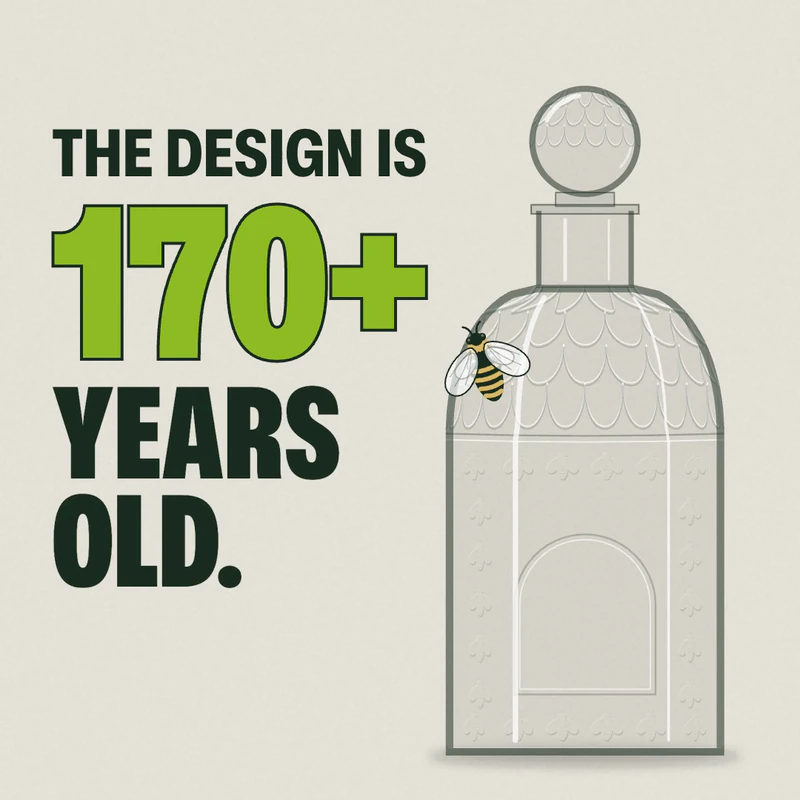
Guerlain's own bee bottle page offers the bottle made to measure, filled with a Guerlain fragrance of the buyer's choice and finished with a cord, a seal and an engraving. In 2022 W Magazine reported four sizes to choose from, and stoppers still sealed by hand with fine thread. Guerlain has belonged to the LVMH group since 1994. The bottle's full story is in our article on Eau de Cologne Impériale.
How old is Ajmal, and why does its name say Dubai?
Ajmal dates from 1951, so its 75th anniversary falls in 2026 (our arithmetic), the year it put Dubai into its name. Ajmal's About Us page says its founder, Haji Ajmal Ali, came from a family of rice farmers in Assam, India, and saw that farming alone could not support them. He had heard that the oud trade could. In 1951 he moved to Mumbai with 500 rupees as his capital and opened his first shop in Crawford Market. His sons also entered the business, and the family, the page says, had in twenty years "planted the seeds of the Ajmal Brand".
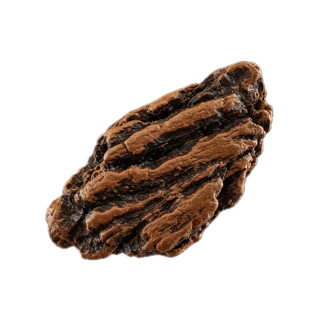
The Gulf came early in the story. The founder landed in Sharjah in 1961, his son Mohammed Amiruddin Ajmal told Gulf News in 2021. The house's Journey page dates its first outlet in Dubai, in Murshid Bazaar, to 1976 and its first Dubai factory to 1986, and The Moodie Davitt Report described the house as "Dubai-based" in 2021. With its 75th anniversary near, the company took the name Ajmal Dubai, according to a Campaign Middle East report of 3 March 2026. Its chief executive was quoted as saying that Dubai had played "an integral role in shaping who we are today".
Ajmal is the youngest house here, and this guide does not call it the oldest in India or the Gulf. It is included because its start is documented, and because its base moved to Dubai while its founding year stayed 1951. The road from Mumbai to Dubai is followed year by year in our Ajmal history.
Who owns the oldest perfume houses today?
Farina and Floris, and by press accounts Ajmal, are the houses in this guide whose sources say the founding family still owns or runs them. Houbigant, Santa Maria Novella and Guerlain have passed to another family or to companies.
| House | Owned or run by today | Source |
|---|---|---|
| Farina | The founding family; the house says the original is kept by its eighth and ninth generations | DPMA; Farina |
| Floris | The founders' descendants run the Jermyn Street shop; in 2018 its perfumery director was a ninth-generation member of the family | Floris |
| Ajmal | The Ajmal family, as the trade press described it in 2021; no shareholder list appears on the house pages we read | The Moodie Davitt Report; Gulf News |
| Houbigant | The Perris family, which took control of the name in 2005, not the founder's family | Houbigant |
| Santa Maria Novella | Italmobiliare, which invested in January 2020 and held 95 percent at 30 June 2026 | Italmobiliare |
| Guerlain | The LVMH group, since 1994 | LVMH |
The wording also differs where it matters: the DPMA states that the Farina family owns its company, while the Floris page says its family runs the shop. This guide has no ownership source for L.T. Piver, and Caswell-Massey's own story says that after Dr. Hunter died in 1777 the business "passed through the hands of various loyal stewards".
Part of Eau Facts, the Fragnatique team's series on fragrance history and science, also told in short videos on Instagram at @eaufacts. Researched from the sources listed above, drafted with AI assistance and checked against each source before publishing.
Frequently asked
- What is the oldest perfume brand still in business?
- Farina in Cologne has the strongest record. Germany's patent office dates the firm to 13 July 1709, says it is assumed to be the world's oldest perfume factory still in existence and counts it, with its younger rival 4711, among the oldest perfume brands in the world. The family still owns it. Santa Maria Novella in Florence claims older dates, a friars' garden of 1221 and perfumed waters sold as medicine by 1381, but it grew from a convent pharmacy, not a perfume firm.
- Is 4711 older than Farina?
- No. Germany's patent office dates Farina's founding to 13 July 1709. It says Wilhelm Mülhens, whose business became 4711, had sold eau de Cologne in Cologne's Glockengasse since 1799 and traded under a Farina name to profit from the original's reputation. His firm was forbidden to use the Farina name only in 1873. The office counts both among the oldest perfume brands in the world; 4711 now belongs to Mäurer & Wirtz.
- What is the oldest perfume house in Paris?
- Founding claims do not settle it. L.T. Piver says it was founded in Paris in 1774, and it now makes its perfumes in Chartres. Houbigant dates its first shop, on the rue du Faubourg Saint-Honoré, to 1775, and Guerlain counts from 1828, when its founder opened his first boutique on the rue de Rivoli. Houbigant's ownership did not stay in one line: the house says its brands were sold, and the Perris family took control of the name in 2005.

Explore Fragnatique