How a 1907 Coty Order Turned René Lalique Into a Glassmaker
René Lalique made perfume bottles for François Coty first, from 1907 says the house (1908, says the V&A), then for Worth, Houbigant, Molinard and others.
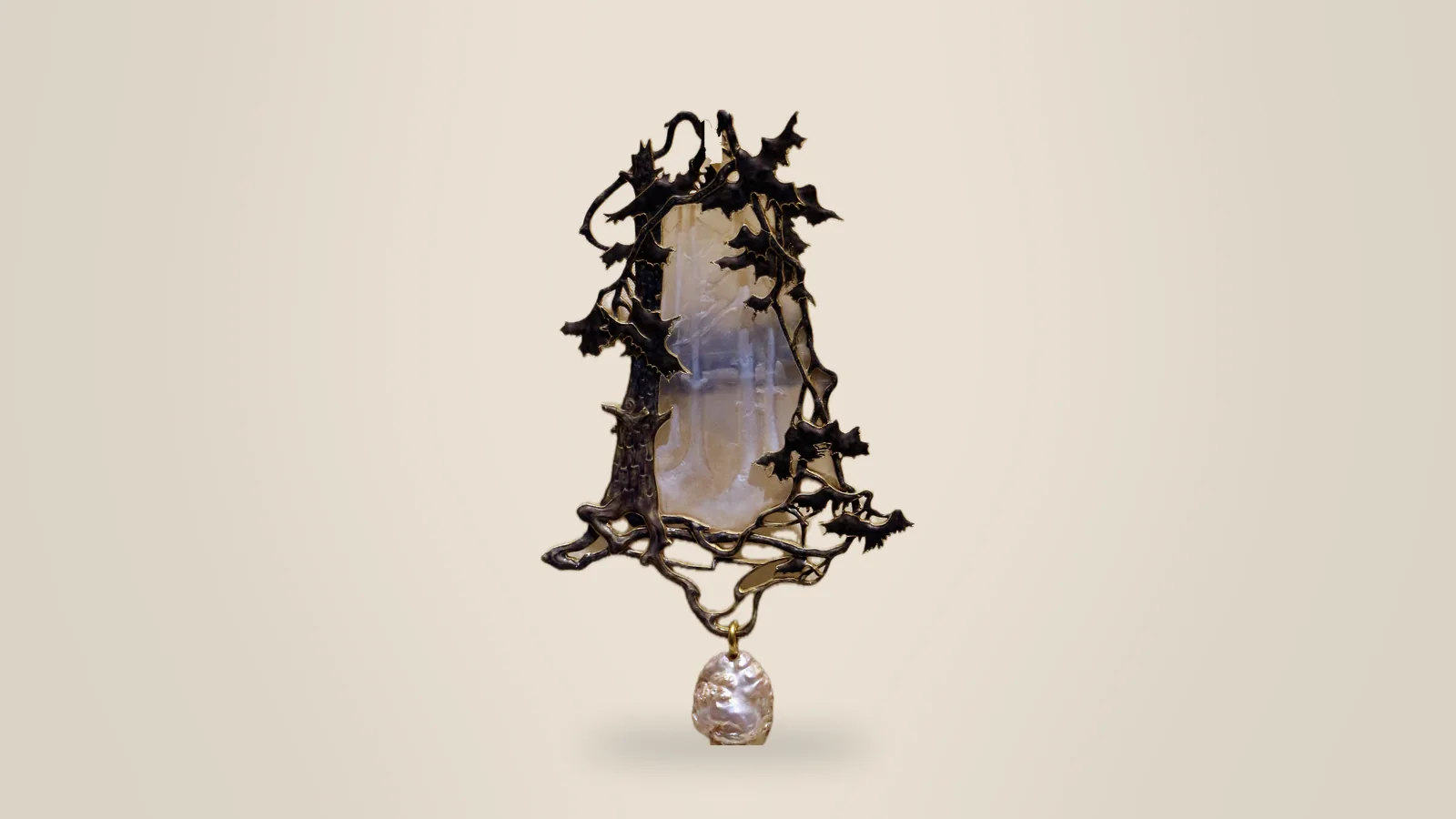
- 01René Lalique designed perfume bottles first for François Coty, some twenty or more, the Musée Lalique says, then for Houbigant, Molinard, d'Orsay, Roger&Gallet and Worth.
- 02Lalique dates its partnership with Coty to 1907; the V&A says Coty first commissioned bottle designs in 1908, the first for Cyclamen, made at first by Baccarat.
- 03On the strength of the Coty commission, Lalique rented a glassworks at Combs-la-Ville in autumn 1908 and bought it in 1913, according to the V&A.
- 04The Musée Lalique calls the Coty collaboration a powerful springboard for Lalique's career as a master glassmaker and his move to industrial glassmaking.
- 05Lalique's own perfume line began in 1992, when René Lalique's granddaughter Marie-Claude created Lalique de Lalique, the house says.
René Lalique was a celebrated jeweler before glass made his name. Perfume changed his trade, and the museum devoted to his work names the client who started it: François Coty. Our sourced timeline of perfume history shows where that turn sits in the longer story.
Who did Lalique make perfume bottles for?
He made them first for François Coty, then for many of the best-known perfume houses of his day. The Musée Lalique, in its 2025 page on the L'Effleurt bottles, says he designed "some twenty or more perfume bottles" for Coty. Its perfume bottle gallery page names Houbigant, Molinard, d'Orsay, Roger&Gallet and Worth among the houses that followed.
Two of those commissions are dated in the museum's notes. Worth launched its first perfume, Dans la nuit, in 1920 and ordered a Lalique flacon four years later: the museum dates the model to 1924. Molinard, founded in Grasse in 1849, asked Lalique for the bottle of Calendal, a 1927 design launched in spring 1928.
The family kept working for perfume after René. His son Marc designed the bottle of Nina Ricci's L'Air du Temps, the museum's page on Marc Lalique says. The gallery in Alsace now shows 230 Lalique perfume bottles and powder boxes.
How did Coty and Lalique start working together?
Coty asked Lalique to design for perfume after seeing his work, in 1907 by the house's own count. Lalique's Story of Lalique puts the start of the partnership under 1907 and says Coty liked Lalique's designs so much that he asked him to work for the perfume industry. Two years earlier, Lalique had opened a shop at 24 Place Vendôme in Paris, showing glass objects from his workshop at Clairefontaine beside his jewelry.
The exact year, and whether the first job was a label or a bottle, depends on the source:
| Year | What the source says | Source |
|---|---|---|
| 1906 | Coty "is believed to have commissioned his first perfume bottles" from Lalique, shown in the Place Vendôme shop in 1907 | New York City Landmarks Preservation Commission, 1985 |
| 1907 | The partnership with Coty begins | Lalique, Story of Lalique |
| 1907 | Lalique meets Coty, already seriously interested in glass | Musée Lalique, René Lalique |
| 1908 | Coty first commissions bottle designs; the first is for Cyclamen, and Baccarat makes the first production | V&A, gallery label |
| 1908 | A label for L'Effleurt, paper and then glass, fixed to a Baccarat crystal bottle | Musée Lalique, 2019 |
| 1909 | Design date of the V&A's own Cyclamen bottle, made at Combs-la-Ville | V&A, object record |
| 1911 or 1912 | Lalique's own L'Effleurt bottle: 1912 in the 2019 page; the 2025 page dates the L'Effleurt bottles 1908 and 1911 | Musée Lalique |
The two museums give the strongest evidence for the first object, because they describe dated pieces they hold or show. Together with the house, they point to a meeting or request in 1907 and first designs in 1908. The commission's 1906 is the outlier: it hedges with "is believed" and cites a 1919 Paris art review through a 1977 catalogue.
The museums still differ on which perfume came first. The V&A's record for its Cyclamen bottle says the first design was for Cyclamen. The Musée Lalique's 2025 page calls the L'Effleurt bottle "René Lalique's first venture into the world of perfume", and its L'Effleurt exhibit page says that work began in 1908 as a label. On one point they agree: Baccarat, not Lalique, made Coty's first bottles.
Baccarat turns up in the record books too: the perfume behind the Guinness title for the most expensive perfume in the world "was presented in a Baccarat crystal flacon", Guinness World Records says.
Why did Coty want beautiful bottles?
He seems to have believed that the container helped sell the perfume. The Landmarks Preservation Commission's 1985 report quotes Coty writing in 1906 that a woman should get the best product, presented "in a perfect container (beautifully simple but of impeccable taste)", at "a reasonable price". The report took the line from a 1977 collectors' guide, whose sources it calls "not especially precise".
Coty was born Joseph Marie François Spoturno. He founded his fragrance house in Paris under a name taken from his mother's maiden name, Coti, with the i changed to a y, Coty's heritage page says. Lalique's history sums up what the partnership delivered:
Their work together revolutionised the perfume industry and made it possible for the first time to offer perfumes in attractive bottles at affordable prices.
Lalique, Story of Lalique
The museum stresses design. Lalique made each bottle for a specific perfume, so that the container had "a direct symbolic link with the contents", a first for the industry, its page on René Lalique says. For L'Effleurt, a name the museum thinks probably came from fleurs (flowers), effluve (fragrance) or effleurer (to brush lightly), he drew a diaphanous figure floating "like a fragrant haze". The stopper of his own version carried two cicadas. Another bottle with a story of its own is Guerlain's bee bottle for Eau de Cologne Impériale.
How did perfume turn a jeweler into a glassmaker?
It gave his glass a client big enough to need a factory. The V&A says that "on the strength of the Coty commission" Lalique rented a glassworks at Combs-la-Ville, in Seine-et-Marne, in the autumn of 1908, and bought it in 1913. The Musée Lalique says the Coty encounter inspired him "to find the techniques to start mass producing", and that he patented several, among them a way to mould-blow and press glass at the same time.
Glass itself was not new to him. Apprenticed to the Paris jeweler Louis Aucoc, he designed for jewelry houses such as Cartier and Boucheron before taking over a workshop of his own in 1885, the house says. By the 1890s he was setting glass and enamel beside gold, opals, diamonds and pearls. The commission dates his full exit from jewelry to about 1910.
The collaboration with Coty proved a powerful springboard for Lalique's career as a master glassmaker, and also marked his transition to industrial glassmaking.
Musée Lalique, L'Effleurt perfume bottle
In 1921 he decided to build a new glassworks at Wingen-sur-Moder, in the northern Vosges of Alsace, the museum says; the house dates its first production to 1922. Lalique's history calls him an Art Nouveau master jeweler who was "to become an Art Deco master glassmaker".
What did Lalique make for Coty in New York?
Windows. In 1910 Coty leased the whole building at 714 Fifth Avenue as his American headquarters and soon commissioned Lalique to design glass windows across its third to fifth floors, the Landmarks Preservation Commission says. It reports that they "are believed to date from 1912", describes a pattern of intertwining vines and tulips, and calls them "unique in New York". It designated the former Coty Building a landmark on 29 January 1985.
The museum's 2025 page describes the same commission as a window of white pressed glass three floors high, with garlands of flowers, plus wall panels of poppies. It adds that "later on a conflict put an end to the partnership between the two men". It gives no date or cause, and none of the sources we read supplies one.
When did Lalique start making its own perfume?
In 1992, when René Lalique's granddaughter Marie-Claude created the fragrance Lalique de Lalique, the year the house gives for the launch of Lalique Parfums. That came 85 years after the house's 1907 date for the Coty partnership, by our arithmetic. The museum's page on Marie-Claude Lalique sums up the change: "René Lalique had provided perfume with an image; Marie-Claude sought out new scents."
Two more generations ran the firm before it left the family. Marc Lalique took over at his father's death in 1945 and moved the house from glass to crystal in the early 1950s; crystal, the museum's crystal gallery page explains, must contain at least 24 percent lead oxide. Marie-Claude, head of the firm from 1977, sold it to the Pochet Group in 1994. In 2008 the Swiss group Art & Fragrance, called Lalique Group since 2016, bought Lalique, the house says.
The group, based in Zurich, now works across "perfumes and cosmetics" as well as crystal, its press site says. All Lalique crystal is still made at Wingen-sur-Moder, where the Musée Lalique opened on 1 July 2011, run by local and regional authorities. The bottle on our cover is a modern Lalique perfume, Encre Noire, not a Coty piece; the house says its bottle was inspired by the "Biches" inkwell René Lalique designed in 1913. For perfumes on today's shelves, our perfume scanner names a bottle from one photo.
Coty's company lives on as Coty Inc. In a 2018 release on a campaign for CK One, it described Calvin Klein Fragrances as "a division of Coty Inc."
Part of Eau Facts, the Fragnatique team's series on fragrance history and science, also told in short videos on Instagram at @eaufacts. Researched from the sources listed above, drafted with AI assistance and checked against each source before publishing.
Frequently asked
- Is Lalique still made?
- Yes. Lalique crystal is still made, and only in one place: Wingen-sur-Moder in Alsace, where René Lalique decided in 1921 to build a glassworks and where, the house says, production began in 1922. The Musée Lalique says the whole of Lalique's crystal production is done there today. The house has also sold perfume under its own name since 1992, and has belonged to the Swiss Lalique Group since 2008.
- Who makes Lalique perfume?
- Lalique Group, a Swiss luxury group based in Zurich, which bought Lalique in 2008 under its former name, Art & Fragrance. Its press site says the group works across perfumes and cosmetics as well as crystal. The perfumes carry the house's own name, a line Lalique dates to 1992, when René Lalique's granddaughter Marie-Claude created Lalique de Lalique.
- Where is the Lalique museum?
- The Musée Lalique is at Wingen-sur-Moder, a village in the northern Vosges in Alsace, near the glassworks René Lalique founded there in the 1920s. It opened on 1 July 2011 and is run by a body of local and regional authorities, the museum says. Its perfume bottle gallery shows 230 Lalique bottles and powder boxes, and its permanent collection includes the L'Effleurt bottle Lalique designed for Coty.
- What is Lalique crystal?
- Glass rich in lead: the Musée Lalique describes crystal as a form of glass that must contain at least 24 percent lead oxide to be called crystal. René Lalique himself worked in glass. His son Marc, who took over after René's death in 1945, moved the firm from glass to crystal in the early 1950s, the museum says, and it is all made at Wingen-sur-Moder in Alsace.

Explore Fragnatique