Tapputi and the Oldest Dated Perfume Recipe That Names Its Maker
No one is known to have invented perfume. The oldest dated perfume recipe naming its maker is Tapputi's, on an Assur tablet Oracc dates to 1239 or 1229 BC.
- 01Perfume has no known inventor; the UCLA Encyclopedia of Egyptology says the Egyptian incense kyphi is already mentioned in the Pyramid Texts.
- 02A perfumer's workshop served the Kingdom of Larsa by King Sumuel's fifth year, about 1890 BC; a 2014 Cuneiform Digital Library Journal study names Lipit-Irra as its head.
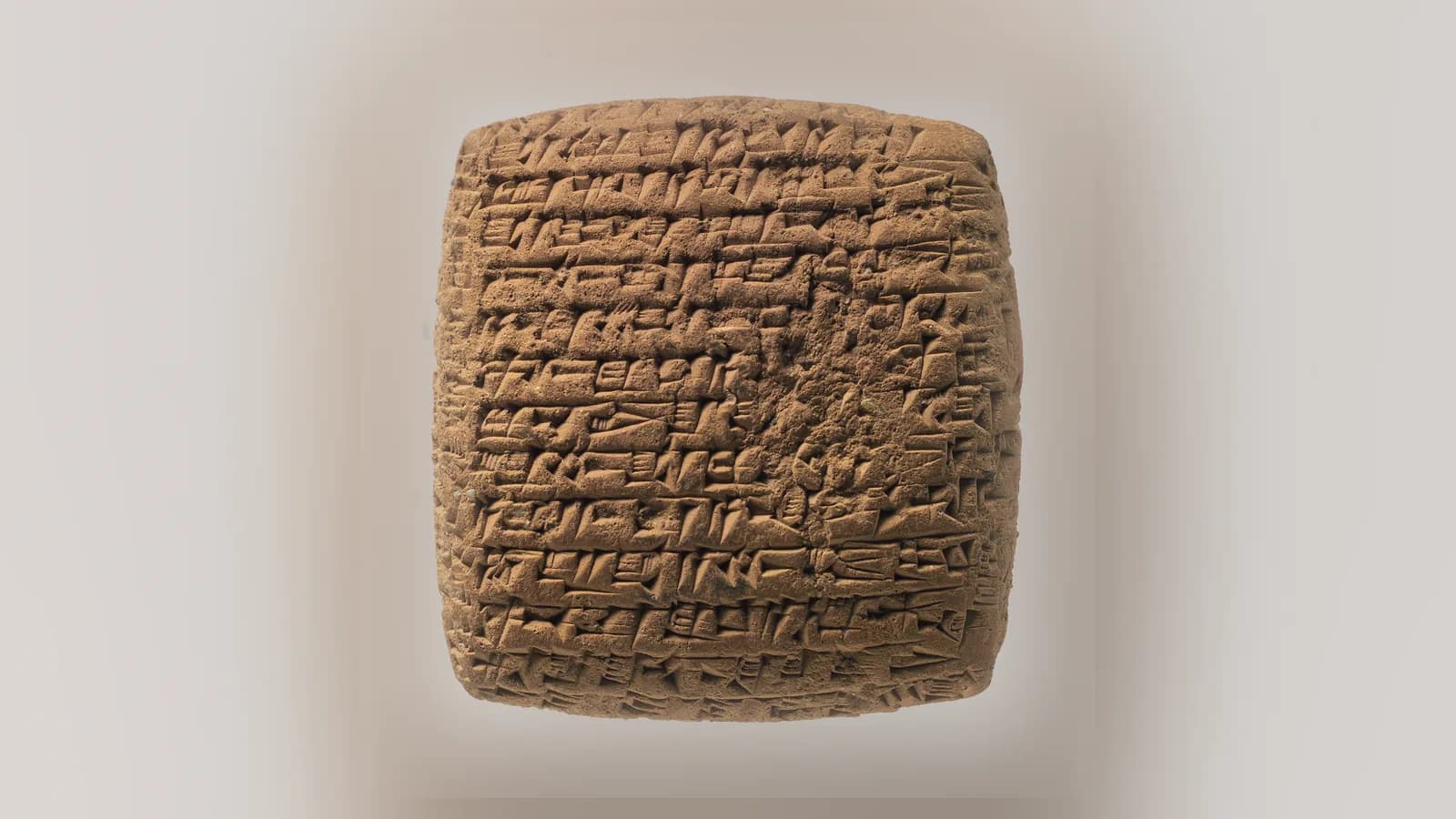
- 03KAR 220, an Assur tablet now in Berlin, credits oil "for the head of the king" to "Tappūti-Bēlat-ēkalle the perfume maker"; Oracc dates it to 1239 or 1229 BC.
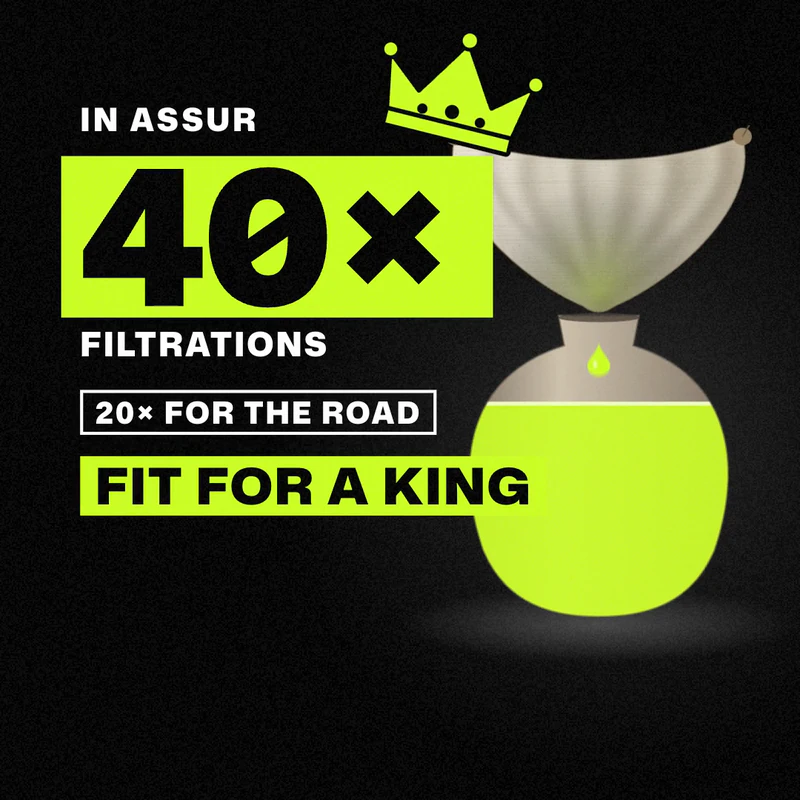
- 04Tapputi's method was steeping, heating and filtering in water and oil, with no alcohol or still; Escobar (2023) says 40 filtrations made Assyrian oil "fit for a king".
- 05Papyrus Ebers 852 is older but names no maker; PKT 6, another Assur recipe crediting a woman, is undated (Oracc). Tapputi's is the oldest dated perfume recipe naming its maker.
The king's perfume was her recipe
Open on InstagramTranscript
The king's perfume was her recipe. Her name was Tapputi, and her legend needs a fact-check.
It survives on a clay tablet from Assur, over three thousand years old, now in Berlin.
She's often called “history's first chemist”. That label is modern.
No alcohol, no distilling. Her oil was steeped, heated and filtered. In Assur, forty filtrations made oil fit for a king!
But she wasn't first. At least five centuries earlier, Lipit-Irra ran a perfume workshop in Larsa.
An Egyptian recipe beats hers by centuries, but names no maker.
So hers is the oldest known perfume recipe that names its maker!
Which perfume legend should we fact-check next?
Narrated by an AI voice.
Who invented perfume?
No inventor is on record. Egyptian tomb chapels show containers of sacred oils on their walls from as early as the 3rd Dynasty, says the UCLA Encyclopedia of Egyptology entry on perfume, and a perfumer's workshop served the Kingdom of Larsa, in Mesopotamia, by about 1890 BC. The oldest dated perfume recipe that names its maker belongs to Tappūti-Bēlat-ēkalle (often written Tapputi-Belatekallim), an Assyrian perfume maker usually called Tapputi.
In date order, with the one undated recipe last, the surviving records look like this.
| Date, as the source gives it | Record | What it is | Maker named? | Source |
|---|---|---|---|---|
| As early as the 3rd Dynasty; the Pyramid Texts | Egyptian tomb chapels; Pyramid Texts | Sacred-oil containers shown on the walls; kyphi named | No | UCLA Encyclopedia of Egyptology |
| Sumuel year 5, about 1890 BC (middle chronology) | YOS 14, 212 (Yale Oriental Series), Kingdom of Larsa | Oil for the perfumer's workshop, headed, according to the 2014 study, by Lipit-Irra | Workshop head named; no recipe | Cuneiform Digital Library Initiative (CDLI); Cuneiform Digital Library Journal (2014) |
| Last quarter of the 16th century BC | Papyrus Ebers 852, Egypt | Kyphi, an incense for the house and clothing | No | Leipzig University Library; Near Eastern Archaeology |
| 1239 or 1229 BC (Escobar: c. 1230 BCE) | KAR 220, Assur | Reed oil "for the head of the king" | Yes: Tappūti-Bēlat-ēkalle | Open Richly Annotated Cuneiform Corpus (Oracc); CDLI |
| Middle Assyrian; no date survives | PKT 6, Assur | Several scented oils | Only "-ninu", the end of her name, survives | Oracc |
Of the two Assur recipes that credit a maker, only hers keeps its date. Our sourced timeline of perfume history follows these records to the present.
Who was Tapputi?
Tapputi was an Assyrian perfume maker, credited by name on a clay tablet of about 1230 BC from Assur, in what is now northern Iraq. The historian and Assyriologist Eduardo A. Escobar, in his 2023 sourcebook chapter on the tablet, calls her "an expert perfumer, an ancient Assyrian woman". The Cuneiform Digital Library Initiative (CDLI) record for KAR 220 places the find at Assur, modern Qalat Sherqat, in the Middle Assyrian period, about 1400 to 1000 BC.
The tablet itself marks her as a woman. In the 2021 edition of KAR 220 by the Open Richly Annotated Cuneiform Corpus (Oracc), her name carries the sign that scribes wrote before women's names, and her title follows munus, the sign for "woman". The title is muraqqītu, which Oracc translates as "the perfume maker"; Escobar says women in Assyrian perfumery held it, glossing it as "experts in aromatics".
The second half of her name is a goddess's name, not a job title. Bēlet-ekallim, which Oracc writes Bēlat-ēkalle, can be translated as "Lady/Mistress of the Palace", according to a 2003 Würzburg doctoral thesis on the goddess, and the edition writes it with the sign for a deity. Beyond this tablet, the scholarly sources cited here say nothing about her life.
Popular accounts go further. The English Wikipedia article on Tapputi, for one, makes three claims that the editions and studies cited here do not support.
| Popular claim | What the sources show | Source |
|---|---|---|
| Her materials were "distilled and filtered several times" | Steeped, heated and strained through cloth; neither translation mentions distilling | Oracc; Escobar |
| She was "an overseer at the Royal Palace" and "the head of a group of professional female perfumers" | The colophon calls her only "the perfume maker"; Escobar describes a "head perfumer" but does not say she was one | Oracc; Escobar |
| She worked with a colleague whose name survives only as "-ninu" | "-ninu" is credited on another recipe, PKT 6; KAR 220 names no other perfume maker | Oracc |
What does Tapputi's tablet, KAR 220, say?
It is a step-by-step recipe for scented reed oil whose closing lines, the colophon, name its maker and date this copy. CDLI records the tablet in the Vorderasiatisches Museum in Berlin as VAT 10165, with other fragments; KAR 220 is its publication number.
Perfume-making of 2 seahs of good oil ... for the head of the king, ... according to the instruction of Tappūti-Bēlat-ēkalle the perfume maker.
Oracc, KAR 220, colophon (reverse iv 8), 2021 edition, CC BY-SA 3.0
Two seahs is about 20 liters by Escobar's conversion, and the oil was made for the king's head, a phrase he renders "fit for a king". The line also says the text was "copied (from a tablet)": the surviving tablet is a copy, not necessarily in her hand. Escobar reads the formula as crediting "all knowledge contained within the recipe" to her, "according to (her) mouth".
The last line dates the copy: "Month Muhur-ilāni, 20th day, eponymy of Šunu-qardū chief of the cupbearers". Assyrian years were named after an official, the eponym. Oracc's eponym table places Šunu-qardū in the reign of King Tukultī-Ninurta I, in 1239 or 1229 BC, and warns that the order of years "has to be reconstructed, a process that is far from complete".
No other perfume recipe from Assur keeps a date. Oracc edits six, KAR 220 among them: four have lost their endings, and PKT 6 (VAT 9659) breaks off just after a credit like hers, to a woman the edition calls "the (female) oil-processer". Only the end of her name survives: "-ninu". With PKT 6 undated, no one can say which of the two recipes is older. Our reel, made before we read PKT 6, calls Tapputi's the oldest known; the tablets support only the oldest dated.
How did Tapputi make perfume?
By steeping, heating and filtering: the recipe soaks aromatic plants in water overnight, strains them through cloth, cooks them with oil over a fire, and repeats the cycle. The reed is washed, dried aromatics are heated in water "from the well belonging to ... the palace", myrtle goes into the vessel, and the mixture "will stay the night and become soft". At dawn, the edition says, "you will sieve this water and perfumes with a cloth".
Then the cycle repeats: the liquid is cleared into a second vessel, the residue thrown away and more crushed reed and myrtle added, as the edition counts "the washing [for the third time]", then "the fourth time of pouring". Later comes "You will heat the fire": oil is poured in and stirred, and at the end strained through cloth, a little at a time, into a šappatu jar.
There is no alcohol and no distilling: neither English translation uses the word distil. A 2014 study of Larsa's aromatics trade in the Cuneiform Digital Library Journal describes these Assyrian recipes the same way: raw materials repeatedly steeped in water and oil, heated over a fire to soften them and draw out their fragrance. For a perfume built on alcohol, see the story of the original eau de Cologne.
Escobar notes that all six known perfume recipes from Assur describe a similar process: heat extraction, maceration and filtration. The grade followed the number of filtrations. After 20, the perfume was suitable for trade, literally "for the road"; after weeks of refinement and 40 filtrations came the finest oil, described as "fit for a king". That, he writes, is "the product attributed to the expertise of Tappūtī-bēlat-ekalle".
Was Tapputi the first perfumer?
No. A perfumer's workshop was at work in Mesopotamia centuries before her tablet was copied, and its head is known by name. In the Kingdom of Larsa, the 2014 study shows, the perfume maker, raqqû in Akkadian, worked in a perfumer's workshop, the bīt raqqî.
A Larsa oil receipt, YOS 14, 212, logs oil received by Lipit-Irra for that workshop. The study concludes that he had run the oil bureau before he "was promoted to the head of the perfumer's workshop by Sumuel's fifth year as king". CDLI's record of the receipt gives the same year, and CDLI's list of Mesopotamian rulers gives King Sumuel's reign as 1894 to 1866 BC in the conventional middle chronology. His fifth year was about 1890 BC, some 650 years before Tapputi's tablet (1890 minus 1239 is 651).
None of the Larsa texts is a recipe, though. The study finds "no texts which describe perfume production before the Middle Assyrian period", the very period of Tapputi's tablet; from Larsa's own era, only texts from Mari make "specific mention of the perfumer's process".
Egypt has an older written recipe. Papyrus Ebers, a medical textbook that Leipzig University Library dates to the last quarter of the 16th century BC, holds what Near Eastern Archaeology calls the earliest kyphi recipe, Ebers 852. In the journal's 2021 translation, it makes kyphi "to make the smell of the house and clothing pleasant": dry myrrh, juniper berries, Pistacia resin, styrax and other ingredients are ground smooth and mixed, and some of it is placed on a fire. It names no maker.
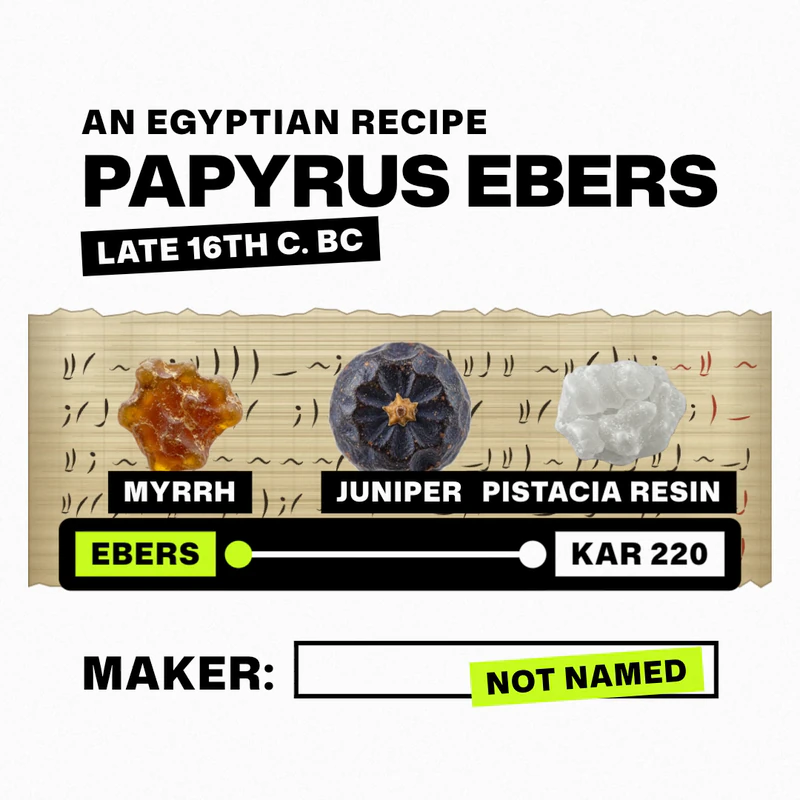
That makes the Egyptian recipe roughly 260 to 300 years older than Tapputi's (the last quarter of the 16th century BC runs from 1525 to 1501 BC). Myrrh and styrax appear in our guide to resinous fragrances.
So Tapputi was neither the first perfumer nor the author of the oldest recipe: what sets her apart is a dated credit line. We follow the perfumers who came after her in a separate guide.
Why is Tapputi called the first chemist?
Because her recipe is read as early chemistry, and hers is the name on it. The English Wikipedia article calls her "one of the world's first recorded chemists", citing a 1973 book by Martin Levey, and Escobar notes that she is "hailed as history's first chemist". The label is modern, and Escobar questions it: one of the questions that close his chapter asks about the "methodological drawbacks" of that title.
The chemistry reading itself belongs to the twentieth century: the 2014 Larsa study traces the first discussion of "the technology involved in aromatic preparation" to Levey's 1959 book, Chemistry and Chemical Technology in Ancient Mesopotamia.
Escobar also stresses the team behind the name. Evidence suggests, he writes, that perfume making was "a collective endeavour, requiring a coordinated team of skilled perfumers", and much of the craft, such as judging temperature and timing, stayed "tacit, embodied knowledge" that the tablet does not record. Whether Tapputi invented perfume is one of the claims we test in perfume myths and facts.
Part of Eau Facts, the Fragnatique team's series on fragrance history and science, also told in short videos on Instagram at @eaufacts. Researched from the sources listed above, drafted with AI assistance and checked against each source before publishing.
Frequently asked
- Is Tapputi Egyptian?
- No. Tapputi was Assyrian. Her recipe survives on KAR 220, a clay tablet excavated at Assur, in what is now northern Iraq, which the Cuneiform Digital Library Initiative dates to the Middle Assyrian period and Oracc's eponym list to 1239 or 1229 BC. Egypt has its own early evidence: Papyrus Ebers, from the last quarter of the 16th century BC, holds an older kyphi recipe, but it names no maker.
- What does the name Tapputi-Belatekallim mean?
- It joins a word for help to a goddess's name. The Chicago Assyrian Dictionary lists her name, from KAR 220, under the Akkadian noun tappûtu, "assistance, help". The second half, Bēlat-ēkalle, is the goddess Bēlet-ekallim, "Lady/Mistress of the Palace", according to a 2003 Würzburg doctoral thesis. Popular accounts render the whole name "Assistant of the Lady of the Palace"; none of the scholarly sources cited here translates it in full. Her title, muraqqītu, means perfume maker.
- Where is the Tapputi tablet today?
- In Berlin. The Cuneiform Digital Library Initiative records KAR 220 as kept in the Vorderasiatisches Museum under museum number VAT 10165, together with fragments VAT 10445 and VAT 12269. It was excavated at Assur, modern Qalat Sherqat, and KAR 220 is its publication number, from the series in which it was first printed. Its transliteration and an English translation are free to read in Oracc's 2021 edition.
- What was the first perfume ever made?
- No one can name the first. Kyphi, an Egyptian incense, is mentioned as early as the Pyramid Texts, says the UCLA Encyclopedia of Egyptology, but its earliest recipe is Papyrus Ebers 852, of the last quarter of the 16th century BC (Near Eastern Archaeology, 2021), and it names no maker. Larsa had a perfumer's workshop by about 1890 BC. Tapputi's recipe, of 1239 or 1229 BC, is the oldest dated one that names its maker.

Explore Fragnatique