The History of Perfume: A Sourced Timeline From Ancient Egypt to Today
A sourced history of perfume, from Egypt's Pyramid Texts and Tapputi's tablet (c. 1239 or 1229 BC) to Farina's Cologne firm of 1709 and EU rules in 2017.
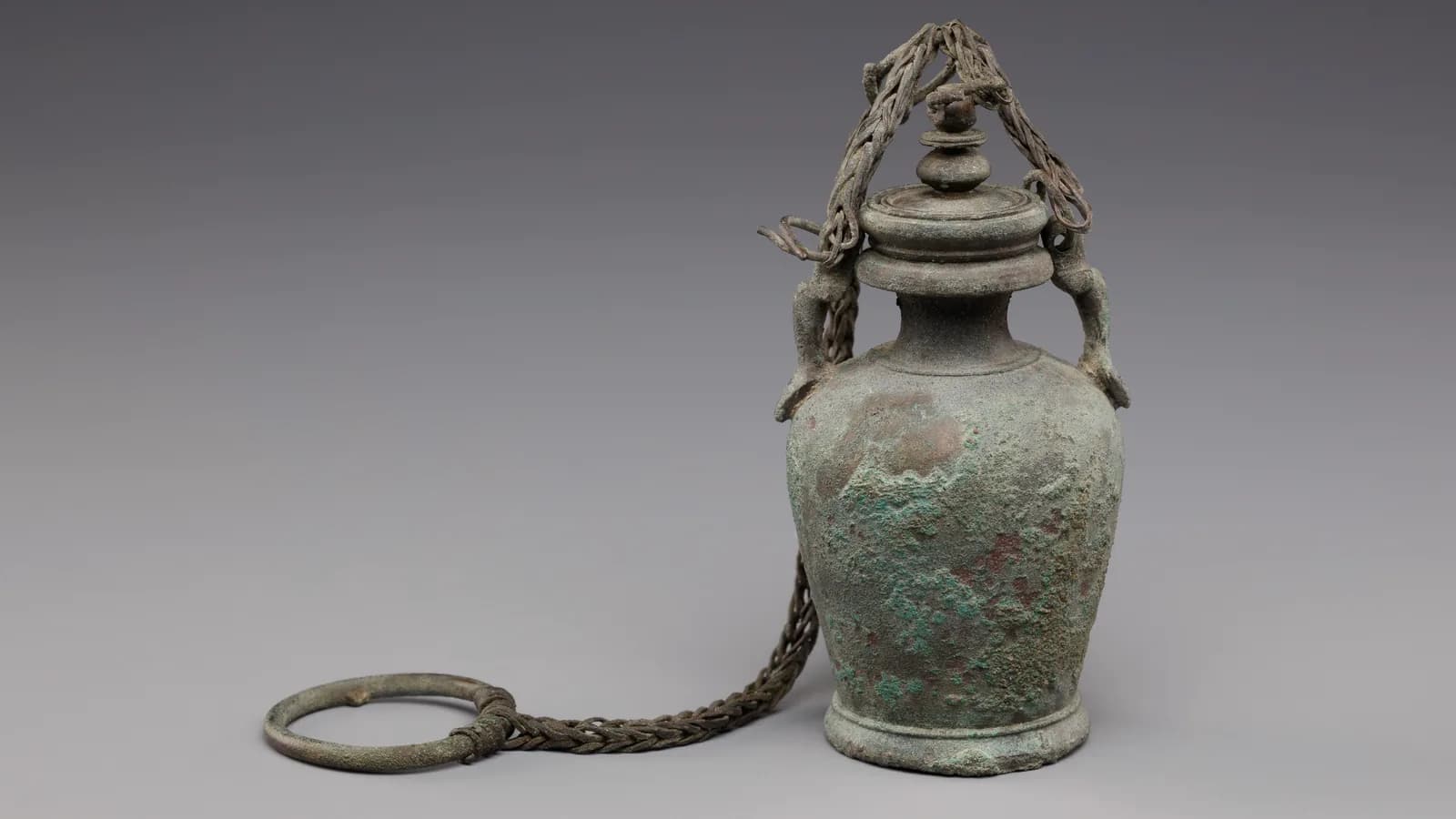
- 01Egypt's Pyramid Texts, carved from King Unis's reign (about 2353 to 2323 BC, says the Met), mention the scent kyphi; Larsa had a perfumer's workshop about 2000 to 1750 BC.
- 02The Assur tablet KAR 220 credits its perfume recipe to Tappūti-Bēlat-ēkalle; its eponym dates it to 1239 or 1229 BC, depending on the chronology, says ORACC.
- 03Germany's patent office says Farina (Cologne, 13 July 1709) "is assumed to be" the world's oldest perfume factory still in existence; Santa Maria Novella's perfume sales go back to 1381.
- 04Louis Vuitton, Dior and Hermès launched their first perfumes in 1927, 1947 and 1951, according to the houses and LVMH; Chanel dates N°5 to 1921.
- 05Regulation (EU) 2017/1410 banned synthetic HICC plus atranol and chloroatranol from oak moss and tree moss; since 23 August 2021, products containing them cannot be sold in the EU.
Perfume is older than every name attached to it. Its oldest dated traces here are a scent named in Egypt's Pyramid Texts, first carved in the 24th century BC, and a Mesopotamian workshop with a manager, not a recipe with an author. The first recipe that does carry a name was itself copied from an earlier tablet. From there the record runs through a Florentine pharmacy, the tanners of Grasse, eau de Cologne and the couture houses to today's rules, raw materials and owners, and a dated table closes the page.
How old is perfumery?
Perfumery goes back at least to Egypt's Old Kingdom, on the dated evidence here. The UCLA Encyclopedia of Egyptology says the scent kyphi is mentioned as early as the Pyramid Texts, and the Metropolitan Museum of Art says King Unis, who reigned about 2353 to 2323 BC, had such texts carved inside his pyramid, as did all later Old Kingdom kings.
In Mesopotamia, the oldest perfumer's workshop in this timeline formed part of the administration of the kingdom of Larsa in the Isin-Larsa period, about 2000 to 1750 BC in the Met's dating. Robert Middeke-Conlin studied Larsa's aromatics trade in the Cuneiform Digital Library Journal. He shows that an official named Lipit-Irra had been promoted to head that workshop by the fifth year of King Sumuel.
The first recipe in this timeline with its maker's name comes from Assur, in what is now northern Iraq. A clay tablet known as KAR 220 sets out how to make scented reed oil, and its closing lines, the colophon, credit the method to a woman, Tappūti-Bēlat-ēkalle. They are dated by the official who gave the year its name, Šunu-qardū, whom the Archival Texts of the Middle Assyrian Period project places in 1239 or 1229 BC, depending on the chronology, in a list it calls provisional. That is at least 500 years after the Isin-Larsa period ended, by our arithmetic.
Perfume-making ... for the head of the king, copied (from a tablet) according to the instruction of Tappūti-Bēlat-ēkalle the perfume maker.
KAR 220, colophon, in Jacob Jan de Ridder's 2021 translation for ORACC (CC BY-SA 3.0)
Her method was soaking, heating and straining, not distilling. In the ORACC translation of KAR 220, the aromatics stay overnight in water, and the liquid is sieved through cloth from one vessel to the next. Writing for UCL Press in 2023, Eduardo Escobar explains that 20 filtrations gave a grade for trade, while 40 gave an oil "fit for a king". He also notes that she is "hailed as history's first chemist", a title whose drawbacks his chapter asks readers to weigh.
Egypt also has an older recipe. The Papyrus Ebers is a medical scroll that Leipzig University Library dates to the last quarter of the 16th century BC, and the UCLA encyclopedia says it includes a recipe for kyphi, whose Egyptian name meant "a substance to be smoked". So Tapputi's is not the oldest perfume recipe. It is the oldest in this timeline that credits a named maker, the record our article on Tapputi examines.
Who made perfume in the Middle Ages and the Renaissance?
In this timeline, medieval perfume came from two trades that began with other work: friars who made medicine and tanners who made gloves. In Florence, Santa Maria Novella counts its continuity from 1221. That year, twelve Dominican friars obtained the use of a site just outside the inner city walls, where they established the Orto dei Semplici, a botanical garden for their infirmary. The earliest confirmed record of its scented production is a sale of perfumed waters in 1381, among them Acqua di Rose.
The pharmacy opened to outsiders much later. On 15 October 1612, the house says, a council of the convent voted to establish a public pharmacy. The Museo Galileo agrees that it "was officially born in 1612" and dates the first documentation of its fragrances to 1381. That is why one house has two founding years: 1221 for the friars and 1612 for the public shop.
Grasse was a leather town before it was a perfume town. The Musée du Parfum in Paris says a large tanning industry gave Grasse a European reputation in the 15th century. Perfumed gloves, which masked the smell of tanned leather, were in fashion, and the town gave itself over to perfumed skins until perfumery gradually became the only work of its factories. UNESCO listed the perfume skills of the Pays de Grasse as intangible heritage in 2018. Its listing dates them to "at least the sixteenth century", in "a craft industry long dominated by leather tanning".
A popular story credits Catherine de' Medici with the change after a visit. The museum tells it in the conditional and adds that no document truly attests the queen's visit to Grasse. It stays a legend.
What changed in perfume between 1700 and 1900?
Perfume became a branded product. Germany's patent and trademark office, the DPMA, dates the Farina company to 13 July 1709, when Giovanni Battista Farina founded it in Cologne. In its account, the firm mainly sold fashion goods until his younger brother Johann Maria joined in 1714. Johann Maria then developed a fragrance water built on bergamot, lemon and orange rather than musk, and later named it Eau de Cologne. Farina's own history folds all of this into 1709, with Johann Maria as founder and creator. It also says his scent was the first to combine bergamot and other citrus oils with pure alcohol, and that Eau de Cologne "marks the beginning of modern perfumery". We follow the DPMA on dates: it is a public office, and its account is the more detailed.
Existing for more than three centuries, it is assumed to be the world's oldest perfume factory still in existence.
Deutsches Patent- und Markenamt, "World's oldest perfume manufacturer"
The claim is hedged and limited to factories: Santa Maria Novella, which the Museo Galileo counts among the oldest working pharmacies, has records of perfume making from 1381.
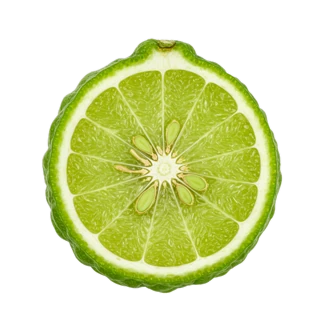
The scent travelled. The DPMA says eau de Cologne dominated the perfumery market at least until the end of the 19th century. The Fondation Napoléon describes Napoleon being rubbed down with it after his bath and shave, without naming a maker; Farina counts him among its loyal customers.
Imitators followed. In a newspaper notice of 20 September 1805, the original house said a rival, Wilhelm Mülhens, had "bought" the name of another Farina. In 1873, the DPMA records, the Mülhens firm was at last forbidden to use "Farina" in its company name; since then that name has included Glockengasse No. 4711.
Other houses that still trade took shape in these two centuries, and our guide to the oldest perfume houses checks their dates. Floris says it began selling perfume, combs and shaving products in London's St James in 1730. Its first royal warrant, in 1820, named it "Smooth Pointed Comb Maker" to King George IV. Hermès began in 1837 as a Paris harness workshop, its 2021 universal registration document says. In 1853, W Magazine reports, Guerlain created Eau de Cologne Impériale for Empress Eugénie's marriage to Napoleon III.
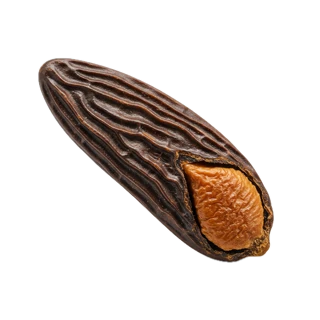
Chemistry arrived before 1900. The Osmothèque says coumarin was isolated from the tonka bean in 1820 and first made synthetically in 1868, by the chemist William Perkin. Paul Parquet, perfumer and co-owner of Houbigant, used coumarin in Fougère Royale, the perfume that named the fougère family described in our guide to fragrance families. Houbigant and a 1994 Perfumer & Flavorist article date it to 1882; the Osmothèque says 1884. We use 1882, the year two sources share, one of them the house. The 1994 article adds that Fougère Royale was first used in soap.
When did fashion houses start making perfume?
Fashion houses started making perfume by 1911, on the record that Guinness World Records keeps: it names Nuit Persane, launched in Paris that year by the couturier Paul Poiret, as the first designer perfume. In this timeline the houses follow from 1921, with Chanel's N°5 and then the first perfumes of Louis Vuitton, Dior and Hermès.
Before Poiret, a jeweller had turned to perfume bottles. Lalique dates to 1907 the start of a partnership with the perfumer François Coty, who was so impressed by René Lalique's designs that he asked him to work for perfume. The V&A says Coty first commissioned perfume bottle designs from Lalique in 1908, and the Musée Lalique calls the collaboration "a powerful springboard" for Lalique's career as a master glassmaker.
Chanel's N°5 page says that in 1921 Gabrielle Chanel asked the perfumer Ernest Beaux for a woman's fragrance. She chose the fifth sample he made and named it N°5 (Chanel No. 5), and the house credits Beaux with an "unprecedented use of aldehydes". The claim that N°5 is the best-selling perfume ever has no public lifetime sales figure behind it that we could find. LVMH's 2024 annual results said Dior's Sauvage "remained the world's best-selling fragrance"; its 2025 results, published on 27 January 2026, say it "remained the world's best-selling men's fragrance".
Louis Vuitton launched its first perfume, Heures d'Absence, in 1927, naming it after the family's country home in Seine-et-Marne. The house says "the original formula has long since been lost".
Miss Dior, the house's first fragrance, was created in 1947 and inspired by Christian Dior's sister Catherine, LVMH says. A book essay published by the Pritzker Military Museum and Library says she was a member of the F2 Resistance network by at least November 1941, while her Resistance service record dates her F2 service from 1 July 1943. Arrested on 6 July 1944, she survived Ravensbrück and other camps, the essay adds. When she returned to France on 28 May 1945, she was so emaciated that her brother did not recognize her.
Hermès took 114 years to make its first perfume, Eau d'Hermès, composed by Edmond Roudnitska, by our arithmetic from its own dates of 1837 and 1951. The house's product page says it evokes "the inside of a Hermès bag in which the aroma of a perfume lingers". Later came Calvin Klein's CK One, which Coty says launched at Tower Records in 1994. Fabien Baron, who designed its frosted flask, told System Magazine he gave it a twist cap "just like a bottle of Coke". Our overview of the first perfumes of fashion houses compares them.
Which molecules and noses changed perfume after 1900?
A few materials and teachers stand out: aldehydes in N°5, Hedione, Iso E Super, and Jean Carles's way of training noses. Carles, a perfumer at Roure, founded in 1946 the perfumery school that is now Givaudan's. His method, which "organised raw materials by similarity and contrast, is still the standard for perfumery training", Givaudan says. The same page credits him with the original Miss Dior.
Hedione shows how little a molecule needs to smell of to matter. Firmenich, which makes it, says one of its scientists discovered it in 1958. It "does not necessarily increase strength, but does bestow presence, noticeability, and diffusion", the company adds. A University of Bristol profile dates the discovery to 1959 and gives the doses. Edmond Roudnitska put 2.5 percent in Dior's Eau Sauvage in 1966, while Hedione was still expensive; Comme des Garçons' Odeur 53 used 65 percent in 1998.
A 2019 chemistry review dates Iso E Super to 1972 and the creation of Molecule 01, a perfume of nothing else, to 2005, while Escentric Molecules' journal says Molecule 01 launched in 2006. The house's FAQ page confirms that Iso E Super is its only ingredient.
Alberto Morillas studied at the Beaux-Arts in Geneva before joining Firmenich in 1970. He "is considered mostly self-trained", The Fragrance Foundation said in 2013, listing CK One among his creations. Our profiles of famous perfumers follow him, Carles, Roudnitska and Parquet. Our notes pyramid guide shows where such materials sit.
What shapes perfume today?
Three forces recur in the recent record: rules, raw materials and owners. Wildlife rules came first, in three steps dated by Species+, the database UNEP-WCMC keeps for CITES. One musk deer subspecies went on Appendix I on 1 July 1975; on 28 June 1979 the whole genus followed, in Appendix II, with a Himalayan population in Appendix I. Since 29 July 1983, six countries' populations have been in Appendix I, which bars international commercial trade in wild specimens, a 2004 TRAFFIC report explains, though it dates that rule to 1979.
Allergy rules followed. Commission Regulation (EU) 2017/1410 of 2 August 2017 prohibited three fragrance allergens which, it says, caused the highest number of contact allergy cases in past years. One is HICC, which the EU's Scientific Committee on Consumer Safety calls "a synthetic fragrance chemical". The other two, atranol and chloroatranol, are natural components of oak moss and tree moss extracts. From 23 August 2021, cosmetic products containing them may not be made available on the EU market. The rule treats natural and synthetic alike: natural is not automatically safer.
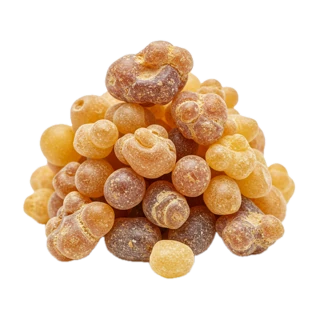
Natural supply is under pressure. Frankincense now comes mainly from the tree Boswellia papyrifera. A 2019 study in Nature Sustainability found that over 75 percent of studied populations lacked small trees. The authors projected that production would halve in 20 years, and blamed cattle grazing, frequent burns and reckless tapping.
Owners change too. The Estée Lauder Companies completed its purchase of the Tom Ford brand on 28 April 2023, in a deal that valued it at $2.8 billion. It said it licenses the name to Zegna for fashion and to Marcolin for eyewear. Ajmal says its founder opened his first shop in Mumbai in 1951 with 500 rupees. In 2026, as it approached its 75th anniversary, the house renamed itself Ajmal Dubai, Campaign Middle East reports.
Records and studies need the same care as legends. Guinness World Records names Clive Christian No1 as the most expensive perfume commercially available. Its record figure comes from No1 Imperial Majesty, a 10-bottle edition of November 2005 priced at £115,000 (then $205,000) per 500 ml. Dubai's Shumukh holds a different record, for the 3,571 diamonds on its bottle.
In a 2015 lab test, two hours after Victoria's Secret Bombshell was applied, 18 percent of Aedes aegypti mosquitoes went to the treated hand. A bare hand drew 58 percent, though the authors call their dose "rather high". More claims are checked in perfume myths and facts.
What are the key dates in perfume history?
These are the dated events of this timeline, oldest first. Where sources disagree, the evidence column names both and says which we follow.
| Date | What happened | Where | Evidence | Read more |
|---|---|---|---|---|
| c. 2353 to 2323 BC onward | The Pyramid Texts, carved for Old Kingdom kings from Unis on, mention kyphi | Egypt | UCLA Encyclopedia of Egyptology for kyphi; the Met for Unis's reign | Tapputi's tablet |
| c. 2000 to 1750 BC | Lipit-Irra heads a perfumer's workshop by Sumuel's fifth year | Larsa, Mesopotamia | Middeke-Conlin, CDLJ 2014:1; period dates from the Met | Tapputi's tablet |
| Last quarter of the 16th century BC | The Papyrus Ebers includes a kyphi recipe | Egypt (bought at Thebes) | Leipzig University Library; UCLA Encyclopedia of Egyptology | Tapputi's tablet |
| c. 1239 or 1229 BC | KAR 220 credits a reed oil recipe to Tappūti-Bēlat-ēkalle | Assur | ORACC translation; provisional TCMA eponym list (Escobar: c. 1230 BCE) | Tapputi's tablet |
| 1221, 1381 and 15 Oct 1612 | Friars obtain the site of their botanical garden; first recorded sale of perfumed waters; public pharmacy | Florence | Santa Maria Novella; Museo Galileo confirms 1381 and 1612 | Santa Maria Novella |
| 15th century | Tanning makes Grasse famous; perfumed gloves follow | Grasse | Musée du Parfum (no document of the queen's visit); UNESCO, 2018 | Grasse |
| 13 Jul 1709 | Farina is founded; the DPMA puts its bergamot, lemon and orange water after Johann Maria joined in 1714 | Cologne | DPMA; the house puts founder Johann Maria and his scent in 1709; we follow the DPMA | Eau de Cologne |
| 1730 and 1820 | Floris opens; its first royal warrant is for combs | London | Floris | Floris |
| 1837 | Thierry Hermès opens a harness workshop | Paris | Hermès, 2021 universal registration document | Eau d'Hermès |
| 1853 | Guerlain's Eau de Cologne Impériale for Empress Eugénie | Paris | W Magazine (press) | Guerlain |
| 1882 | Paul Parquet's Fougère Royale, first used in soap | Houbigant, Paris | Houbigant and Perfumer & Flavorist (1994): 1882; Osmothèque: 1884; we use 1882 | Fougère |
| 1907 or 1908 | François Coty turns to René Lalique for perfume bottles | France | Lalique: 1907; V&A: 1908 for the first bottle commission | Lalique and Coty |
| 1911 | Paul Poiret's Nuit Persane, the first designer perfume on the Guinness record | Paris | Guinness World Records | First perfumes of fashion houses |
| 1921 | Ernest Beaux's N°5 for Chanel | Chanel | Chanel; LVMH (2024 and 2025) for Sauvage | Chanel N°5 |
| 1927 | Louis Vuitton's first perfume, Heures d'Absence | Louis Vuitton | Louis Vuitton (formula lost) | Heures d'Absence |
| 1946 | Jean Carles, a Roure perfumer, founds the perfumery school Givaudan now runs | Roure, now Givaudan | Givaudan | Jean Carles |
| 1947 | Miss Dior, inspired by Catherine Dior | Dior | LVMH; Pritzker Military Museum and Library | Miss Dior |
| 1951 | Eau d'Hermès by Edmond Roudnitska | Hermès, Paris | Hermès product page | Eau d'Hermès |
| 1951 | Ajmal's founder opens his first shop with 500 rupees | Mumbai | Ajmal; Campaign Middle East for the 2026 rename | Ajmal |
| 1966 | Eau Sauvage uses Hedione at 2.5 percent | Dior | University of Bristol; discovery 1958 (Firmenich) or 1959 (Bristol); we give the maker's year | Hedione |
| 1970 | Alberto Morillas joins Firmenich | Firmenich | The Fragrance Foundation, 2013 | Alberto Morillas |
| 1975 to 1983 | Musk deer enter CITES: a subspecies (1975), the whole genus (1979), six countries' populations on Appendix I (1983) | International | Species+; TRAFFIC (2004) dates the six-country rule to 1979 | Musk deer |
| 1994 | CK One launches | Tower Records | Coty, 2024; Fabien Baron in System Magazine for the cap | CK One |
| Nov 2005 | No1 Imperial Majesty, the 10-bottle edition behind Clive Christian No1's Guinness price record | London and New York | Guinness; Shumukh's 2019 record is for diamonds | Most expensive perfume |
| 2005 or 2006 | Molecule 01: Iso E Super and nothing else | Escentric Molecules | Beilstein review (2019): created in 2005; Escentric Molecules: launched in 2006 | Molecule 01 |
| 2015 | Bombshell draws fewer mosquitoes than a bare hand | New Mexico State University | Journal of Insect Science; one study | Mosquitoes |
| 2 Aug 2017 | EU bans HICC, atranol and chloroatranol; sales end 23 Aug 2021 | European Union | Regulation (EU) 2017/1410; SCCS, 2012 | Natural or synthetic |
| 1 Jul 2019 | Study finds frankincense's main tree collapsing | Boswellia papyrifera's range | Bongers and others, Nature Sustainability | Frankincense |
| 28 Apr 2023 | Estée Lauder completes its Tom Ford purchase | New York | Estée Lauder Companies | Tom Ford |
Part of Eau Facts, the Fragnatique team's series on fragrance history and science, also told in short videos on Instagram at @eaufacts. Researched from the sources listed above, drafted with AI assistance and checked against each source before publishing.
Frequently asked
- When was perfume invented?
- None of the sources we read gives perfume an invention date. The oldest dated evidence here is Egyptian: the UCLA Encyclopedia of Egyptology says the scent kyphi is mentioned as early as the Pyramid Texts, which the Met says King Unis, who reigned about 2353 to 2323 BC, had carved inside his pyramid. A perfumer's workshop served the kingdom of Larsa, in Mesopotamia, about 2000 to 1750 BC, and the Assur tablet KAR 220, of 1239 or 1229 BC, credits its recipe to Tappūti-Bēlat-ēkalle.
- Where did perfume originate?
- No single place, on the evidence we found. In Egypt, the scent kyphi is mentioned as early as the Pyramid Texts, carved in pyramids from the reign of Unis, about 2353 to 2323 BC, say the UCLA Encyclopedia of Egyptology and the Met. In Mesopotamia, a perfumer's workshop served the kingdom of Larsa about 2000 to 1750 BC, and the oldest recipe in this timeline naming its maker comes from Assur, in today's northern Iraq. These are the oldest records in our sources, not proof of a single birthplace.
- When was modern perfume invented?
- No source we read settles it, and different milestones compete. Farina's own history says its 1709 Eau de Cologne, which first combined bergamot and other citrus oils with pure alcohol, marks the beginning of modern perfumery. Chemistry offers later markers: the Osmothèque says coumarin was first made synthetically in 1868, Houbigant dates Fougère Royale, built with coumarin, to 1882, and Chanel credits N°5 of 1921 with an unprecedented use of aldehydes.
- When was cologne invented?
- Eau de Cologne dates from the early 1700s in Cologne. Germany's patent and trademark office says Giovanni Battista Farina founded the firm there on 13 July 1709, and that his brother Johann Maria, who joined in 1714, developed the fragrance water of bergamot, lemon and orange and later named it Eau de Cologne. Farina's own history puts both the founding and the scent in 1709.
Explore Fragnatique