Does Perfume Attract Mosquitoes? What One Lab Study Found
One 2015 lab test says no: two hours after Victoria's Secret Bombshell was applied, 18 percent of mosquitoes flew to that hand, 58 percent to a bare hand.
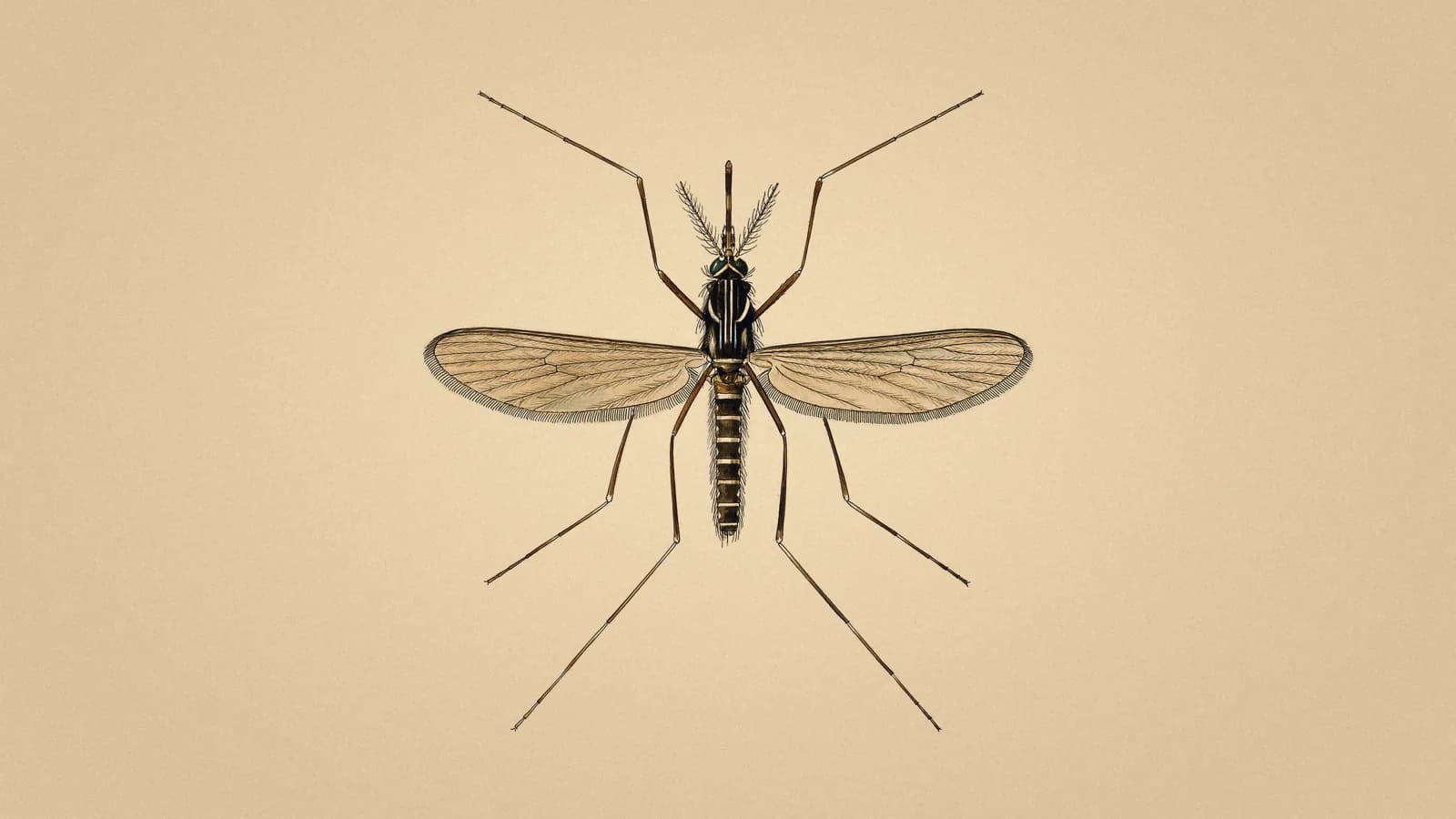
- 01In a 2015 Journal of Insect Science study, a hand wearing Victoria's Secret Bombshell drew 18 percent of Aedes aegypti mosquitoes after two hours; a bare hand drew 58.
- 02The 2015 authors call the perfume concentration they used "rather high" and say lower concentrations of the same fragrance might have different effects.
- 03In the 2015 study, Bombshell's effect was no longer significant at four hours: 47 percent of Aedes aegypti reached the perfumed hand, against a 61 percent bare-hand baseline.
- 04In a 2019 PNAS study, Aedes mosquitoes were drawn to a nonanal-rich orchid scent, but not once one compound, lilac aldehyde, was raised to related orchids' levels.
- 05The 2015 authors call DEET repellents "the most effective mosquito repellents in the market"; the CDC advises EPA-registered repellents and says it does not know how well unregistered ones work.
"Avoiding perfumed cosmetics" heads the list of measures people take against mosquito bites in a 2006 trial in the British Columbia Medical Journal. When a 2015 lab study tested one floral perfume, fewer mosquitoes went to the perfumed hand, not more.
Does perfume attract mosquitoes?
One peer-reviewed lab test says no, at least for one floral perfume: for about two hours, a hand wearing Victoria's Secret Bombshell drew a smaller share of mosquitoes than a bare hand. The 2015 Journal of Insect Science study comes from Stacy Rodriguez, Immo Hansen and colleagues at New Mexico State University.
On average, 18 percent of the yellow fever mosquitoes (Aedes aegypti) in a run reached the perfumed hand 120 minutes after application. In the control runs at that check, 58 percent reached a bare hand.
That is one perfume, at one concentration, in one laboratory, and the authors warn that lower concentrations of the same fragrance "might have different effects". The test also counted where mosquitoes flew, not bites. One test cannot settle the general question, so our perfume myths and facts check rates the claim unproven.
What did the 2015 study test?
The 2015 Journal of Insect Science study tested whether seven repellent sprays, two fragrances and a vitamin B1 skin patch kept two mosquito species away from a human hand. The fragrances were Victoria's Secret Bombshell and Avon Skin So Soft Bath Oil, which the paper says "has been used as a home remedy for mosquito repellency". The species, "both major human disease vectors" in the abstract's words, were Aedes aegypti and Aedes albopictus, the Asian tiger mosquito.
The test used a Y-shaped tube, an olfactometer, built to a blueprint in the World Health Organization's 2013 guidelines, with modifications. In each run, 20 female mosquitoes, starved for a day, were held for 30 seconds in the hand's odor, then had two minutes to fly toward either arm.
One arm ended at the treated hand of a co-author, chosen because pilot tests found her a "superior attractant". Her other hand, in a nitrile glove, sat at the end of the other arm. The attraction rate is the share of the 20 found at the treated hand.
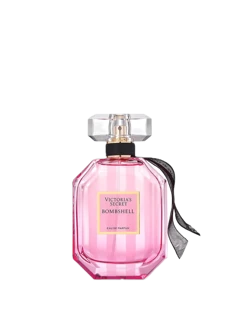
Each product was checked right after application and at 30, 120 and 240 minutes, five runs per check, over three months; the vitamin patch went on two hours before the first check. The methods give about 0.5 ml for the sprayed repellents and no amount for the perfume, which the reference list identifies as Bombshell Eau de Parfum. The discussion, citing the brand's 2015 product page, describes it as "Fruity floral notes: Purple passion fruit, Shangri-la peony, Vanilla orchid".

How many mosquitoes went to the perfumed hand?
In the 2015 test, fewer mosquitoes went to the perfumed hand than to a bare hand, and the difference held up statistically for about two hours. Through 120 minutes, the perfumed hand's share stayed significantly below the bare-hand baseline; at 240 minutes it no longer did, for either species. For Aedes aegypti (Table 2), next to the bare hand at the same check:
- Right after application: 17 percent at the perfumed hand, 61 percent at the bare hand
- After 30 minutes: 15 percent, against 61
- After 120 minutes: 18 percent, against 58
- After 240 minutes: 47 percent, against 68; no longer significantly below the baseline
The paper tests every result against the bare hand at the first check (61 percent for this species, 41 for the Asian tiger mosquito), not against the bare hand at the same check. The Asian tiger mosquito followed the same pattern in Table 3: 17 percent against 41 at 120 minutes, and no significant difference at 240. The study's other fragrance, Avon Skin So Soft Bath Oil, also cut Aedes aegypti attraction through 120 minutes but not at 240, and had no significant effect on the Asian tiger mosquito.
The paper's abstract speaks of "a modest repellency effect early after application"; its discussion calls the perfume "a strong repellent with effects lasting longer than 120 min". The tables show significance through 120 minutes, not at 240, so "longer than 120 min" goes beyond what was measured.
It must be noted that the concentration of perfume we used in this test was rather high
Stacy D. Rodriguez and colleagues, Journal of Insect Science, 2015
Why fewer mosquitoes went to the perfumed hand was not tested. The authors suggest floral fragrances "may provide a masking odor", lowering attraction "over a shorter duration of time"; that is a proposal, not a measurement.
Why might floral scents draw mosquitoes?
Mosquitoes feed on flower nectar and find it partly by scent, so some floral scents do draw them. A study of orchid scent in the Proceedings of the National Academy of Sciences (PNAS) was published in December 2019 by Chloé Lahondère, Jeffrey Riffell and colleagues, mostly at the University of Washington. It notes that nectar feeding helps both sexes live longer and reproduce, and that males need it to survive.
The team watched a small green orchid, Platanthera obtusata, in northern Washington State: more than 581 flowers over 47 hours, with 57 feeding visits by mosquitoes, mainly of the genus Aedes. Pollen masses stuck to the visitors' eyes, and the team showed they pollinate the orchid. Its scent is faint, "grassy- and musky-type", and rich in nonanal, an aldehyde: the class of molecules that Chanel says its N°5 (No. 5) used as never before.
In the lab, Aedes aegypti, the species of the 2015 perfume test, was drawn to an artificial copy of that scent. Without one minor compound, lilac aldehyde, the pull fell to near that of an odorless control. With lilac aldehyde raised to the levels of related orchids, which carry 6 to 40 times more of it and are not visited by mosquitoes, the attraction was lost.
The team also recorded the mosquitoes' brain responses. In Aedes aegypti, the cluster in the smell center that responded most strongly to lilac aldehyde, called AM2, responded next most strongly to DEET, a repellent.
None of this tested a perfume. It shows that "floral" is not one signal to a mosquito: in the lab, shifting the balance of two compounds was enough to end the attraction. A floral perfume is another mixture again; our guide to the floral family shows how varied the family is.
The 2015 paper's only citation for "other studies have shown that floral scents attract mosquitoes" is the 2006 British Columbia Medical Journal trial. That trial compared 95% DEET, Avon Skin So Soft bath oil and a "special mixture" against a placebo by counting bites and landings; it tested no scent for attraction.
What draws mosquitoes to people?
Smell does much of the work: the 2015 paper calls it one of the most important senses mosquitoes use to find a host from a distance. It names lactic acid and 1-octen-3-ol as strong attractants, and carbon dioxide from breath as another, one that "sensitizes mosquitoes to other odorants". Many known attractants and repellents, it notes, come from human metabolism or from bacteria breaking down sweat.
People also differ. The PNAS team writes that human odors, like floral scents, are mixtures whose ratios can differ between individuals, which "may explain" why mosquitoes prefer some people over others. The Environmental Protection Agency (EPA) lists "how attractive you are to mosquitoes and ticks" among the factors in how well a repellent works, in its advice on using insect repellents safely.
What actually repels mosquitoes?
In the 2015 test, the DEET sprays and a spray of oil of lemon eucalyptus held off the yellow fever mosquito longest. The Centers for Disease Control and Prevention (CDC) and the EPA point people to EPA-registered repellents. Shares of Aedes aegypti at the treated hand, all from Table 2 of the 2015 paper:
| Product tested | At 120 minutes | At 240 minutes |
|---|---|---|
| Bare hand (control) | 58% | 68% |
| Victoria's Secret Bombshell, perfume | 18% | 47%, not significant |
| Avon Skin So Soft Bath Oil, fragrance | 43% | 53%, not significant |
| Spray with 98.11% DEET | 15% | 14% |
| Spray with 25% DEET | 14% | 29% |
| Spray with 7% DEET | 17% | 30% |
| Spray with 30% oil of lemon eucalyptus | 13% | 18% |
| Spray with 10% citronella oil | 52%, not significant | 67%, not significant |
| Spray with 5% geraniol and 2% soybean oil | 64%, not significant | 65%, not significant |
| Spray with 1% geraniol and three plant oils | 68%, not significant | 67%, not significant |
| Vitamin B1 (thiamine) skin patch | 48%, not significant | 68%, not significant |
"Not significant" means not significantly different from the bare hand at the first check (61 percent), the baseline the paper tests every value against. The paper lists the lemon eucalyptus oil as 65 percent p-menthane-3,8-diol (PMD).
The authors conclude that DEET repellents are "the most effective mosquito repellents in the market". They rate the lemon eucalyptus spray as similar in strength and duration, although their abstract says such repellents worked "for shorter time periods". Against this species, the citronella spray and the geraniol and soybean oil spray did little, and the 1 percent geraniol spray worked only right after application.
Against the Asian tiger mosquito, the 1 percent geraniol spray, made with rosemary, cinnamon and lemongrass oils, was still significant at four hours, while the 25 and 7 percent DEET sprays were not (Table 3). The patch did nothing for either species.
On its Preventing Mosquito Bites page, the CDC advises EPA-registered repellents with one of six active ingredients: DEET, picaridin (called icaridin outside the United States), IR3535, oil of lemon eucalyptus (OLE), para-menthane-diol (PMD) or 2-undecanone. Used as directed, it says, they are "proven safe and effective".
We do not know the effectiveness of non-EPA registered insect repellents, including some natural repellents.
Centers for Disease Control and Prevention, Preventing Mosquito Bites
The EPA's page on regulating skin-applied repellents says registration means a product was evaluated for human safety and effectiveness when used as the label directs; registered products carry an EPA registration number. Some products made from minimal-risk ingredients, citronella oil and soybean oil among them, are exempt, and those "have not been evaluated for effectiveness". In the study's product table, the protection-time column reads "Not Recommended" for both fragrances. Whether natural ingredients are kinder to skin is a separate question, taken up in our check of natural versus synthetic perfume safety.
Part of Eau Facts, the Fragnatique team's series on fragrance history and science, also told in short videos on Instagram at @eaufacts. Researched from the sources listed above, drafted with AI assistance and checked against each source before publishing.
Frequently asked
- Does perfume repel mosquitoes?
- Not as a dependable repellent. In the 2015 Journal of Insect Science test, a hand wearing Victoria's Secret Bombshell drew fewer mosquitoes than a bare hand for two hours, at a concentration the authors call rather high, but by four hours the drop was no longer significant. The study's product table lists no protection time for Bombshell, only 'Not Recommended'. The CDC advises EPA-registered repellents, such as those with DEET or picaridin.
- Which Victoria's Secret perfume was tested on mosquitoes?
- Bombshell Eau de Parfum, according to the reference list of the 2015 Journal of Insect Science paper; it was the only Victoria's Secret product in the test. The paper describes it as fruity floral, with passion fruit, peony and vanilla orchid notes, and calls the concentration used rather high. Two hours after it was applied, 18 percent of Aedes aegypti flew to that hand, against 58 percent to a bare hand.
- What scents do mosquitoes hate?
- In the 2015 Journal of Insect Science test, the products that kept mosquitoes away longest were repellents, some of them plant-based, not perfume. A spray of oil of lemon eucalyptus, rich in PMD, still cut Aedes aegypti attraction at four hours, while a 10 percent citronella spray did little against that species. A geraniol spray with rosemary, cinnamon and lemongrass oils held off the Asian tiger mosquito for four hours. The CDC lists oil of lemon eucalyptus and 2-undecanone as plant-derived repellent ingredients.

Explore Fragnatique