Is Natural Perfume Safer Than Synthetic? What EU Rules Show
Not automatically: a 2017 EU rule banned two natural oak moss allergens and synthetic HICC; since 23 August 2021, products with them can't be sold in the EU.
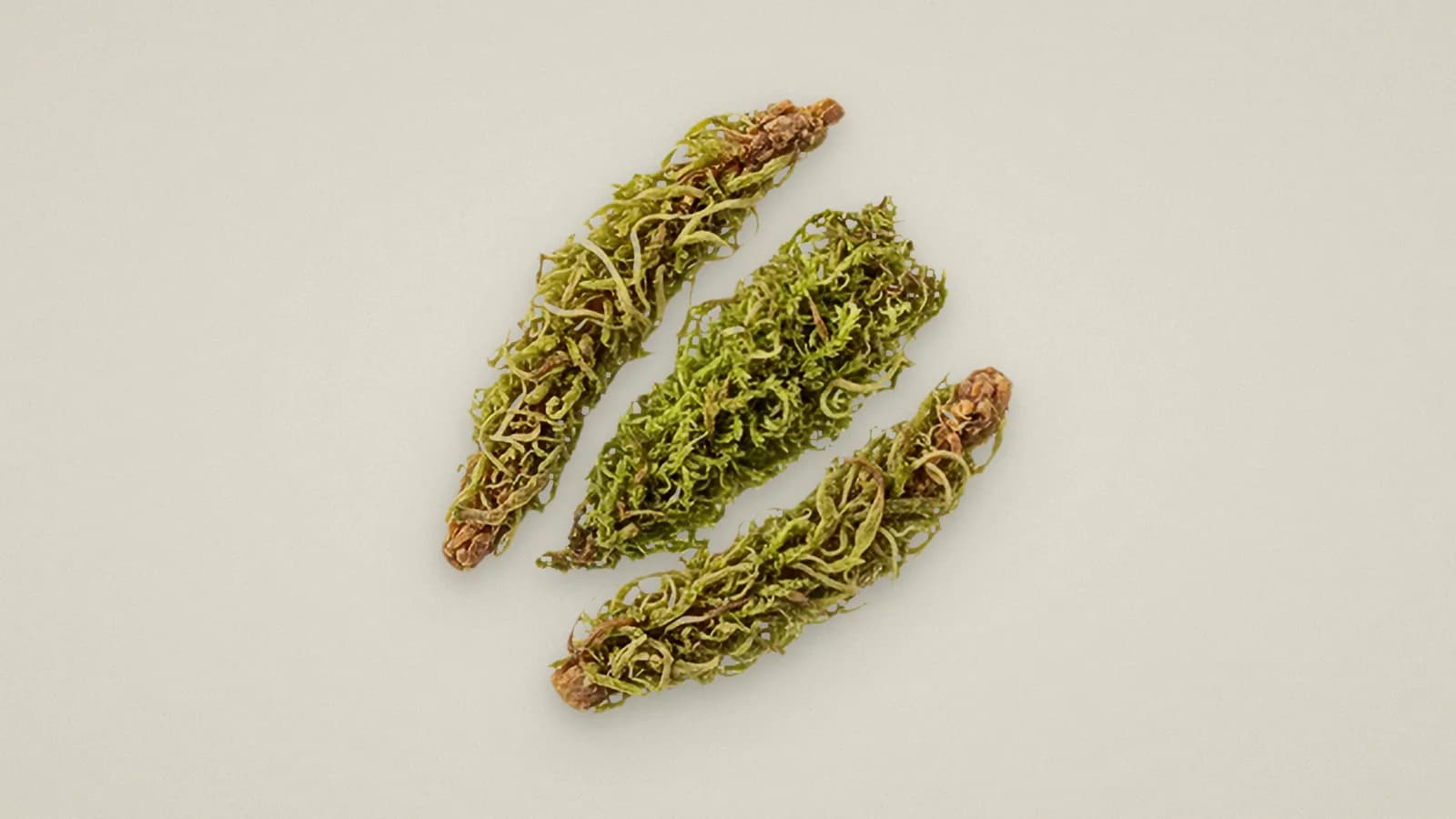
- 01Regulation (EU) 2017/1410 banned three fragrance allergens together: atranol and chloroatranol, natural components of oak moss and treemoss extracts, and the synthetic HICC.
- 02Since 23 August 2021, Regulation (EU) 2017/1410 has kept cosmetics containing HICC, atranol or chloroatranol off the EU market, old stock included.
- 03In 2012 the EU's Scientific Committee on Consumer Safety classed 82 substances as established contact allergens in humans: 54 single chemicals and 28 natural extracts, including jasmine and sandalwood.
- 04Oak moss extract is still allowed in the EU, but Regulation (EC) No 1223/2009 requires it to be named on ingredient lists above 0.001 percent in leave-on products.
- 05ISO 16128, the guideline for natural and organic cosmetic ingredients, says it does not address claims, labeling or human safety: its natural index measures origin, not safety.
Can natural fragrance ingredients cause allergies?
Yes. The EU's Scientific Committee on Consumer Safety (SCCS), which advises the European Commission, classed 82 substances as established contact allergens in humans in its 2012 opinion on fragrance allergens. Of those, 54 are single chemicals and 28 are natural extracts. So the belief that natural means safer, one of the claims checked in Perfume Myths and Facts, does not hold as a rule.
That split does not follow origin. In the committee's terms, a single chemical may be of natural or synthetic origin, as long as its identity is fully known. A natural extract is a mixture derived from a plant or an animal, such as lavender oil, so animal materials like real musk count as natural too.
Natural extracts rank high. The SCCS flagged twelve chemicals and eight natural extracts as allergens of special concern, with more than 100 published cases each. The eight are ylang-ylang, clove, jasmine and sandalwood oils, oak moss, treemoss, balsam of Peru and turpentine.
When it suggested a general limit for allergens of concern, the committee said the limit follows the molecule, not its source:
the maximum use concentration applies to the identified chemicals both if added as chemicals or as an identified constituent of a natural ingredient
Scientific Committee on Consumer Safety, Opinion on fragrance allergens in cosmetic products (SCCS/1459/11), 2012
What is oakmoss, and why did the EU act?
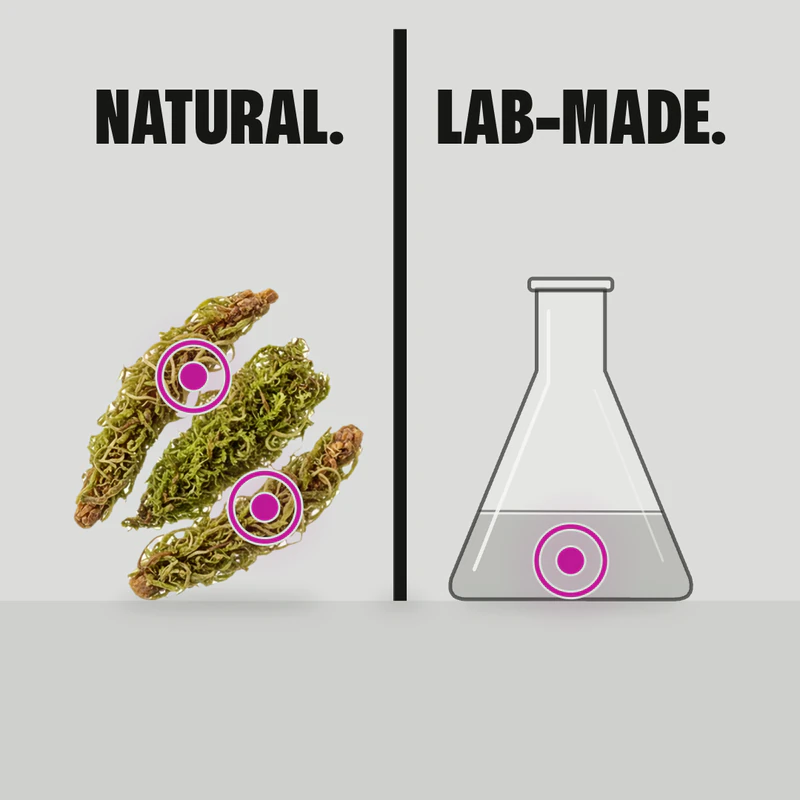
Oak moss (often written oakmoss) is a lichen, Evernia prunastri, and its extract is used in perfumery as oak moss absolute. It is a classic material of the fougère family, and Fragnatique files it under the earthy family, one of the eight in our guide to the fragrance families.
A 2014 usage study in Acta Dermato-Venereologica calls two of its constituents, atranol and chloroatranol, strong contact allergens. The SCCS describes the pair, which also occur in treemoss, as very potent fragrance allergens.
The SCCS uses a general threshold of 0.8 micrograms per square centimeter of skin, which it equates to 0.01 percent in a cosmetic product. In a statistical analysis of published patch tests, that was the median dose setting off allergic contact dermatitis in 10 percent of sensitized eczema patients. For chloroatranol, the SCCS gives an elicitation threshold of 0.0004 micrograms per square centimeter under similar experimental conditions: 2,000 times lower, by our arithmetic.
The warning came early. In 2004, the 2012 opinion recalls, an earlier EU committee, the Scientific Committee on Consumer Products, concluded that the two molecules should not be present in consumer products. Contact allergy to both mosses stayed frequent among eczema patients. The SCCS's own verdict, in 2012:
The SCCS is of the opinion that the presence of the two constituents, chloroatranol and atranol, in cosmetic products are not safe.
Scientific Committee on Consumer Safety, SCCS/1459/11, 2012
The 2014 study suggests that lowering the two molecules is not a complete fix: it tested 15 people allergic to oak moss absolute with an untreated and a reduced-level absolute. Patch tests found significantly more reactions to the untreated sample. A repeated open application test, which the SCCS describes as simulating normal use, found no difference in how many people reacted, only in how quickly. The authors conclude that the reduced absolute can still elicit reactions in people already sensitized.
Neither EU law nor the industry's own standard bans oak moss itself. The IFRA Standard on oakmoss extracts (Amendment 49, 2020) restricts them to 0.1 percent of a finished fine fragrance. It also asks for atranol and chloroatranol below 100 ppm each in the extract.
Which fragrance ingredients does the EU ban?
The EU's banned list, Annex II of its cosmetics regulation, holds fragrance allergens of both origins: the synthetic HICC and two natural oak moss constituents, atranol and chloroatranol. All three were added by Commission Regulation (EU) 2017/1410 of 2 August 2017, which cites the SCCS's 2012 conclusion that they should not be used in cosmetic products.
The regulation itself calls them the fragrance allergens behind the most contact allergy cases in past years. The committee's tallies qualify that ranking: balsam of Peru and turpentine were reported more often than HICC, it notes, though both are used well beyond fragrances and cosmetics.
The rule set two dates. From 23 August 2019, no new product containing any of the three could enter the EU market. From 23 August 2021, remaining stock could no longer be supplied either. Regulation (EC) No 1223/2009, the EU cosmetics law, counts any commercial supply, paid or free, as making a product available.
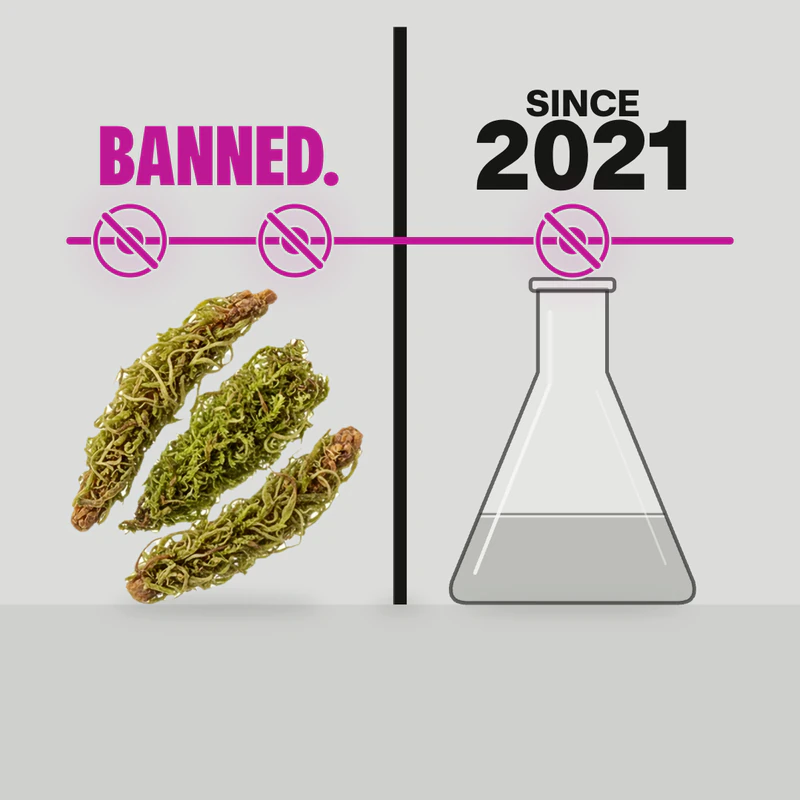
That law counts perfumes and eau de Cologne as cosmetic products and tolerates only technically unavoidable traces of a banned substance, in a safe product. The 2017 rule explains its long deadline: reformulating a fragrance is exceptionally complex and lengthy, and consumers are concerned when a fragrance's smell changes.
The banned list is longer than that rule. The consolidated cosmetics regulation also bars crude balsam of Peru, the raw exudation of Myroxylon pereirae, as a fragrance ingredient, while its extracts and distillates are only restricted. Since 1 March 2022 it has barred butylphenyl methylpropional, sold as Lilial, which Regulation (EU) 2021/1902 added with other substances classified as carcinogenic, mutagenic or toxic for reproduction.
| Substance | Natural or synthetic | EU status | Source |
|---|---|---|---|
| Atranol | Natural, in oak moss and treemoss extracts | Banned (Annex II, entry 1381); off the market from 23 Aug 2021 | Regulation (EU) 2017/1410 |
| Chloroatranol | Natural, in oak moss and treemoss extracts | Banned (Annex II, entry 1382); same dates | Regulation (EU) 2017/1410 |
| HICC (trade name Lyral) | Synthetic | Banned (Annex II, entry 1380); same dates | Regulation (EU) 2017/1410; SCCS, 2012 |
| Crude balsam of Peru | Natural | Banned as a fragrance ingredient (Annex II, entry 1136); extracts restricted (Annex III, entry 154) | Regulation (EC) No 1223/2009, consolidated 2026 |
| Oak moss extract (Evernia prunastri) | Natural | Allowed with at most unavoidable traces of atranol and chloroatranol; named above 0.001% in leave-on products | Regulation (EC) No 1223/2009, Annex III, entry 91, and Article 17 |
| Treemoss extract (Evernia furfuracea) | Natural | Same as oak moss | Same regulation, Annex III, entry 92 |
| Rose, jasmine and sandalwood oils | Natural | Allowed; named above 0.001% in leave-on products placed on the market after 31 Jul 2026 | Regulation (EU) 2023/1545 |
| Tetramethyl acetyloctahydronaphthalenes (sold as Iso E Super) | Synthetic | Allowed; same new labeling rule | Regulation (EU) 2023/1545; Beilstein review, 2019 |
Are synthetic fragrances bad for you?
Not as a group: EU law judges synthetic fragrance chemicals one at a time, as it does natural ones. HICC is the clearest case. The SCCS calls it a synthetic whose only source of exposure is fragrances, and the single fragrance chemical most often reported as causing allergy since 1999.
The committee counted about 1,500 published cases for HICC, against around 350 for cinnamal, the second most reported chemical. It judged the industry's voluntary limits on HICC insufficient and advised that HICC should not be used in consumer products.
Other synthetics remain legal under conditions. A 2019 review in the Beilstein Journal of Organic Chemistry calls Iso E Super, the material behind Molecule 01, the most successful synthetic fragrance ever. The SCCS lists it among established allergens in its lowest band, up to 10 positive test reactions reported, and new EU labels must name it above set thresholds.
The law's starting point ignores origin. The cosmetics regulation defines a substance as "a chemical element and its compounds in the natural state or obtained by any manufacturing process". It also requires every product on the market to be safe for human health under normal or reasonably foreseeable use.
Citing an impact assessment study, Regulation (EU) 2023/1545 puts the share of people in the EU allergic to fragrance allergens at 1 to 9 percent. The SCCS's own 2012 estimate, from tests with eight common fragrance allergens, was 1 to 3 percent of the general population in Europe. The committee said the real figure may be higher. The 2017 regulation adds that fragrance allergy normally stays confined to the skin.
What does "natural" mean on a perfume label?
It describes where ingredients come from, not how safe they are. The international guideline on natural cosmetic ingredients is ISO 16128. Its second part, published in 2017, sets out how to calculate natural, natural origin, organic and organic origin indexes.
ISO's own summary is explicit: neither part addresses product communication, such as claims and labeling, or human safety. A natural index measures origin, not safety.
EU law adds one guardrail. Its cosmetics regulation bars text, names, pictures or other signs in labeling and advertising that imply characteristics or functions a product does not have. A truthful natural claim still says nothing about allergens: by the SCCS's count, 28 natural extracts are established contact allergens.
How can you check a perfume for allergens?
Read the ingredient list. In the EU, Article 19 of the cosmetics regulation requires a list headed "ingredients", where perfume compositions and their raw materials appear as "parfum" or "aroma". The fragrance allergens the regulation lists must still be named individually.
For fragrance allergens, that duty applies above 0.001 percent in leave-on products and 0.01 percent in rinse-off products. Oak moss extract appears as Evernia prunastri extract, the name EU labels use, and treemoss extract as Evernia furfuracea extract.
The list is growing. When Regulation (EU) 2023/1545 was adopted in July 2023, 24 fragrance allergens had to be named individually. It adds the further allergens the SCCS identified, 56 in the regulation's count. New label names include Rose Flower Oil/Extract, Jasmine Oil/Extract, Santalum Album Oil (sandalwood) and Tetramethyl Acetyloctahydronaphthalenes (sold as Iso E Super).
Products placed on the EU market after 31 July 2026 must follow the new rules, and older stock may be sold until 31 July 2028. By our reading of those dates, shops can hold both kinds of label today. The regulation's stated purpose: people already sensitized can avoid the substance they react to.
Outside the EU, a label may say less. Under US regulations, fragrance ingredients can be listed simply as "Fragrance", according to the FDA's page on fragrances in cosmetics. The reason, it says, is that the labeling law cannot force companies to reveal trade secrets. The FDA's page on MoCRA, the 2022 cosmetics law, lists fragrance allergen labeling among the rules that law requires the agency to set.
Part of Eau Facts, the Fragnatique team's series on fragrance history and science, also told in short videos on Instagram at @eaufacts. Researched from the sources listed above, drafted with AI assistance and checked against each source before publishing.
Frequently asked
- What is synthetic perfume?
- In the SCCS's terms, a fragrance chemical can be of natural or synthetic origin; a synthetic perfume relies on molecules made by organic synthesis. A 2019 review in the Beilstein Journal of Organic Chemistry says synthesis served either to replace natural materials without changing their smell or to create new scents, and calls Iso E Super the most successful synthetic fragrance ever. Many formulas mix both: the US FDA describes fragrance formulas as complex mixtures of many different natural and synthetic chemical ingredients.
- Is oakmoss banned in perfume?
- No, not in the EU. Oak moss extract is still allowed under Annex III of Regulation (EC) No 1223/2009, which requires it to be named in the ingredient list above 0.001 percent in leave-on products and 0.01 percent in rinse-off products. Regulation (EU) 2017/1410 banned two of its constituents, atranol and chloroatranol: since 23 August 2021, products containing them may not be sold in the EU, apart from technically unavoidable traces. The industry's IFRA Standard also limits oak moss extracts, to 0.1 percent of a finished fine fragrance.
- What are fragrance allergens?
- They are scent ingredients that can cause contact allergy, which Regulation (EU) 2023/1545 describes as a life-long change in the immune system's reactivity: once a person is sensitized, a much lower concentration can trigger symptoms such as eczema. The EU's scientific advisers counted 82 established fragrance allergens in humans in 2012, natural extracts included. They estimated that 1 to 3 percent of Europe's general population is allergic to fragrance ingredients; the 2023 regulation, citing an impact assessment study, gives 1 to 9 percent.

Explore Fragnatique