Perfume Myths and Facts: 11 History and Science Claims Checked
We checked 11 perfume myths against Guinness, EU law, museums and lab studies: three are false, three unproven, and only deer musk is plainly true.
- 01Of 11 perfume myths we checked, three are false, three unproven, two rest on a single report, one is a legend, one half true and one true.
- 02A 2014 study places a perfumer's workshop at Larsa by King Sumuel's fifth year (about 1890 BC), at least five centuries before Tapputi's tablet of 1239 or 1229 BC.
- 03Napoleon used up to sixty bottles of eau de Cologne a month, says the second volume of Claire de Rémusat's memoirs (1880); no account book we could read confirms it.
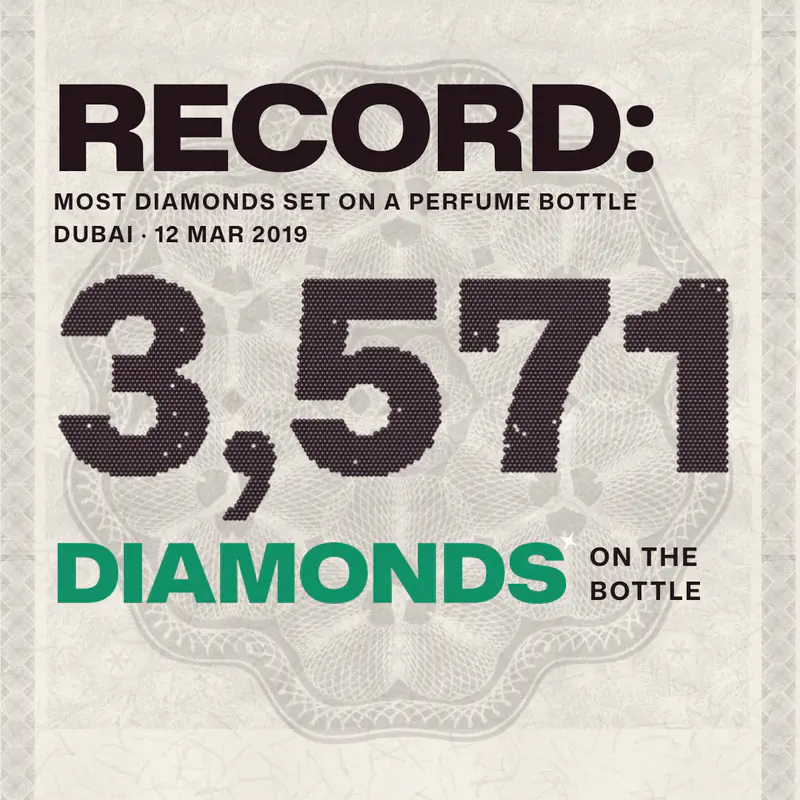
- 04Guinness World Records lists Shumukh for the most diamonds on a perfume bottle, 3,571; its price record still names Clive Christian No1, from November 2005.
- 05Regulation (EU) 2017/1410 banned two natural oak moss allergens and one synthetic one together; since 23 August 2021 products containing them cannot be sold in the EU.
Perfume facts often travel without their paperwork. A sales rate for Chanel N°5 (No. 5) circulates with no document behind it. A story about a queen loses its "reportedly", and a description is repeated as a world record.
We took 11 perfume claims, from who invented perfume to whether perfume attracts mosquitoes, and went back to the oldest or most official record we could read for each. The table gives the verdicts and the sections after it the evidence, source by source.
Which perfume myths are true?
Of the 11 perfume claims we checked, only one holds up exactly as people repeat it: natural musk does come from a deer, the male musk deer.
| Claim | Verdict | What the evidence says | Strongest source | Read more |
|---|---|---|---|---|
| Tapputi invented perfume | False | A perfumer's workshop at Larsa is at least five centuries older than her tablet of 1239 or 1229 BC | CDLJ 2014 study of Larsa; Oracc, KAR 220 | What Tapputi's recipe says |
| Napoleon used two bottles of cologne a day | Reported | A courtier's memoirs (1880 volume) say up to sixty a month; no ledger we could read counts it | Rémusat's memoirs | Which cologne Napoleon wore |
| Catherine de' Medici made Grasse the perfume capital | Legend | A perfume museum finds no document of her visit; tanning and perfumed gloves came first | Musée du Parfum | Grasse, tanners and gloves |
| Floris is London's oldest perfume house | Unproven | Only the house gives 1730; the oldest outside record we found is from 1799, and the 1820 royal warrant was for combs | Survey of London, Jermyn Street | Floris, from comb maker to perfumer |
| Chanel N°5 sells a bottle every 30 seconds | Unproven | No Chanel document; in 2010 the press credited the company with both 55 seconds (Mental Floss, May) and 30 seconds (Happi, July) | Happi, July 2010 | Where the 30 seconds come from |
| Shumukh holds the record as the world's most expensive perfume | False | Its Guinness record is for 3,571 diamonds; the price record is Clive Christian No1, from 2005 | Guinness World Records | The most expensive perfume |
| Real musk comes from a deer | True | Only male musk deer make it, about 25 grams per animal | ESABII, Biodiversity Center of Japan | The musk deer |
| Some people cannot smell Molecule 01 | Reported | The house says it hears of such cases; we found no study that counts them | Escentric Molecules FAQ | Molecule 01 and Iso E Super |
| The world is running out of frankincense | Half true | Not yet, but its main source tree is collapsing; a 2019 model halves output in 20 years | Nature Sustainability study, 2019 | Frankincense in decline |
| Natural perfume is safer than synthetic | False | One 2017 EU rule banned two natural allergens, from oak moss and treemoss, and one synthetic | Regulation (EU) 2017/1410 | Natural vs synthetic safety |
| Perfume attracts mosquitoes | Unproven | In one 2015 lab test, a floral perfume drew 18 percent of mosquitoes and a bare hand 58 percent | Journal of Insect Science, 2015 | Perfume and mosquitoes |
How do we check a perfume claim?
We read the record that could settle the claim, not the articles that repeat it: for a date, the tablet, register or dated history; for a record, the record keeper's own page; for safety, the law and the science behind it. Press articles and brand pages count for what they report, and the text says when a line rests on them.
Three details decide most verdicts. Wording comes first: "described as" or the French "aurait" (would have) signals doubt in the source itself. Scope is second, since one lab test speaks for one perfume at one dose. The date of reading is third, and every source below carries one, because record and product pages change.
The verdicts use six labels:
- True: the strongest source supports the claim as people word it.
- False: the strongest source contradicts it.
- Half true: part of the claim holds and part does not.
- Unproven: the evidence we could read does not settle it either way.
- Legend: a story told as history that the sources themselves call undocumented.
- Reported: a single witness or the company itself says so, and nothing independent confirms or measures it.
Which perfume history myths hold up?
Only one of the four history myths matches its source, and that source is a single memoir: Napoleon's two bottles of cologne a day. Tapputi did not invent perfume, Catherine de' Medici's role in Grasse is a legend, and the claim that Floris is London's oldest perfume house rests on a founding date only the house gives.
Did Tapputi invent perfume?
No: Tapputi is the perfume maker named on a recipe tablet of 1239 or 1229 BC, but a perfumer's workshop at Larsa is at least five centuries older. The tablet, KAR 220, was excavated at Assur, according to CDLI's catalogue record.
Its closing lines credit the recipe to "the instruction of Tappūti-Bēlat-ēkalle the perfume maker", in the Oracc edition of the tablet, and date the copy to the eponym year of Šunu-qardū. Oracc's table of Middle Assyrian eponyms puts that year in 1239 or 1229 BC, depending on the chronology.
A 2014 study of Larsa's aromatics industry finds that an official, Lipit-Irra, had been promoted to head the kingdom's perfumer's workshop by King Sumuel's fifth year. CDLI's record of the tablet behind that date gives the same year.
CDLI's list of Mesopotamian rulers dates Sumuel's reign to 1894 to 1866 BC in the middle chronology, so his fifth year fell about 1890 BC. By our arithmetic, the workshop is at least five centuries older than Tapputi's tablet, which our reading of her recipe sets beside the other early evidence.
How much cologne did Napoleon use?
Up to sixty bottles of eau de Cologne a month, about two a day at most by our arithmetic, according to the memoirs of Claire de Rémusat, a lady-in-waiting at the imperial court. No primary record we could read confirms the count.
He never made use of any perfume except eau de Cologne, but of that he would get through sixty bottles in a month.
Claire de Rémusat, memoirs, English translation of 1880
The French original, in the second volume of her memoirs, published by her grandson Paul de Rémusat in 1880, says "jusqu'à soixante rouleaux par mois", up to sixty a month. The Fondation Napoléon's account of his day confirms the habit without a number: after his bath and shave, he was rubbed down with eau de Cologne.
As for which cologne he wore, Germany's patent office, the DPMA, counts Napoleon among the customers of Farina, which its history of the brand dates to 1709 in Cologne. Roger&Gallet's house history also claims him for the Jean Marie Farina cologne of a Paris house founded in 1806 and bought by Roger&Gallet's founders in 1862; the story of Farina's eau de Cologne sets out both claims.
Did Catherine de' Medici make Grasse the perfume capital?
It is a legend: in its history of Grasse, from tanners to perfumers, the Musée du Parfum writes that the queen "aurait" (would have) recommended Florentine techniques during a stay there, then concedes that no document truly confirms the visit.
What the record does show is leather, as our history of Grasse's tanners and perfumed gloves traces. The museum dates a major tanning industry in Grasse to the 15th century, and perfumed gloves masked the smell of tanned hides.
France.fr, the French tourism agency's page on Grasse, still tells the legend as fact, with a local tanner offering the queen perfumed gloves. UNESCO's 2018 listing of the Pays de Grasse perfume skills keeps to what can be shown: practices developed "since at least the sixteenth century", in a craft industry "long dominated by leather tanning".
Is Floris London's oldest perfume house?
Unproven: the house is the only source for its founding year, 1730. The house's own history says the founder and his wife opened for business that year with perfume, combs and shaving goods, and The Rake's 2018 profile described Floris as "Britain's oldest perfumer" on the strength of that date. The same profile has the founder starting out "as a barber and comb-maker".
The oldest outside evidence we found is younger: the Survey of London's 1960 chapter on Jermyn Street has Floris at No. 88 from 1799, which settles neither account. The first royal warrant, of 1820, reads "Smooth-pointed comb maker to HM King George IV", per the house history; a warrant recognizes a firm that has regularly supplied the Royal Household, as the royal family's website explains.
The earliest period document we found naming a Floris as perfumer is later still: the will of John Floris, "Perfumer of Jermyn Street", which The National Archives dates to 1855. The house may be London's oldest perfumer, but its records, from comb maker to perfumer, are younger than its story.
Are perfume sales and price records reliable?
They are only as reliable as the document behind them: we found no N°5 sales rate published by Chanel, and Shumukh's Guinness record counts diamonds, not dollars.
Does Chanel N°5 sell a bottle every 30 seconds?
Unproven: the press first pinned that rate on Chanel in 2010, and no Chanel document we found contains it. Chanel's own N°5 page dates the perfume to 1921 and credits the composition to Ernest Beaux, but it gives no sales rate, and we found no lifetime total from the house either.
The number also drifts. A Mental Floss list of May 2010 put the company's estimate at one bottle "every 55 seconds", citing no document. Less than three months later, the trade magazine Happi wrote in its July 2010 report on Chanel that "the company maintains" a bottle sells every 30 seconds, again with no document.
Two different rates credited to Chanel in one year, and none from Chanel itself, do not add up to the company's word. So the 30-second claim stays unproven rather than reported; every dated version of the line is set out in our N°5 article.
Is Shumukh the world's most expensive perfume?
No: Guinness lists Shumukh for the most diamonds set on a perfume bottle, 3,571, presented in Dubai on 12 March 2019, while its price record names Clive Christian No1. A Guinness news story of 11 April 2019 adds that the perfume is "also described as" the world's most expensive, at $1.295 million. That wording reports a claim; it does not certify a price.
That price record is for a perfume on sale. In November 2005, Clive Christian made No.1 Imperial Majesty, a 10-bottle edition priced at £115,000 (then $205,000) per 500 ml, according to the Guinness record page. The claim merges two Guinness records, one for diamonds and one for price.
What does science say about musk, Molecule 01 and frankincense?
Science backs the musk claim in full and the frankincense claim halfway; for Molecule 01, the only account of people who cannot smell it is the maker's own.
Does real musk come from a deer?
Yes: natural musk forms in a gland of male musk deer, according to the ESABII species entry of the Biodiversity Center of Japan. One animal yields only about 25 grams, and most gatherers kill the deer for the whole sac. Musk was once valued at up to US$45,000 a kilogram on the international market, a figure IUCN's 2015 assessment of the Siberian musk deer dates to the 1970s.
A 2004 TRAFFIC report on the musk trade, citing a 1986 estimate, says indiscriminate snaring means at least three to five deer may die for each male with a large enough gland. All musk deer species were in the CITES appendices by 1979, it notes. The current appendices put six countries' populations in Appendix I, where international commercial trade in wild specimens is barred, a rule that Species+, the CITES species database, dates to 29 July 1983.
The appendices file musk deer in their own family, Moschidae, apart from the true deer, Cervidae, so the claim holds in its everyday sense, as our full account of musk deer and the musk trade explains.
Can everyone smell Molecule 01?
Escentric Molecules says some people cannot smell its single-molecule perfume, but no study we found counts them. Its one aroma molecule, the house says, is Iso E Super, a material International Flavors & Fragrances (IFF) sells under that name, per IFF's ingredient compendium. The house's FAQ says it hears of such cases "occasionally" and that most people detect such materials within a normal range.
Industrial Iso E Super is a mixture, explains a 2019 review in the Beilstein Journal of Organic Chemistry, and an impurity of about 5 percent, later patented as Iso E Super Plus, was held responsible for its characteristic smell.
For a perfume that seems to vanish, the FAQ lists three possible factors. Sensitivity to such materials varies widely between people, and Iso E Super binds to smell receptors in a way that makes it seem to come and go. A wearer may also have lost some or all sense of smell (anosmia or hyposmia), which in most cases is temporary, the FAQ says.
Is the world running out of frankincense?
Half true: frankincense has not run out, but the abstract of a 2019 study in Nature Sustainability reports evidence of "population collapse" in Boswellia papyrifera, now its main source. Over 75 percent of the studied populations lacked small trees, and natural regeneration had been absent for decades. The authors' models projected that production will be halved in 20 years.
Wageningen University's release on the paper adds that 18 of the 23 populations had hardly any recruits, the young trees that replace old ones. The study blames cattle grazing, frequent burns and reckless tapping, driven by human population pressure; how other field studies weigh those causes is set out in our frankincense report.
A projection made in 2019 is not a measured fall, which is why the verdict is half true. Our guide to the notes pyramid shows where resins such as frankincense sit in a perfume.
What do EU law and lab tests say about perfume safety and mosquitoes?
EU law bans natural and synthetic fragrance allergens side by side, and in the one controlled mosquito test we read, a floral perfume attracted fewer mosquitoes than a bare hand. Neither "natural is safer" nor "perfume attracts mosquitoes" holds as a general rule.
Is natural perfume safer than synthetic?
No, not automatically: in Regulation (EU) 2017/1410, the European Commission banned three fragrance allergens from cosmetics, two natural and one synthetic. Citing an opinion of the Scientific Committee on Consumer Safety (SCCS), it called them the allergens "which caused the highest number of contact allergies cases in past years". The natural pair comes from oak moss and treemoss:
atranol and chloroatranol are natural components of oak tree moss (Evernia prunastri) and treemoss (Evernia furfuracea) extracts
European Commission, Regulation (EU) 2017/1410, recital 4
Despite their names, both are lichens: a 2014 study in Acta Dermato-Venereologica calls oak moss absolute "a lichen extract used in perfumery", and the 2012 SCCS opinion lists treemoss extract as one too. The same opinion calls the third allergen, HICC, "a synthetic fragrance chemical".
The three joined the EU's prohibited list together: none could be placed on the market from 23 August 2019, or sold from 23 August 2021. The ban covers the two natural molecules, not the oak moss and treemoss extracts, which stay in Annex III of the EU cosmetics law (entries 91 and 92), the list of substances allowed only under set restrictions.
Natural oils also age like synthetic ones: the SCCS found that linalool in lavender oil oxidizes in air into the same products as pure synthetic linalool, and the comparison of natural and synthetic ingredients under EU rules goes further.
Does perfume attract mosquitoes?
Not Victoria's Secret Bombshell: in a 2015 test in the Journal of Insect Science, the perfumed hand drew 18 percent of yellow fever mosquitoes (Aedes aegypti) two hours after application, against 58 percent for a bare hand. Mosquitoes were released into a Y-shaped tube, with the treated hand at the end of one arm and an untreated, gloved hand at the other; in control runs, the first hand was bare.
With a second species, the Asian tiger mosquito (Aedes albopictus), the perfume gave similar results, 17 percent against 41, and by four hours the gap was no longer significant for either species. The authors call the perfume concentration they used "rather high", say lower ones might act differently, and note that other studies found floral scents attract mosquitoes.
One perfume at one dose cannot settle the general claim, so it stays unproven. Against the yellow fever mosquito, the DEET sprays and a lemon eucalyptus (PMD) spray protected longest in the same tests, as the full 2015 results, spray by spray, show.
Why do perfume myths spread so easily?
Perfume myths spread because each keeps a true core and drops the qualifier, such as "reportedly" or "described as", that came with it. The 11 checks above show five recurring patterns:
- A narrow fact grows into a broad one. A perfume maker named on one surviving recipe becomes the inventor of perfume.
- A conditional turns into a fact. The museum's "aurait" about Catherine de' Medici disappears in the retelling.
- A description becomes a record. "Also described as" the world's most expensive turns into a Guinness title.
- A number travels without a document. Thirty seconds or fifty-five: no Chanel document we found carries either.
- One source becomes a rule. One perfume at one dose, one company's anecdote or one house's own founding date is read as settled.
The same checks work on any perfume claim: ask who says it, look for the document behind the number, and watch for the small qualifier that the retelling dropped. A sourced timeline of perfume history applies them era by era, and a date-by-date check of the oldest perfume houses applies them to founding dates.
Part of Eau Facts, the Fragnatique team's series on fragrance history and science, also told in short videos on Instagram at @eaufacts. Researched from the sources listed above, drafted with AI assistance and checked against each source before publishing.
Frequently asked
- What happens to perfume when it gets old?
- Some of its fragrance molecules react with air. In a 2012 opinion, the EU's Scientific Committee on Consumer Safety wrote that common terpenes such as limonene and linalool autoxidize on air exposure and form hydroperoxides. Oxidized limonene and linalool gave frequent allergic reactions in patch tests of dermatitis patients, while the fresh compounds rarely did. The committee added that limiting air exposure in handling and storage, or adding suitable antioxidants, can hold this back to a certain extent.
- Does perfume expire?
- EU law sets no single expiry date for perfume. Under Article 19 of Regulation (EC) No 1223/2009, which counts perfumes among cosmetic products, a product that keeps for 30 months or less must show a date of minimum durability, marked with an hourglass symbol or the words best used before the end of. Products that keep longer carry the period-after-opening symbol instead, with the months they stay safe once opened, unless that concept does not apply, as for products that do not open.
- Did Napoleon wear cologne?
- Yes, by the Fondation Napoléon's account: after his bath and shave he was rubbed down with eau de Cologne, and flasks of it traveled in his campaign kit. How much he used rests on a single memoir, Claire de Rémusat's, which says he wore no other perfume and went through up to sixty bottles a month.
Explore Fragnatique