Is Chanel N°5 the Best-Selling Perfume Ever? What the Evidence Says
Unproven: Chanel publishes no lifetime N°5 sales figure, totals in print cite no source, and LVMH named Dior's Sauvage the world's best seller for 2024.
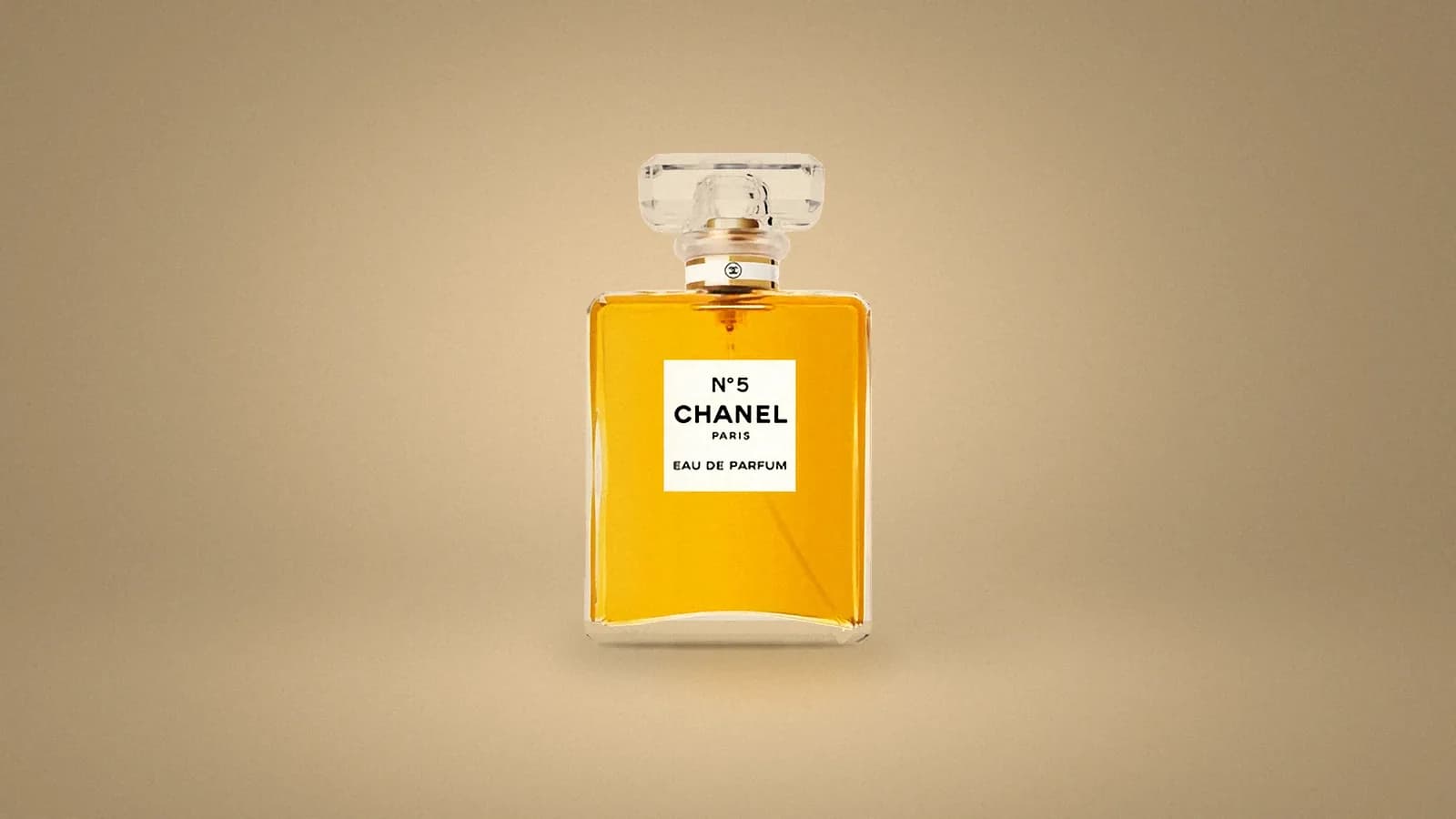
- 01Chanel publishes no lifetime sales figure for N°5, and totals in print, such as Stylist's 2025 "roughly over 100 million bottles", cite no source, so the all-time title is unproven.
- 02Chanel says Ernest Beaux composed N°5 in 1921 and Gabrielle Chanel chose his fifth sample; its founder page quotes Beaux's 1946 memoir: "the number 5 will bring it luck".
- 03Two N°5 sales rates were credited to Chanel in 2010, a bottle every 55 seconds (Mental Floss) and every 30 (Happi); we found no Chanel document behind either.
- 04LVMH's results releases called Dior's Sauvage the world's best-selling fragrance for 2023 and 2024, then narrowed the claim to men's fragrance for 2025, with no unit figures.
- 05In 2025 WWD said Dior's Sauvage sells a bottle "every 30 seconds" and "more than 12 million" a year, though 12 million means one every 2.6 seconds (our arithmetic).
Chanel N°5 (No. 5) is often called the best-selling perfume ever made, usually with a sales rate attached. NUVO magazine called it "the world's best-selling perfume" in 2009, the trade magazine Happi "the best-selling scent in the world" in 2010, and Stylist "the bestselling perfume of all time" in 2025. We traced those claims and their numbers to the oldest dated sources we could find, and none ends at a Chanel document. It is one of the claims in our perfume myths and facts check.
Is Chanel N°5 the best-selling perfume of all time?
It may be, but nobody has shown it, so the claim is unproven. Chanel publishes no lifetime sales figure for N°5, and the totals in print cite no source. The most specific is in Stylist's 2025 list of best-selling fragrances: "roughly over 100 million bottles sold since its launch", with no source named.
A lifetime count would need Chanel's own records, and the house does not publish sales by perfume. Chanel Limited's results for 2025, released in London on 19 May 2026, describe Chanel Limited as "a private company" and report revenue of US$19.3 billion. They split it only by region: Europe, Asia Pacific and the Americas. They say growth in fragrance was supported by Chance Eau Splendide, the house's first new women's perfume in eight years, and never mention N°5.
Chanel's own N°5 pages make no sales claim either. Archived between February and June 2026, they call it "legendary" and "a true cult fragrance" (N°5 Eau de Parfum page; N°5 Parfum page).
Researching our video on 21 October 2026, we also checked the market researchers Circana, NielsenIQ and Euromonitor. None of them, nor Guinness World Records, had a public all-time count. Guinness keeps a perfume record for price, the subject of our check on the most expensive perfume in the world.
The most formal recent best-seller claim we found names another perfume entirely: Dior's Sauvage.
| Claim | What the evidence says | Source |
|---|---|---|
| N°5 is the best-selling perfume of all time | Chanel publishes no lifetime figure and reports revenue by region, not by perfume | Chanel Limited, results for 2025 |
| N°5 has sold over 100 million bottles | A 2025 list says "roughly over 100 million" and names no source | Stylist, 2025 |
| A bottle of N°5 sells every 30 seconds | Attributed to Chanel by Happi in 2010; repeated on NPR in 2011 and by Who What Wear in 2026 without a source; no Chanel document found | Happi, 2010; NPR, 2011; Who What Wear, 2026 |
| A bottle sells every 55 seconds, by company estimate | Published by Mental Floss in 2010 with no company document named | Mental Floss, 2010 |
| One N°5 product sells every six seconds | Published by NUVO in 2009 with no source named | NUVO, 2009 |
| Dior's Sauvage is the world's best-selling fragrance | LVMH's claim for 2023 and 2024, narrowed to men's fragrance for 2025, with no unit figures | LVMH results, January 2024, 2025 and 2026 |
| N°5 dates from 1921 and was composed by Ernest Beaux | Chanel's own account, repeated across its N°5 pages | Chanel N°5 pages, archived 2026 |
| The name comes from the fifth sample | Chanel's account; its founder page adds a luck reason from Beaux's 1946 memoir; only the fortune-teller detail cites nothing | Chanel product and founder pages; Mental Floss, 2010 |
Where does "a bottle every 30 seconds" come from?
From the press, which first credited it to Chanel in 2010, though we found no Chanel document that gives it. The rate itself has moved. In August 2009, NUVO, writing about a new N°5 film, said "one product from the Chanel No. 5 portfolio is sold every six seconds". In May 2010, a Mental Floss list said "the company estimates" a bottle sells "every 55 seconds", naming no document.
The earliest 30 second version we found came less than three months later. Happi's Top 30 report, dated 30 July 2010, says of Chanel: "the company maintains that every 30 seconds, a bottle of Chanel No. 5 is sold somewhere in the world." It names no document either.
On 1 January 2011, NPR's host said "someone buys a bottle of Chanel No. 5 every 30 seconds", citing nothing (NPR, "The Enduring Allure Of Chanel No. 5"). The same segment called N°5 "a bestseller for almost 90 years", a smaller claim than the best-seller of all time.
The line is still in print. On 16 October 2026, Who What Wear's article on a new Chanel film about N°5 said "one bottle is sold every 30 seconds", naming no source. The magazine had the film as an exclusive from Chanel. Stylist's 2025 list gives the same rate, as an estimate.
The same words now describe another perfume as well. WWD's September 2025 report on Dior's Sauvage says a bottle of Sauvage is bought "every 30 seconds" and "more than 12 million" a year. Those two numbers cannot describe the same rate. A year has 31,536,000 seconds, so 12 million bottles would mean one about every 2.6 seconds (our arithmetic).
Even a true rate per second would not settle the question. It describes one moment rather than the century since 1921, and it compares N°5 with no other perfume.
What is the best-selling perfume in the world?
By its owner's account, Dior's Sauvage: LVMH named it the world's best-selling fragrance for 2023 and 2024. No independent global ranking we could read confirms it. LVMH's results release for 2023, dated 25 January 2024, called Sauvage "once again the world's best-selling fragrance in 2023". Its results release for 2024 said:
Strong momentum in fragrances, driven in particular by the success of Dior's Sauvage, which remained the world's best-selling fragrance.
LVMH, full-year 2024 results release, 28 January 2025
In WWD's September 2025 report, Véronique Courtois, chief executive of Parfums Christian Dior, called Sauvage "the number-one fragrance sold in the world". WWD added, without naming a source, that it had held first place every year since 2021. Then LVMH said less. Its results release for 2025, dated 27 January 2026, reads: "Sauvage remained the world's best-selling men's fragrance."
The LVMH releases give no unit figures, and none of these statements explains how the ranking was measured. The releases and the chief executive speak for the product's owner, and none of them covers all time.
One name needs untangling. This Sauvage is the Dior line that began in 2015 with François Demachy's eau de toilette. Eau Sauvage is an older, separate perfume that Edmond Roudnitska made for Dior in 1966 (WWD's Sauvage report; University of Bristol, "Hedione"). Its story is told in Hedione and Dior's Eau Sauvage.
How did Chanel N°5 get its name?
By Chanel's account, from a sample number: Gabrielle Chanel chose the fifth of the samples Ernest Beaux presented, and the number became the name. The house's N°5 pages put it in one line:
Mademoiselle chose the fifth sample of the fragrance, and decided to name it simply N°5.
CHANEL, N°5 Eau de Parfum page, chanel.com/rs (archived 10 June 2026)
Chanel's founder page also gives her reason for keeping the number. It quotes a memoir Beaux published in October 1946, 25 years after the launch by our arithmetic. In it, she is presenting her collection of five dresses on 5 May, the fifth month, and says "the number 5 will bring it luck". Our comparison of the first perfumes of Chanel, Dior, Hermès and Louis Vuitton quotes the full line.
Other retellings add to the story. In NPR's 2011 segment, the writer Tilar Mazzeo, author of The Secret of Chanel No. 5, agreed that five was "her lucky number". She traced Chanel's interest in it to the Cistercian convent where Chanel was raised. Only the fortune teller in a 2010 Mental Floss list rests on nothing, and the list itself hedges it with the word "Supposedly".
How was Chanel N°5 created?
Chanel says Gabrielle Chanel commissioned it from the perfumer Ernest Beaux in 1921, asking for "a woman's perfume with a woman's scent". In the house's telling, Beaux answered with a composition that made "unprecedented use of aldehydes". Aldehydes are a class of organic molecules, and Chanel says they "provide airy freshness and lend an abstract effect" (Chanel's N°5 Parfum page).
Not every account agrees on the year. The Mental Floss list noted that "sources state everything from 1921 to 1925", and Mazzeo told NPR that the perfume "is invented in 1920". Chanel's pages hold to 1921 and describe N°5 "since its creation in 1921" (Chanel's US N°5 Eau de Parfum page).
The flowers are named on the Parfum page: "Neroli from Grasse" in the top notes, then "May Rose and Jasmine from Grasse" at the heart. The Eau de Parfum page describes the same heart, a bouquet "composed around May Rose and Jasmine". Chanel calls N°5 an aldehyde floral bouquet, which puts it in the floral family. Why the town matters to perfume at all is the subject of why Grasse became the perfume capital.
The bottle was part of the idea from the start. Chanel says Gabrielle Chanel chose "a bottle with a revolutionary design, adorned with a white label and topped with a faceted cabochon". The Eau de Parfum came later, from another perfumer. In 1986, Jacques Polge, "the CHANEL nose since 1978", reinterpreted Beaux's composition as a fuller Eau de Parfum, according to Chanel's N°5 Eau de Parfum page.
Why is Chanel N°5 so popular?
In the writer Tilar Mazzeo's account, a wartime decision made it an icon: its investors chose to sell it through US Army commissaries in the Second World War. That decision, "more than anything", she told NPR in 2011, "transformed Chanel No. 5 into this international icon". Its fame, in other words, is better documented than its sales.
The house still promotes it. Its October 2026 film on N°5 features the perfumer Olivier Polge and Chanel's flower fields in Grasse, timed to the jasmine harvest, according to Who What Wear's report on the film.
For a buyer, that history is more useful than the sales legend. N°5 is a 1921 aldehydic floral with a named author, and how it wears is something a test on skin settles better than any ranking.
Part of Eau Facts, the Fragnatique team's series on fragrance history and science, also told in short videos on Instagram at @eaufacts. Researched from the sources listed above, drafted with AI assistance and checked against each source before publishing.
Frequently asked
- How old is Chanel N°5?
- Chanel dates N°5 to 1921, which makes it 105 years old in 2026 (our arithmetic from the house's date). Retellings disagree: a 2010 Mental Floss list said sources give years from 1921 to 1925, and the writer Tilar Mazzeo told NPR in 2011 that it was invented in 1920. Chanel's own pages use 1921 throughout, and some versions are far younger: the house says Jacques Polge created the Eau de Parfum in 1986.
- Is Chanel N°5 still popular?
- It is still made and promoted, but no public figure shows whether it still sells the most. In October 2026 Chanel gave Who What Wear an exclusive short film on N°5, featuring its perfumer Olivier Polge and the house's flower fields in Grasse. Chanel publishes no sales by perfume, and its results for 2025 credit fragrance growth to a newer scent, Chance Eau Splendide. The only company rankings we found, LVMH's, put Dior's Sauvage first.
- Is Chanel N°5 still made?
- Yes. Chanel's US site sold the Eau de Parfum in four sizes in February 2026, and its Serbian page, archived in June 2026, listed it beside N°5 L'Eau and a new edition of the Eau de Toilette. Its South African page, archived in May 2026, showed the Parfum in a 7.5 ml bottle. The US page speaks of five interpretations built from the same accord, so the name now covers a family of versions.

Explore Fragnatique