How to Layer Perfume: 5 Rules and 10 Combinations
How to layer perfume: pick two scents that share a note, wear the pair on one wrist and judge the blend. Five rules and ten combinations, with the science.

- 01To layer two perfumes, choose a pair that shares at least one note, spray both on the same spot, and judge the result as one scent.
- 02Two perfumes do not add up. In one study, a strawberry-like smell mixed with a caramel-like smell was judged as more typical of pineapple than either part.
- 03Keep it to two. Trained panels and professional perfumers alike could pick out only three or four components of a mixture, and training did not raise the limit.
- 04Ten pairs to try are in the table below, each with the note the two perfumes share in our catalogue.
To layer perfume, choose two scents that share at least one note, spray both on the same spot, and judge what you get as a single new smell. Two perfumes do not simply add up: in one study, people who smelled a strawberry-like odor mixed with a caramel-like one judged the mix as more typical of pineapple than either part. This is one of the perfume myths and facts we check: layering works, though not the way most guides describe.
The 5 Rules of Layering Perfume
| Rule | In one line | Basis |
|---|---|---|
| 1. Expect a third scent | The blend has its own character | Research on odor mixtures |
| 2. Share a note | Pair perfumes with a common note | Our catalogue's note lists |
| 3. Stop at two | The nose resolves only a few components | Livermore and Laing, 1996 |
| 4. Mix one strong with one quiet | Two loud scents blur | Our catalogue's strength tags |
| 5. Test on one wrist | Judge the blend, not the parts | Follows from rule 1 |
Rules 1 and 3 come from published research. Rules 2, 4 and 5 are our practice, built on those findings and on the note data in our catalogue. We say which is which below.
Rule 1: Expect a third scent, not a sum
A mixture of two smells is often perceived as a new smell. The clearest example in the research is a simple pair. Tromelin and colleagues, writing in the journal Molecules in 2020, summarise earlier experiments on ethyl isobutyrate, which smells of strawberry, and ethyl maltol, which smells of caramel:
In humans, the mixture was judged as more typical of a pineapple odor [...] than the odors of the individual components.
Tromelin and colleagues, Molecules, 2020
Neither part smells of pineapple. Together they do. A review of the field in Frontiers in Psychology by Thomas-Danguin and colleagues reports the same experiment, in which "the binary mixture carried a pineapple odor that was significantly less present in the single odorants", and concludes that "the odor quality of the mixture is different from those of its components". Researchers call this configural processing: the brain treats the blend as one object.
For layering, the lesson is to stop predicting. Vanilla plus rose will not necessarily smell like vanilla and rose. It may smell like something neither bottle suggests, and you only find out by trying.
Rule 2: Share at least one note
This is our working rule, not a research finding: a pair holds together best when the two perfumes have a note in common. The shared note acts as a bridge, and the notes that differ give the blend its new character. Every pair in the table below shares at least one note in our catalogue.
It is also how houses build their own layering ranges. Ulta's listing for a Carolina Herrera mini trio suggests wearing Good Girl and to "layer with Good Girl Blush's bergamot, ylang-ylang, peony, and Madagascar vanilla": two perfumes from one line, built on the same vanilla and tonka base.
Rule 3: Stop at two
The nose cannot follow many things at once. In 1996, Livermore and Laing tested this in the Journal of Experimental Psychology with a trained panel and with "an expert panel of 8 male professional perfumers and flavorists". Their result:
[...] for both panels only 3 or 4 components of a complex mixture could be discriminated and identified and [...] this capacity could not be increased by training.
Livermore and Laing, 1996
The Frontiers review puts the limit in similar terms: people "are hardly able to identify more than three odorants in a mixture".
A finished perfume is already a mixture of many materials. Two of them together are far past the point where you can pick out the parts, which is fine, because the goal is a pleasing whole. A third bottle rarely adds anything you can perceive as a distinct layer.
Rule 4: Pair one strong scent with one quiet one
Our practice again. If both perfumes are loud, each masks the other. Our catalogue tags every perfume by strength, and the pairs that work combine a strong or dense scent with a moderate or light one. Single-note and skin scents are the easiest partners: Juliette Has A Gun Not A Perfume, for example, is listed with one note, Cetalox, and sits under almost anything.
Rule 5: Test on one wrist and judge the blend
Spray both perfumes on the same patch of skin, wait ten minutes, and ask one question: do I like this smell? Do not try to find each perfume inside it. Rule 1 says you often cannot, and that is not a failure of the pair.
10 Perfume Layering Combinations to Try
Each pair shares the note shown, by our catalogue's note lists. These are starting points for your own testing, not promises about the result: by rule 1, the blend can surprise you.
| # | Pair | Shared in our catalogue | What the pair sets against each other |
|---|---|---|---|
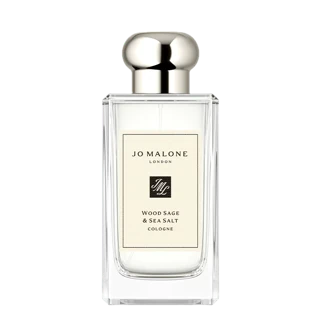
| 1 | Jo Malone London English Pear & Freesia + Wood Sage & Sea Salt | Musk, amber | Pear and freesia against sea salt and sage |
| 2 | Yves Saint Laurent Libre + Burberry Goddess | Lavender, vanilla | Orange blossom against a triple vanilla |
| 3 | Yves Saint Laurent Libre + Black Opium | Orange blossom, vanilla | Lavender against coffee |
| 4 | Glossier You + Prada Infusion d'Iris | Iris | Ambroxan warmth against cool cedar and incense |
| 5 | Le Labo Santal 33 + Another 13 | Ambroxan-type materials | Sandalwood and leather against a clean musk |
| 6 | Montale Vanille Absolu + Tom Ford Tobacco Vanille | Vanilla | Pure vanilla against tobacco and cacao |
| 7 | Versace Eros + Versace Pour Homme Dylan Blue | Ambroxan, tonka bean | Mint and vanilla against bergamot and incense |
| 8 | Chanel Chance Eau Tendre + Byredo Blanche | Musk | Quince and jasmine against aldehydes and white rose |
| 9 | Acqua di Parma Colonia + Hermès Terre d'Hermès | Vetiver, patchouli | Lemon and lavender against orange and pepper |
| 10 | Dior Sauvage + Montblanc Explorer | Ambroxan, bergamot | Pepper and lavender against vetiver and leather |
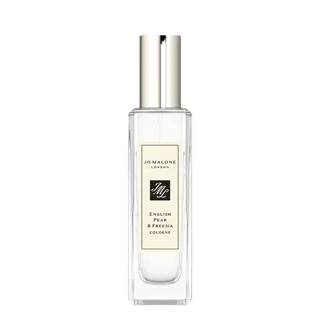
Pair 1 is the one our video on layering used. Our catalogue lists pear and melon on top of English Pear & Freesia, freesia and rose in the heart, and musk, patchouli and amber in the base; Wood Sage & Sea Salt is ambrette, sea salt and sage over amber and musk. Both are tagged light to moderate, which makes them forgiving partners.
Pairs 2 and 3 show how one perfume changes with its partner. Libre has lavender, orange blossom and vanilla. With Burberry Goddess, which our catalogue lists as vanilla and lavender, the pair leans soft and creamy. With Black Opium, which shares the orange blossom and vanilla and adds coffee, it turns darker.
How to Layer Perfume So It Lasts Longer
Put a heavier base under a lighter scent. Base notes such as vanilla, musk, woods and ambroxan are the slowest to leave skin, as the fragrance notes pyramid explains, so a light citrus or floral layered over one of them borrows its staying power. Pairs 5 and 6 above work this way. Layering two light scents does not make either last; how long perfume lasts covers what does.
How to Layer Perfume with a Body Mist or Lotion
Start with the same scent in a lighter form. A mist or lotion gives a quiet first layer, and brands design them for it: Ulta's listing for Sol de Janeiro's mist set tells buyers to "layer two (or more) fragrances for an unforgettable scent experience". Mists are light, so they are also the safest way to try rule 1 without committing to a strong blend.
How to Layer Cologne
The same five rules apply. Men's fragrances lean on woods, ambroxan, lavender and citrus, so shared notes are easy to find: pair 7 (two Versace scents with ambroxan and tonka bean) and pair 9 (two citrus scents over vetiver and patchouli) are built that way. Keep rule 4 in mind, because many popular men's scents are tagged strong.
Design a Blend in the Fragnatique App
Layering is a way of making a new scent from two finished ones. The Scent Lab in the Fragnatique app does the same thing one step earlier: you pick the notes you like and it turns them into a single formula. To find perfumes that share a note with one you own, scan the bottle with the perfume scanner and open any note on its page. Our fragrance families guide helps with choosing families that sit well together.
Part of Eau Facts, the Fragnatique team's series on fragrance history and science, also told in short videos on Instagram at @eaufacts. Researched from the sources named in the text, drafted with AI assistance and checked against each source before publishing.
The short answer and the episode: What happens when you layer two perfumes?
Frequently asked
How do you layer two perfumes?
Pick two that share a note, such as vanilla, musk or lavender. Spray the heavier one first and the lighter one over it on the same spot, wait ten minutes, and smell the result as one scent. If the blend smells muddy, the pair shares too little or both are too strong.
Does layering perfume make it last longer?
It can, if one of the two has a heavier base, because base notes are what remain after hours. Layering a light citrus scent over a musk or vanilla scent gives the pair the staying power of the heavier one. It does not make a short-lived perfume last longer on its own.
Which perfumes should not be layered?
Two very strong scents from different families, for example a smoky oud over a sweet gourmand. Each already holds many materials, and the nose can pick out only a few components of a mixture. The usual result is a blur, not a blend.
Can you layer perfume with a body mist or lotion?
Yes, and it is the gentlest way to start. A lotion or mist in the same scent adds a quiet base, and brands sell them for that purpose: Sol de Janeiro's mist set, for example, suggests layering two or more of its fragrances.
How many perfumes can you layer at once?
Two is the practical limit. A 1996 study found that both a trained panel and professional perfumers could discriminate and identify only three or four components of a mixture. A single perfume already contains far more than that, so a third bottle adds noise more than character.
Do you smell both perfumes when you layer them?
Usually not as two separate things. Research on odor mixtures shows that the brain often processes a blend as one new smell with its own character, which is why a layered pair can smell unlike either bottle.

Written by Fragnatique Team
Published