Perfume Barcode and Batch Code: What They Tell You, and What They Don't
What a perfume barcode and batch code tell you: the product, the batch, sometimes the age. Why neither proves a bottle is genuine, and what to check.
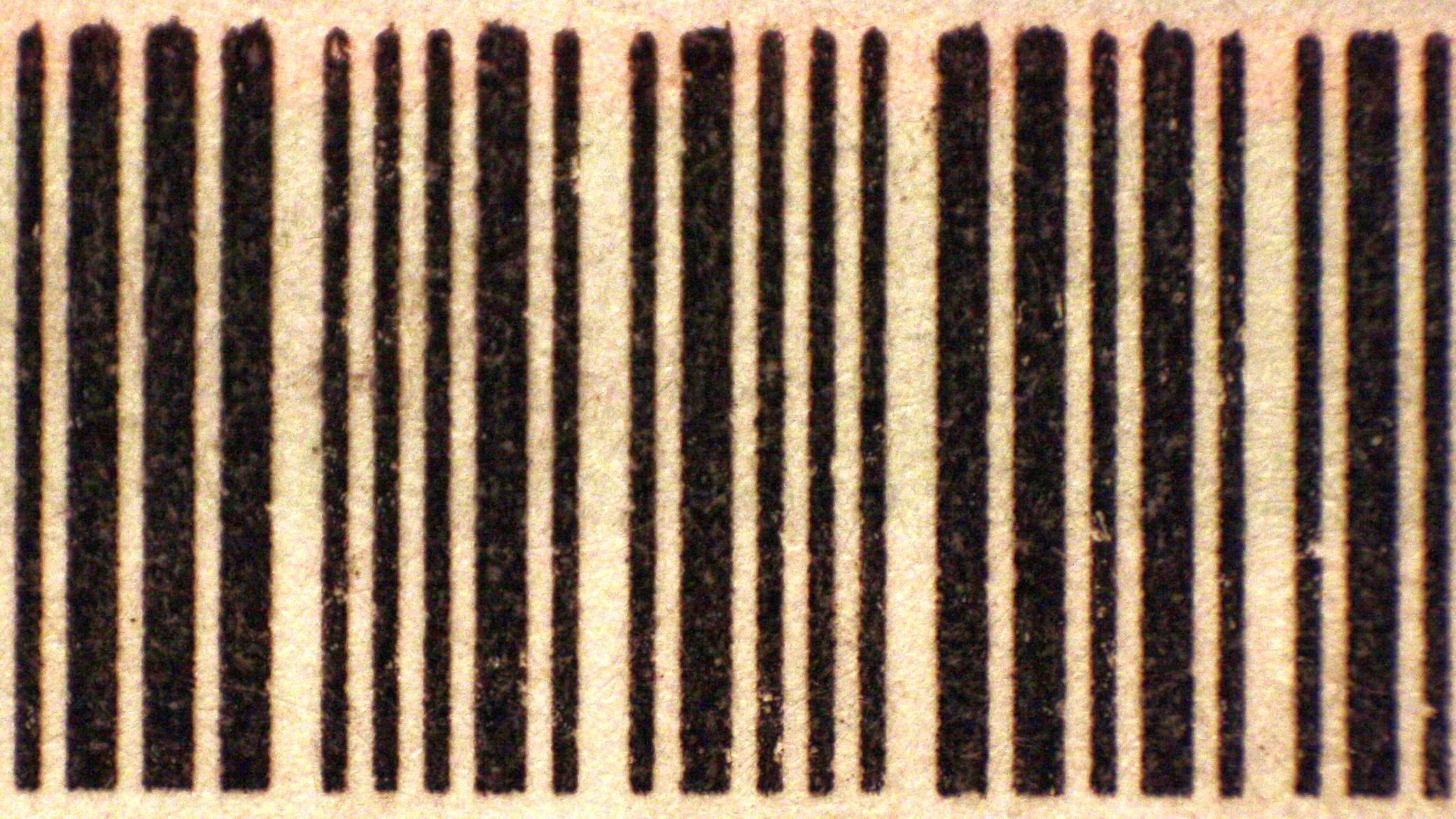
- 01The barcode is a product number (a GTIN, called UPC in North America and EAN elsewhere). Scanning it can show which product and size the box claims to be, but GS1 says its prefix does not show the country of origin, and a correct barcode can be printed on a fake box.
- 02The batch code identifies the production batch. EU law requires it on cosmetics, and it is the only route to a bottle's age when there is no date on the box, but houses do not publish how to read their codes.
- 03Neither number proves a perfume is genuine. A code on the box that matches the code on the bottle is a good sign; a missing code is a warning; the seller is still the strongest proof.
A perfume's barcode and its batch code answer two different questions. The barcode is a product number: scanned, it can show which perfume and which size the box claims to be, but it does not show where the perfume was made, and a correct barcode can be printed on a fake box. The batch code identifies the production batch: EU law requires it, it can point to a bottle's age, and the code on the box should match the code on the bottle. Neither proves a bottle is genuine; the seller does.
Everything below comes from GS1, the organisation that issues barcode numbers, from the EU Cosmetics Regulation, from the US Food and Drug Administration and from UK and French government pages, all read on 23 November 2026.
| Code | Where you find it | What it tells you | What it cannot tell you |
|---|---|---|---|
| Barcode (GTIN, UPC or EAN) | On the box, under the black and white lines | The retail product and size the box is for | Where it was made; whether it is genuine |
| Batch code | On the bottle and on the box | The production batch; sometimes, read indirectly, its age | Whether it is genuine: a code can be copied |
| Period-after-opening symbol | On the box or bottle, an open jar with "12M", "24M" or "36M" | How long the maker says it keeps once opened | How old the bottle is |
What the Barcode on a Perfume Box Means
The number under a barcode is a GTIN. GS1 describes it as "a unique, global, verifiable product identifier issued by GS1" and as "the number you see under the barcode of a product". It comes in a few lengths:
- GTIN-12, "also called UPC. It's a 12-digit number mostly used in North America".
- GTIN-13, "also called EAN or JAN. It's a 13-digit number mostly used in Europe and rest of the world."
- GTIN-8, "an 8-digit number used for smaller-sized items".
The number is built from a GS1 Company Prefix of 4 to 12 digits, issued by a national GS1 office to the company that labels the product, and it ends in "a check digit to verify the GS1 GTIN's structure".
One number per size. GS1's rule is that "each product variation needs its own GS1 GTIN", and that variations mean "each size, each colour, each combination". So a 50 ml and a 100 ml bottle of the same perfume carry different barcodes. Since December 2018 a GTIN "SHALL NOT be reallocated to another trade item", with narrow exceptions, so a number points to one product.
Not a country of origin. The first three digits are often read as the country where a perfume was made. GS1 says plainly: "No, The GS1 Prefix does not show the country of origin." The prefix shows which national GS1 office issued the number, and it "does not indicate that the product was manufactured in a specific country or by a specific manufacturer". A French perfume can carry a number issued anywhere.
Can You Scan a Perfume Barcode?
Yes, with the box in hand. A barcode scanner app reads the number and, where a product database knows it, shows the product and size. Plymouth City Council's trading standards advice for Christmas shoppers suggests exactly that: "If you have an app on your mobile that scans bar codes, scan it and see if it's listed as the correct product."
To see which company assigned a number, GS1 runs a lookup called Verified by GS1, which "contains information about the company, organisation or person who assigned a GS1 GTIN"; it replaced the older GEPIR service on 31 December 2023, and its free tier allows "30 queries maximum per day".
The limit is the same for every scan: the barcode is printed on the box like the rest of the artwork. A counterfeiter who copies a genuine box copies its barcode too, so a correct result tells you the box is labelled as the right product, not that the perfume inside is.
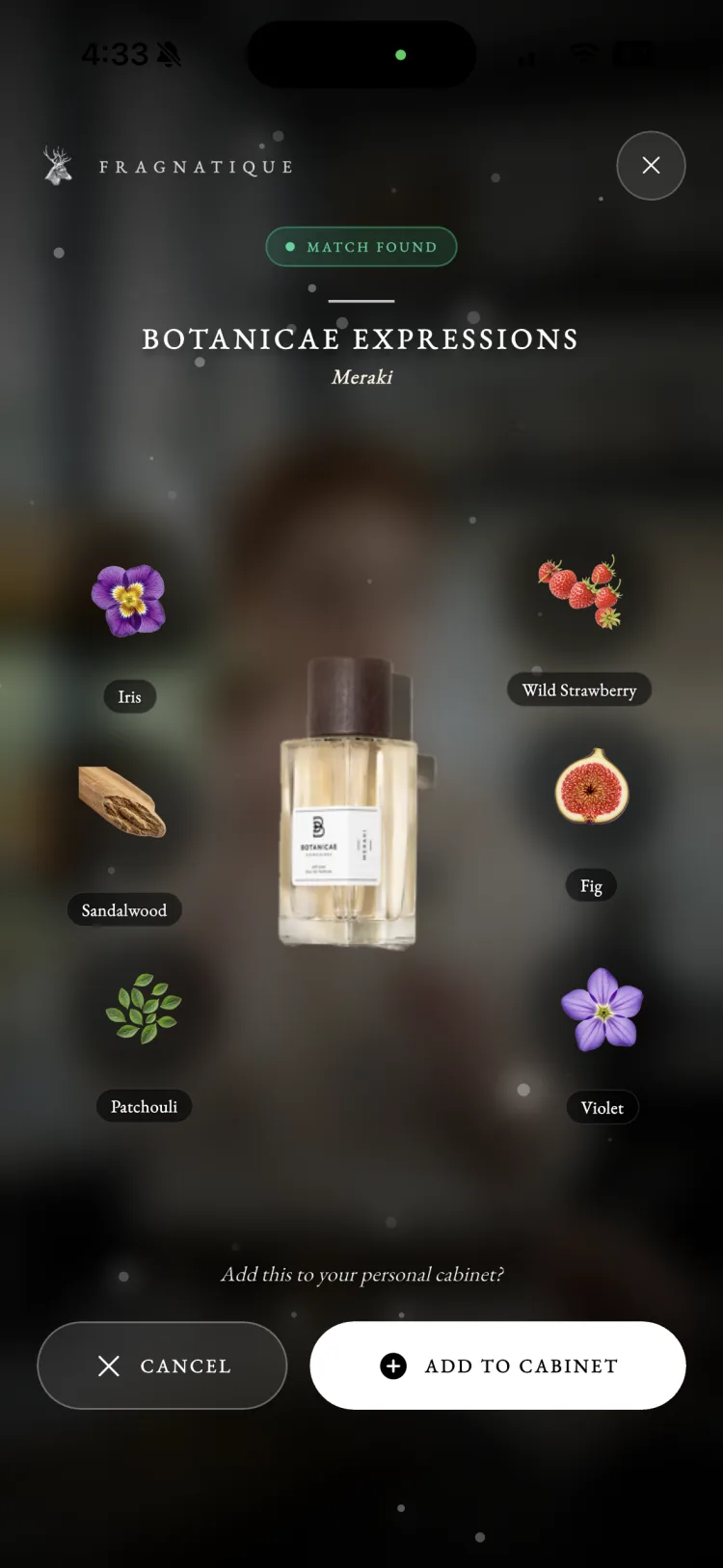
No box, no barcode. Testers, gifts and decants often come without a box. The Fragnatique perfume scanner reads the bottle itself, so it names the house and the release from one photo of the bottle, then shows its notes and how it wears. For the general methods, from Live Text to search by image, see how to identify a perfume from a picture.
What a Perfume Batch Code Is
The batch code is the maker's reference for the production run the bottle came from. In the European Union it is required: Article 19 of the Cosmetics Regulation lists, among the details a cosmetic must carry, "the batch number of manufacture or the reference for identifying the cosmetic product". It is a short string of letters and digits, usually found on the base of the bottle and on the box.
The US Food and Drug Administration's cosmetics labelling guide, read on 23 November 2026, does not list a batch code among the items it requires; it covers the name and address of "the manufacturer, packer or distributor" and the ingredients "in descending order of predominance".
Box and bottle should match. Both come from the same production, so the two codes should be the same. French Customs advises checking that the lot number on the bottle matches the one on the box.
Can a Batch Code Tell You How Old Your Perfume Is?
Sometimes, and only indirectly. Some codes contain a date in the house's own pattern, and batch code websites try to read it from patterns seen before. We found no perfume house that publishes how to read its own codes, so the result is an estimate, not a statement from the house.
That matters because the box may carry no date at all:
- In the EU, a date of minimum durability ("best used before the end of") is "not mandatory" for cosmetics "with a minimum durability of more than 30 months". Those carry the period-after-opening symbol instead: an open jar "followed by the period (in months and/or years)", such as 24M or 36M.
- In the US, the FDA says "there are no U.S. laws or regulations that require cosmetics to have specific shelf lives" and no requirement for "expiration dates on their labels". It considers shelf life "part of the manufacturer's responsibility".
So the batch code can be the only route to a bottle's age. The FDA also names heat, sunlight and exposure to air among the things that can change a cosmetic over time, so how a bottle was stored matters as well as its age. Our guide to how long perfume lasts covers both shelf life and wear time.
Batch Codes and Fake Perfume
A batch code is a useful flag and a poor proof.
- A missing code is a warning. The Highland Council's trading standards team lists, for perfume, "No outer wrapping", "No batch code numbers" and "Poorly printed text on the bottle or packaging" as signs of counterfeits.
- A mismatch is a warning. Different codes on the box and the bottle mean the two did not start out together.
- A matching, sensible code is not proof. A code can be copied from one genuine bottle onto thousands of fakes, and it will decode to a sensible date every time.
The risk is not only to your money. The UK Intellectual Property Office reported on 2 November 2026 that "a counterfeit fragrance contained around 80% methanol", and that testing "also detected nicotine in a counterfeit perfume, despite it being prohibited in cosmetics". French Customs warns that counterfeits "are often manufactured without sanitary control". The IPO's advice is short: "Check who you're buying from"; "Question the deal, and don't be rushed"; and if you think it could be fake, do not use it, and report it.
For the full check, from the seller and the box to the sprayer and the juice, see our step-by-step guide on how to tell if perfume is fake.
A Quick Check With the Box in Hand
- Find the batch code on the bottle's base and on the box. Both should be there.
- Compare them. They should be the same.
- Scan the barcode. The product and size shown should match what you bought.
- Read the jar symbol. It tells you how long the maker says the perfume keeps once opened.
- Then look past the numbers: the seller, the print, the cap, the sprayer and the scent over a few hours. The numbers can be copied, so they are only one part of the check.
Know What You Own in the Fragnatique App
The Fragnatique app names a bottle from one photo, box or no box, and files it in your Perfume Cabinet with its notes. To find what to wear next, start with the perfume finder: it returns ranked matches, each with your score and the reason why, made by Fragnatique's proprietary matching algorithm.
Frequently asked
Can I scan a perfume barcode to identify it?
Yes, if you have the box. The barcode carries a GTIN, a product number that GS1 says must be different for each size and variation, so a barcode scanner app can usually show the product and size the box is for. A perfume scanner such as Fragnatique's reads the bottle itself instead, so it also works on a bottle with no box.
Does a perfume barcode show where it was made?
No. GS1 says: "No, The GS1 Prefix does not show the country of origin." The first digits show which national GS1 office issued the number, not where the perfume was made or by whom.
What is a perfume batch code?
A short code, printed or etched on the bottle and the box, that identifies the production batch. The EU Cosmetics Regulation requires "the batch number of manufacture or the reference for identifying the cosmetic product" on the label. Houses use it to trace a batch; buyers use it to estimate age and to check that box and bottle belong together.
Can a batch code tell me how old my perfume is?
Sometimes. Some codes contain a date in the house's own pattern, and batch code websites try to read it. No house we found publishes how to read its codes, so treat the date as an estimate. If the code reads as a date before the perfume was launched, or reads as nothing, that is a red flag.
Does perfume have an expiration date?
Not always. In the EU, a date of minimum durability is not mandatory for cosmetics that keep for more than 30 months; those carry a period-after-opening symbol, an open jar with a number of months. In the US, the FDA says no law requires cosmetics to have specific shelf lives or expiration dates on their labels.
Can a batch code prove my perfume is real?
No. A code can be copied from a genuine bottle onto every fake box. What a batch code can do is raise a flag: UK trading standards list "No batch code numbers" as a sign of counterfeit perfume, and a code on the box that differs from the code on the bottle is another. Buy from the house or a retailer it lists.

Written by Fragnatique Team
Published