Once a formula drafted with an AI perfume generator smells right, the next question is usually commercial: can it be sold, under whose name, and what has to happen first? People also ask whether an AI-designed perfume faces extra rules, and who owns the formula.
This guide covers what is required, using the EU as the worked example, and the points to check in other markets. It is general information, not legal advice.
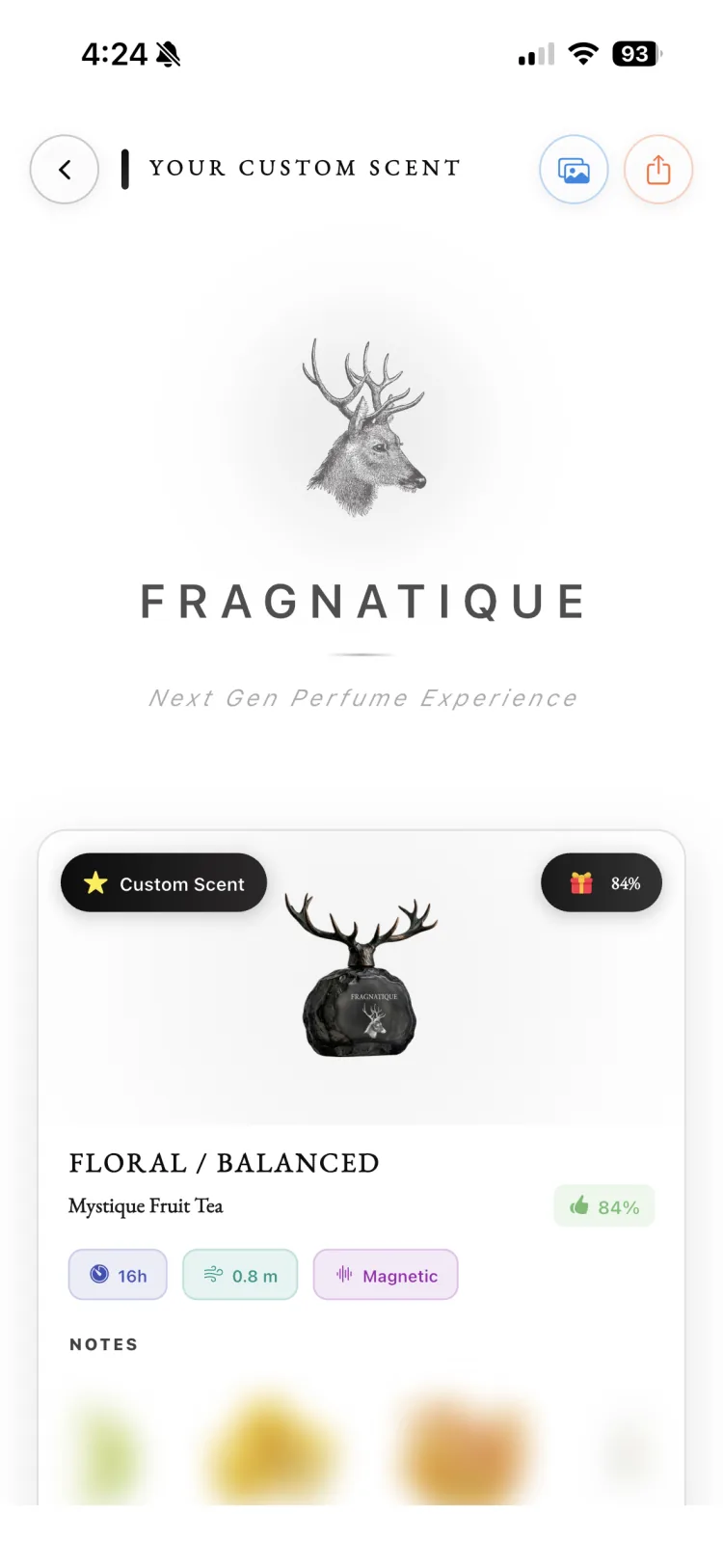
Scent Lab turns an idea into a manufacturing document
Answer the Lab's questions and it returns a formula and an exportable PDF that follows IFRA safety standards, one a producer can actually read.
Open it on iOS1 answer
Most useful answer firstMost useful answer
Short answer: yes, under exactly the same rules as any perfume. Cosmetics law regulates the product placed on sale, its safety and its label. It does not care whether the formula came from a trained perfumer, a hobbyist or software. There is no lighter route for AI-designed perfume, and as of today no extra one either.
What the EU requires (Regulation (EC) No 1223/2009)
A perfume is a cosmetic product under the regulation. Before it goes on sale you need:
- A responsible person established in the EU, legally answerable for the product (Article 4). For a small brand that is often the brand itself.
- A safety assessment carried out before the product is placed on the market (Article 10), documented in a product information file. It covers the exact formula, the raw materials, exposure, impurities and stability.
- A notification to the European Commission through the Cosmetic Products Notification Portal (CPNP) before sale (Article 13).
- A compliant label (Article 19): responsible person's name and address, nominal content, batch number, precautions, and the ingredient list.
- Allergen declaration. Regulation (EU) 2023/1545 extended the list of fragrance allergens that must be named in the ingredient list when present above 0.001 percent in leave-on products such as perfume.
Outside the EU the shape is similar but the details differ. In the United States, for example, the FDA does not approve cosmetics before sale, and the company marketing the product is legally responsible for its safety and labelling. Check the rules of every market you ship to.
Where an AI formula helps, and where it does not
A good formula export shortens this road. A recipe with INCI names and CAS numbers, a check against the IFRA Standards and a list of declarable allergens is close to what a safety assessor and a contract manufacturer ask for first. What it cannot replace:
- The safety assessment. A software IFRA check flags restricted materials; a qualified assessor signs off the finished product.
- Stability and packaging tests. The liquid has to stay safe and stable in its actual bottle, pump and storage conditions.
- Real samples. A manufacturer will make test batches, and the smell may need adjusting once real materials replace the model's choices.
Who owns the formula?
Check the terms of the tool you used. Some services keep rights to what they generate; others assign it to you. Separately, whether a smell itself can be legally protected varies by country; using another perfume's name, bottle shape or branding to sell yours is a clearer and more serious risk.
A sensible order of work
- Finalise the formula and wear test batches for several weeks.
- Choose a contract manufacturer and confirm they can source every material.
- Engage a safety assessor with the full formula and raw material documents.
- Design the label around the allergen declaration.
- Notify, then sell.
In Fragnatique
The Scent Lab exports a manufacturing-ready document that follows IFRA safety standards, as described on the Scent Lab page. Formulas composed there belong to the person who composed them. The IFRA check is guidance; final responsibility for a commercial product rests with the manufacturer and the responsible person. Our home perfume guide quotes the relevant articles of the regulation.