Search for "AI perfume generator" and you find everything from name-and-mood-board toys to tools that print a full ingredient list. People want to know what these tools actually produce, whether the output is a real perfume formula, and what is left to do between the screen and a bottle on the shelf.
This guide explains what the term covers, what a useful output looks like, and where the software stops.
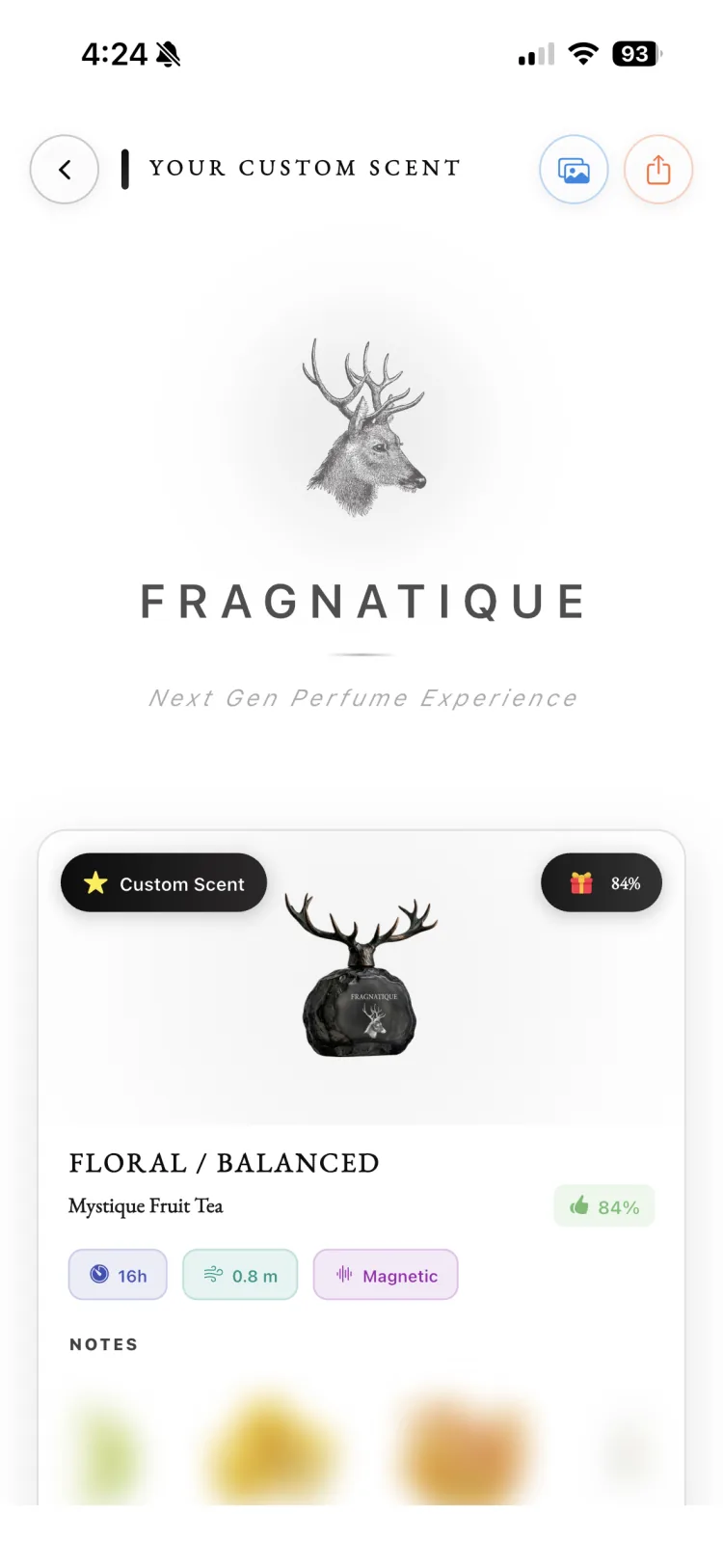
Scent Lab turns an idea into a manufacturing document
Answer the Lab's questions and it returns a formula and an exportable PDF that follows IFRA safety standards, one a producer can actually read.
Open it on iOS1 answer
Most useful answer firstMost useful answer
An AI perfume generator is software that turns a description of a scent into a formula: a list of fragrance materials with the proportion of each. You describe the character, the mood and how strongly it should carry, and the model proposes a composition. What it hands back is a recipe. Nothing has been mixed, and nothing has been smelled.
Three kinds of tool share the name
- Concept generators. They return a name, a mood and a list of notes ("bergamot, iris, vetiver"). That is a brief, not a formula: a note list does not say how much of anything to use, and the same three notes can be built a hundred ways.
- Formula generators. They return materials with weights or percentages that add up to a whole. This is the first output a perfumer or a hobbyist can actually weigh out.
- Formula generators with a safety and production layer. On top of the recipe they check restricted materials against the IFRA Standards (the International Fragrance Association's usage limits), list the allergens that would need declaring, and add production notes such as how long the batch should rest.
What a usable formula contains
- Every material named precisely, ideally with its INCI name and CAS number, because "rose" or "musk" can mean dozens of different raw materials.
- Amounts by weight, written out of 100 percent or as grams per batch.
- The intended concentration once diluted in alcohol (an eau de parfum is commonly 15 to 20 percent fragrance concentrate).
- A note of which materials are restricted and at what level.
What the software cannot do
- It cannot smell. The model works from data about materials and existing perfumes, not from the air in front of it. Its proposal is a prediction of how the blend will read.
- It cannot mix or age the perfume. A blend changes as it rests (maceration), and the result can differ from the prediction. Someone has to weigh it, wait and evaluate it on a blotter and on skin.
- It cannot make a perfume legal to sell. In the EU, Regulation (EC) No 1223/2009 requires a responsible person, a safety assessment and a notification before a cosmetic goes on the market. A software IFRA check is guidance, not that assessment.
How to judge one before you trust it
Ask four questions: does it give amounts, not just notes? Are materials identifiable by a supplier? Does it flag IFRA restrictions and allergens? Does it say plainly what it leaves to you? A tool that answers no to the first question is a writing exercise.
Where Fragnatique fits
The Scent Lab in the Fragnatique app is a formula generator of the third kind: it asks about character, mood and projection, then exports a manufacturing-ready document that follows IFRA safety standards. Our AI perfume guide sets out the same limits listed above, and the Scent Lab page shows what the export carries. The formula is still a first pass: the IFRA check is guidance, and responsibility for a commercial product rests with the manufacturer.
The short version: a good AI perfume generator saves you the most expensive mistake in home perfumery, which is buying materials for an idea you have not structured. It does not replace a scale, a few weeks of patience and your own nose.