Hedione: The Faint Jasmine Molecule Behind Dior's Eau Sauvage
Hedione is Firmenich's jasmine-scented molecule. Eau Sauvage used 2.5 percent in 1966 and Odeur 53 used 65 percent in 1998, the University of Bristol reports.
- 01Hedione is Firmenich's name for methyl dihydrojasmonate, which its ingredient sheet describes as a transparent floral jasmine note with citrus freshness, made by chemical synthesis.
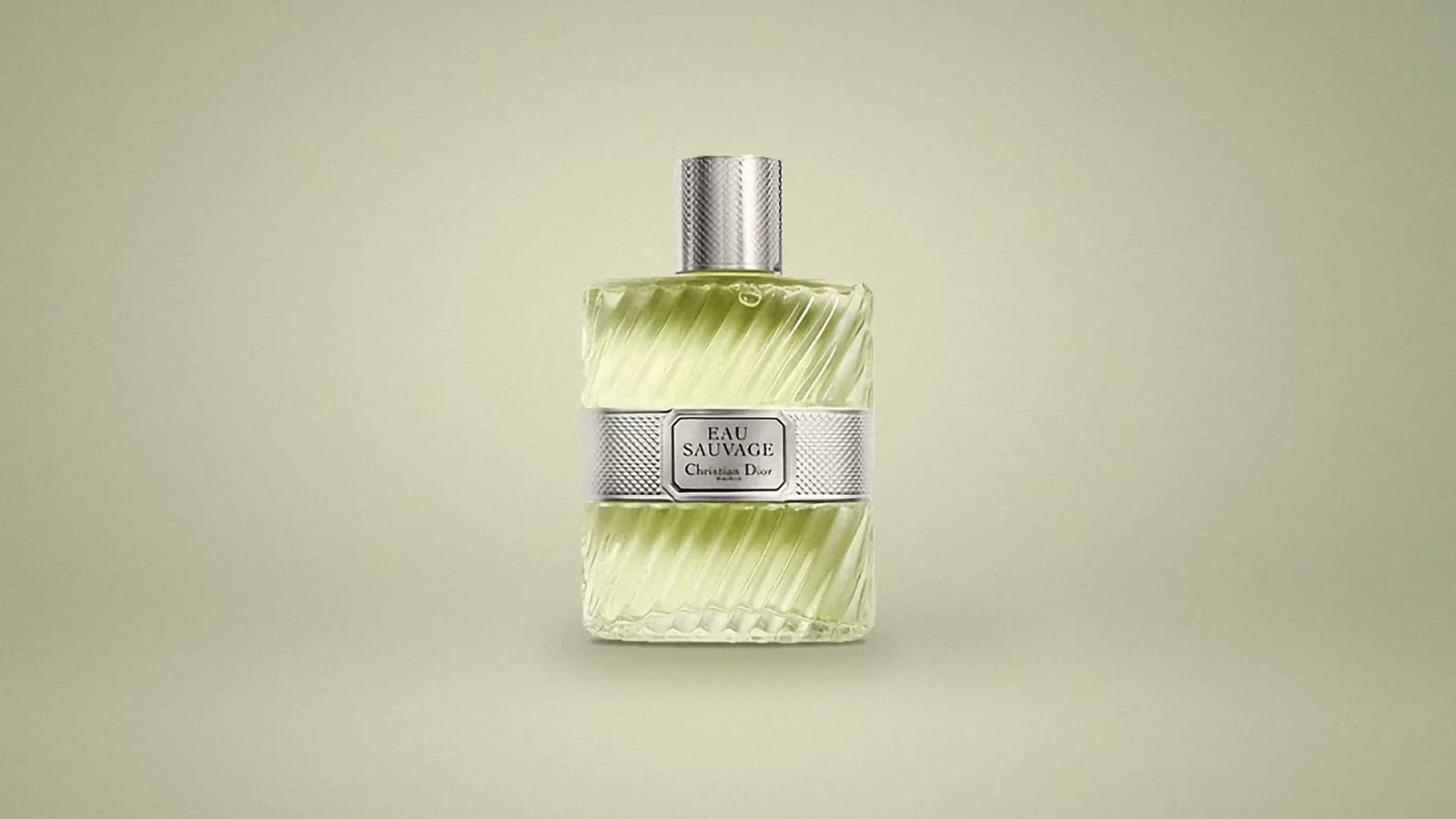
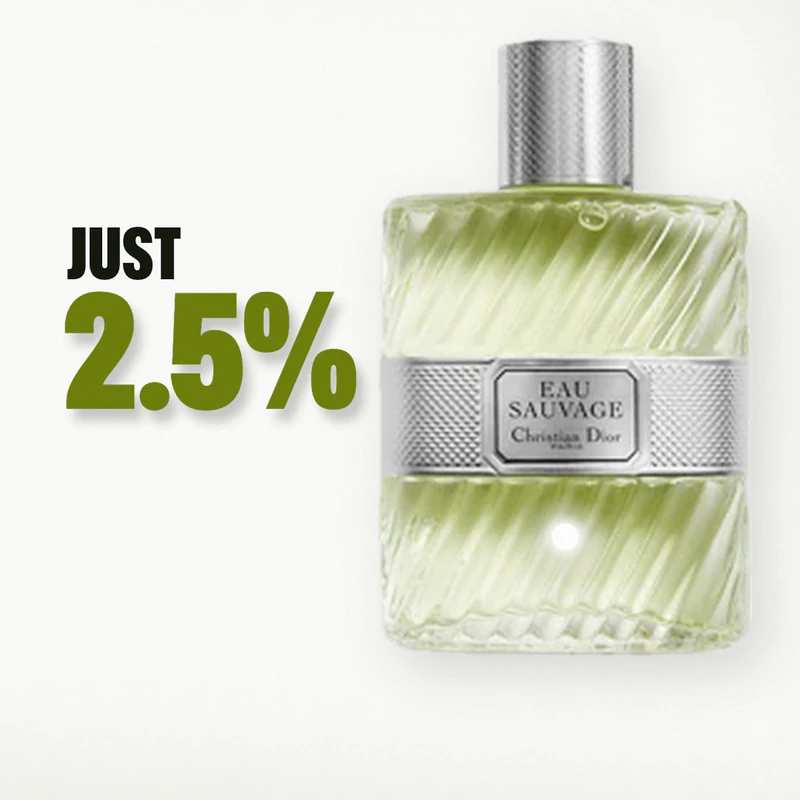
- 02Edmond Roudnitska used Hedione in Dior's Eau Sauvage of 1966 at 2.5 percent, when it was still expensive, according to the University of Bristol and Chemistry World.
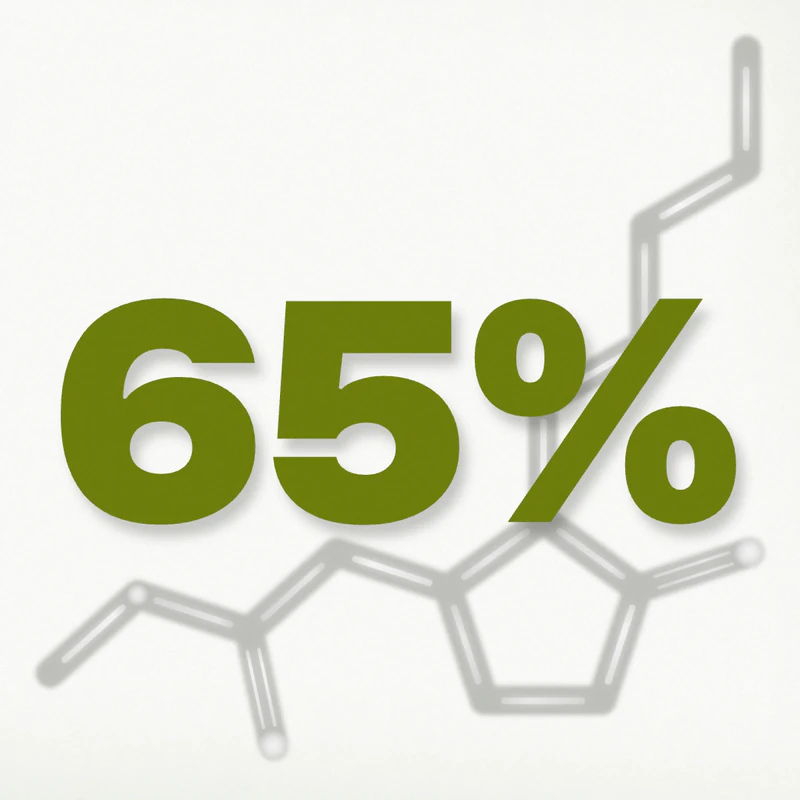
- 03As Hedione's price fell, doses rose: the University of Bristol and Chemistry World report that Comme des Garçons' Odeur 53 used 65 percent in 1998.
- 04Firmenich dates its chemist Edouard Demole's discovery of Hedione to 1958 and Bristol to 1959; a 2019 Chimia account says it was patented in 1960 and published in 1962.
- 05Eau Sauvage, Edmond Roudnitska's 1966 fragrance, and Sauvage, by François Demachy and called new in LVMH's 2015 results, are two different Dior perfumes.
Hedione matters less for its own smell than for what it does to a perfume. Its maker, the chemists who described it and Dior's own pages trace how a costly laboratory find went from 2.5 percent of one perfume to 65 percent of another.
What is Hedione?
Hedione is methyl dihydrojasmonate, a jasmine-like aroma molecule that the fragrance company Firmenich named and makes. Firmenich's ingredient sheet for Hedione gives its chemical name (cyclopentaneacetic acid, 3-oxo-2-pentyl-, methyl ester), a molecular weight of 226 and its origin: chemical synthesis. The name comes from the Greek hedone, pleasure, and "was given by its inventors at the perfume company Firmenich", says the University of Bristol's Molecule of the Month profile of Hedione.
The accounts agree on who found it: Edouard Demole of Firmenich. Firmenich, Chemistry World and Chimia also tie the find to his work on methyl jasmonate, which Bristol calls "one of the key odorants of jasmine". They disagree on when.
| Source | What it says | Year |
|---|---|---|
| Firmenich, ingredient sheet | Demole discovered it "as part of the methyl jasmonate synthesis" | 1958 |
| Chemistry World, 2019 podcast | Hedione was "first synthesised" | 1958 |
| University of Bristol, 2025 profile | Demole "discovered" it while doing his PhD | 1959 |
| Chimia, 2019 account by Firmenich chemists | "These discoveries were patented in 1960, and published in 1962" | 1960 and 1962 |
| Helvetica Chimica Acta, journal record | Demole and colleagues publish the synthesis of methyl dihydrojasmonate | 1962 |
The firmest date is 1962: the paper is a dated record anyone can look up in Helvetica Chimica Acta. For the discovery itself, the maker's 1958 is the better source, since Firmenich speaks for its own laboratory, and Chemistry World gives the same year. Bristol's 1959 is the outlier, and its own reading list points to the same 1960 patents and 1962 papers. We use 1958 for the discovery and 1962 for publication.
What does Hedione smell like?
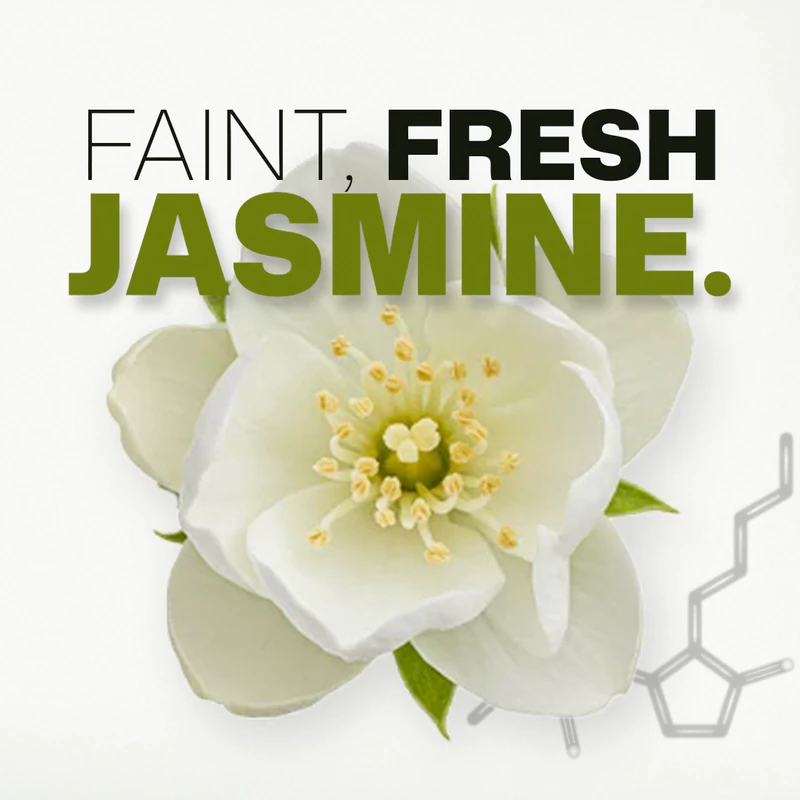
On its own, Hedione smells of light, fresh jasmine. Firmenich describes "an elegant, transparent floral, jasmine note with citrus freshness", from a material "by itself quietly understated and easily underestimated". Bristol agrees that "hedione smells of jasmine, too".
Its value shows in a blend. Bristol, citing Christian Chapuis of Firmenich, writes that by itself Hedione "did not have that strong a smell". Yet it "rendered perfumes round, floral and diffusive" and gave some of them "a greater faculty to fill a room with fragrance". Firmenich puts the effect in one line:
It does not necessarily increase strength, but does bestow presence, noticeability, and diffusion.
Firmenich, Hedione ingredient sheet
The sheet lists it as a "top and heart note" in fine fragrance and says it lasts two weeks on a smelling strip. The molecule also exists in four forms, or stereoisomers, that do not smell alike. Bristol lists odor thresholds from 15 parts per billion for the most potent to 15,360 for the faintest. A 2002 study in Food Reviews International found all four "odor-active" and different in their olfactory properties.
What happens in the brain when you smell Hedione?
In brain scans, Hedione activated two limbic areas, the amygdala and hippocampus, more strongly than a common floral odor, phenylethyl alcohol, according to a 2015 study in NeuroImage. The team, from Ruhr University Bochum and TU Dresden, started with receptors. Humans carry five vomeronasal-type 1 receptor genes, VN1R1 to VN1R5. In two laboratory cell systems, Hedione activated VN1R1, a receptor in the lining of the human nose that the authors call a "putative human pheromone receptor".
Hedione also drew a different response from women and men in a region of the hypothalamus "associated with hormonal release". The authors write that VN1R1 activation "might play a role" in hormone secretion that differs between the sexes.
A later test looked for an effect on behavior and found no clear one. In a 2021 study in Physiology & Behavior, women smelled Hedione, phenylethyl alcohol or odorless air around ovulation, then judged men's faces. Hedione had no effect on a face recognition task and only "moderate, but non-significant effects" on ratings of attractiveness and likeability. Only about half of the women tested were sensitive to Hedione, which the authors describe as a high rate of Hedione-specific anosmia, or smell blindness.
We therefore assume that Hedione is not a potent model of pheromone in humans.
Physiology & Behavior, study of Hedione and ratings of faces, 2021
The same paper calls the existence of human pheromones "controversial". Bristol sums up later tests on women: Hedione increased their response to certain stresses but did not affect how they rated men's attractiveness.
How did Hedione get into Eau Sauvage?
Firmenich sent out samples, and Dior took Hedione up for Eau Sauvage, which Edmond Roudnitska composed in 1966. Chemistry World's 2019 podcast on Hedione says early uptake was slow, so Firmenich "sent out samples to notable perfume houses such as Dior". Dior's Eau Sauvage page places the work in Cabris, "in the bushy hills of the Grasse hinterland", and calls Eau Sauvage "the first men's fragrance from the house of Dior".
The dose was small. Hedione "was very expensive at first, which partly explains the tiny amount of it in Eau Sauvage (2.5%)", Bristol writes, and Chemistry World gives the same 2.5 percent. Both are published accounts, not a formula issued by Dior.
Bristol sketches the structure around it: bergamot, lemon and basil at the top; jasmine from Hedione, with patchouli, in the heart; oakmoss in the base. Chemistry World calls it "a fresh citrus fragrance for men with floral accents", the family our guide to citrus fragrances explains.
Roudnitska had already worked for Hermès. The Hermès page for Eau d'Hermès says he created it, "the House's very first fragrance", in 1951; that story is told in Eau d'Hermès, the first Hermès perfume. His place among the great noses is set out in Famous Perfumers in History.
Why did Hedione doses rise?
Doses rose because Hedione became cheaper. Chemistry World reports that it was made in batches of 50 kg in 1961. As manufacturing improved, "its price fell", demand rose, and "by the 1970s it was being made by the ton". Bristol puts it plainly: "With economies of scale, costs came down".
Bristol lists these shares, and Chemistry World confirms the first and the last:
| Perfume | House, year | Hedione share | Source |
|---|---|---|---|
| Eau Sauvage | Dior, 1966 | 2.5% | Bristol; Chemistry World |
| Chanel N°19 | Chanel, 1971 | 12.6% | Bristol |
| Diorella | Dior, 1972 | 8% | Bristol |
| First | Van Cleef & Arpels, 1976 | 18% | Bristol |
| Cristalle | Chanel, 1993 | 26% | Bristol |
| Odeur 53 | Comme des Garçons, 1998 | 65% | Bristol; Chemistry World |
Years are as Bristol gives them, and neither source says how the shares were measured: read them as reported formula figures, not tests of bottles on sale. For scale, Firmenich's sheet says Hedione is used at "between 2 and 15%, but can be used at levels of 35% and above". Odeur 53's reported 65 percent goes well beyond the usual range.
For a perfume built on a single material, see Molecule 01 and Iso E Super.
Is Eau Sauvage the same as Sauvage?
No. Eau Sauvage is Edmond Roudnitska's 1966 fragrance for Dior; Sauvage is a separate Dior fragrance by François Demachy. LVMH called Sauvage "the new men's fragrance" in its results for 2015.
Dior's Sauvage eau de toilette page, as archived in November 2015, credits "François Demachy, Dior Perfumer-Creator". It names two notes, Reggio bergamot and Ambroxan, which it says "unleashes a powerfully woody trail". Eau Sauvage, by Bristol's account, has a jasmine heart from Hedione.
The two lines also came to share a perfumer: Dior's 2019 Eau Sauvage page presented an Eau Sauvage Parfum in which Demachy "revisits the trail of Eau Sauvage". Sauvage's sales claims, set against those of Chanel N°5 (No. 5), are weighed in our article on whether N°5 is the best-selling perfume.
Is Hedione natural?
Hedione as perfumers buy it is synthetic: Firmenich lists its origin as chemical synthesis and rates it readily biodegradable. Its story starts in a flower, though. A 2019 account in the Swiss chemistry journal Chimia, by Christian Chapuis and colleagues at Firmenich, starts in 1957. That year, it says, Demole found jasmine's "hidden active principle", methyl jasmonate, at "less than 0.8%" of jasmine absolute.
Confirming that structure, by synthesis, chemical breakdown and full hydrogenation, "led to the serendipitous discovery" of Hedione, its saturated analogue, the account says. Chemistry World says Hedione was made "by simple hydrogenation". Natural jasmine was scarce: one ton of flowers yields about 2.3 kg of jasmine concrete, Chimia notes. It calls the extract "more expensive than gold", used in practically every perfume at the start of the 20th century.
The molecule itself also turns up in nature. The 2002 study in Food Reviews International reports analyzing all four forms of methyl dihydrojasmonate "in numerous natural products". Chimia adds that methyl jasmonate occurs in Tunisian rosemary, several citrus fruits, flowers and tea flavors. So the answer has two parts: the Hedione in perfume is made by synthesis, and the same molecule has been found in natural products.
Part of Eau Facts, the Fragnatique team's series on fragrance history and science, also told in short videos on Instagram at @eaufacts. Researched from the sources listed above, drafted with AI assistance and checked against each source before publishing.
Frequently asked
- Is Hedione a pheromone?
- Not on the evidence so far. A 2015 study in NeuroImage found that Hedione activates VN1R1, a receptor its authors call a putative human pheromone receptor, and that it drew different responses from women and men in a hormone-related part of the hypothalamus. A 2021 study in Physiology & Behavior found no significant effect on how women rated men's faces, and its authors concluded that Hedione is not a potent model of pheromone in humans.
- Who discovered Hedione?
- Edouard Demole, a chemist at Firmenich, found it while working on methyl jasmonate, one of the key odorants of jasmine. Firmenich dates the discovery to 1958 and Chemistry World gives the same year; the University of Bristol says 1959. A 2019 account by Firmenich chemists in Chimia says the work was patented in 1960 and published in 1962. The name, from the Greek word for pleasure, was given at Firmenich.
- Is Hedione a top note or a base note?
- Its maker lists it as a top and heart note, not a base note: Firmenich's ingredient sheet gives that placement for fine fragrance and says Hedione lasts two weeks on a smelling strip. In Eau Sauvage, the University of Bristol places its jasmine in the middle note, between a top of bergamot, lemon and basil and a base of oakmoss. Firmenich's case for it rests on effect rather than position: presence, noticeability and diffusion.
- When was Eau Sauvage launched?
- In 1966. Dior says Edmond Roudnitska composed Eau Sauvage that year in Cabris, in the hills of the Grasse hinterland, and calls it the house's first men's fragrance. The University of Bristol, Chemistry World and a 2019 Chimia account give the same year. It is a different perfume from Sauvage, the Dior men's fragrance by François Demachy that LVMH called new in its results for 2015.

Explore Fragnatique