The First Perfumes of Chanel, Dior, Hermès and Louis Vuitton
Dior's first perfume was Miss Dior, made for its first show in 1947, Dior says; Chanel's was N°5 in 1921, Louis Vuitton's came in 1927, Hermès's in 1951.
- 01By the houses' own accounts, Chanel's first perfume was N°5 (1921), Louis Vuitton's Heures d'Absence (1927), Dior's Miss Dior (1947) and Hermès's Eau d'Hermès (1951).
- 02Dior says Christian Dior commissioned the perfumer Paul Vacher for Miss Dior, sprayed in his salons at his first show on 12 February 1947; Givaudan credits Jean Carles.
- 03Hermès waited longest: its 2021 registration document dates Thierry Hermès's harness workshop to 1837 and Eau d'Hermès to 1951, 114 years apart by our arithmetic.
- 04Chanel calls N°5 the first perfume by a dressmaker, but Guinness World Records names Paul Poiret's Nuit Persane, launched in Paris in 1911, the first designer perfume.
- 05The Estée Lauder Companies introduced Tom Ford Beauty in 2006 and became sole owner of the whole Tom Ford brand in 2023, licensing it for fashion and eyewear.
The great fashion houses came to perfume at very different speeds. Dior had a perfume ready for its first show; Hermès took more than a century. Below, each house's first perfume is checked against what the house itself publishes, with the year, the perfumer it credits and the time since its founding. Two later chapters follow: a fragrance sold to men and women alike, and a beauty company that came to own a fashion brand. The longer view, back to the oldest written recipes, is in our history of perfume, date by date.
What were the first perfumes of Chanel, Louis Vuitton, Dior and Hermès?
By the houses' own accounts, they were N°5 (No. 5) for Chanel in 1921, Heures d'Absence for Louis Vuitton in 1927, Miss Dior for Dior in 1947 and Eau d'Hermès for Hermès in 1951. The table counts each wait from the founding date that the house or its parent company gives. The dates are theirs; the subtraction is ours.
| House | Founded, as the house or its owner states | First perfume | Year | Years between (our arithmetic) | Perfumer, as credited | Source | Read more |
|---|---|---|---|---|---|---|---|
| Chanel | 1910: Gabrielle Chanel's first hat boutique, Paris | N°5 | 1921 | 11 | Ernest Beaux, Chanel says | Chanel founder page; Chanel N°5 page | The N°5 sales claim |
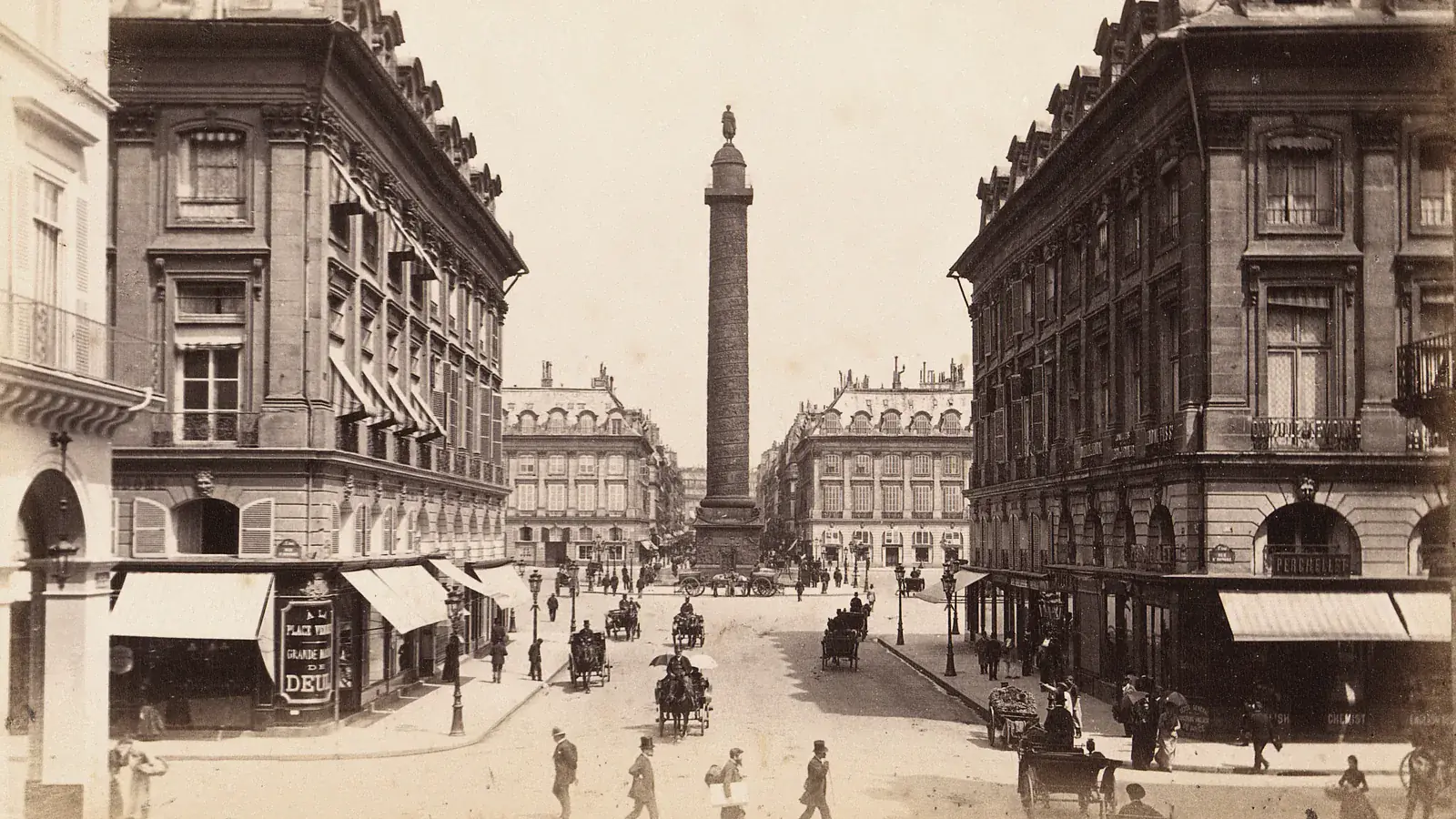
| Louis Vuitton | 1854: first store, 4 rue des Capucines, Paris | Heures d'Absence | 1927 | 73 | No source we read names one | LVMH on Louis Vuitton; Louis Vuitton | The lost 1927 perfume |
| Dior | 1946: the House of Dior, opened that December | Miss Dior | 1947 | 1 | Paul Vacher, say Dior and the Musée Christian Dior; Jean Carles, says Givaudan; Christian Dior himself, says LVMH | LVMH on Parfums Christian Dior; LVMH fragrance guide; Musée Christian Dior; Dior; Givaudan | Miss Dior and Catherine Dior |
| Hermès | 1837: Thierry Hermès's harness workshop, Paris | Eau d'Hermès | 1951 | 114 | Edmond Roudnitska, Hermès says | Hermès, 2021 filing; Hermès product page | The first Hermès perfume |
Each founding year marks a different kind of start. Chanel's founder page counts from the hat boutique Gabrielle Chanel opened in Paris in 1910, and says her couture house followed in Biarritz in 1915. LVMH, which owns Louis Vuitton, dates the trunk maker's first store to 1854. Hermès's registration document for 2021 places the harness workshop of Thierry Hermès in Paris in 1837, and LVMH dates the House of Dior to 1946.
One of those dates is disputed. The Met's essay on Chanel says she opened her first shop in Paris in 1913, followed by another in Deauville. Chanel's page gives 1910 for the Paris hat shop and 1912 for Deauville, dating each opening separately. Neither text cites a document, so neither settles it; the table keeps the house's more detailed account, because its column records each house's own date. Counted from the Met's 1913, Chanel's wait would shrink to eight years.
How did Chanel's first perfume begin?
With a brief and a choice, in Chanel's telling. In 1921, the house's N°5 page says, Gabrielle Chanel wanted "a woman's perfume with a woman's scent" from the perfumer Ernest Beaux. She picked the fifth of the samples he presented, a composition built on aldehydes in a way the house calls unprecedented.
Why keep the number? The founder page answers with her own words, as Beaux recalled them in a memoir published in October 1946, 25 years after the launch by our arithmetic. In that account she was presenting her collection on 5 May, the fifth month of the year, and went on:
we will therefore give it the number that it's wearing, and the number 5 will bring it luck.
Chanel, "Gabrielle Chanel, the founder of CHANEL", quoting Ernest Beaux's memoir of 1946
N°5 also carries a famous label, the best-selling perfume of all time. We found no public lifetime sales count behind it, from Chanel or anyone else, so it stays unproven; our article on the N°5 sales claim traces the figures people repeat to their first appearance in print.
The house makes one more claim for N°5: its founder page calls it "the first perfume by a dressmaker". Two independent sources point the other way. Guinness World Records lists the couturier Paul Poiret's Nuit Persane, launched in Paris in 1911, as the first designer perfume, and says that while popular lore credits Chanel, "historians generally credit another French fashion designer". The Met's essay on Poiret dates the business behind it. In 1909 he moved his atelier to avenue d'Antin, and two years later he founded a perfume and cosmetics company named after his eldest daughter, Rosine.
That makes 1911 by our arithmetic, the year Guinness gives. A museum essay and a record keeper agree with each other, and neither is the house making the claim, so on this point we follow them rather than Chanel.
What survives of Louis Vuitton's 1927 perfume?
A name, a description and some empty bottles. The formula is gone: Louis Vuitton says it "has long since been lost". The house's own account of the perfume dates it to 1927 and says it took its name from a country house in Seine-et-Marne, France, that the Vuitton family had acquired. Its 2020 press text, which Tagwalk published, describes the design: an airplane engraved on the glass, and a box in the form of a kilometer marker.
The bottles outlived what was in them. In 2016 LVMH wrote that the old bottles are engraved with evocative names, Heures d'Absence among them, "but the scents have evaporated". A photograph from Thérèse Bonney's collection in the Smithsonian Libraries and Archives, captioned Paris, 1925 to 1930, records the etched crystal bottle with its packaging.
The name came back on 27 February 2020, the date the press text gives, on a new composition by Jacques Cavallier Belletrud, whom the house calls its Master Perfumer. Since no one knows how the original smelled, the two perfumes share a name and nothing that can be compared. Our story of the lost 1927 perfume follows the bottle, the name and the house's other early scents.
What was Dior's first perfume?
Miss Dior, made to accompany the first collection Christian Dior showed, on 12 February 1947, in his salons at 30 avenue Montaigne in Paris. The Musée Christian Dior in Granville puts it in one line in the chronology of its 2021 press kit:
Naissance du premier parfum Dior, Miss Dior, créé par Paul Vacher.
Musée Christian Dior, "Dior en roses", press kit, 2021 (in English: the birth of the first Dior perfume, Miss Dior, created by Paul Vacher)
The same chronology says Dior opened his house in December 1946, so the perfume arrived within months. Dior's own history of its founder's perfumes says he gave Vacher a brief for a perfume that smelled of love. On the day of the show, the house says, it was sprayed generously through the salons and became the perfume of the New Look, a green chypre built on citrus fruits, flowers and patchouli.
Who composed it is not settled. Givaudan, for its part, lists Miss Dior among the creations of Jean Carles, the perfumer whose training system is explained in how the Jean Carles method trains noses. LVMH, which owns Dior, goes further and says Christian Dior created it himself. None of them cites a record from 1947, so the credits stand side by side.
The name honors a person. According to LVMH, the perfume was inspired by Catherine, the designer's sister, and the museum says it was dedicated to her. An essay for the Pritzker Military Museum & Library, on Justine Picardie's biography of her, sets out her war. By November 1941 she belonged to F2, a Resistance intelligence network; on 6 July 1944 she was arrested and tortured, then deported to Germany, where she survived forced labor in Ravensbrück and other camps.
When she came home on 28 May 1945, the essay says, she was so emaciated that her brother did not recognize her. He later named the perfume for her, the essay adds. Our article on Catherine Dior tells her story in full.
How did Hermès describe its first perfume?
As the inside of a bag. Its perfumer, Edmond Roudnitska, pictured a Hermès bag still holding the trace of a perfume, an image the house still uses. The 2019 version of the Eau d'Hermès page adds his description of a fine leather note, wrapped in citrus and seasoned with spices, and presents it as a scent for men and women. Its current page, as archived in April 2026, lists lemon petitgrain with cardamom and cinnamon.
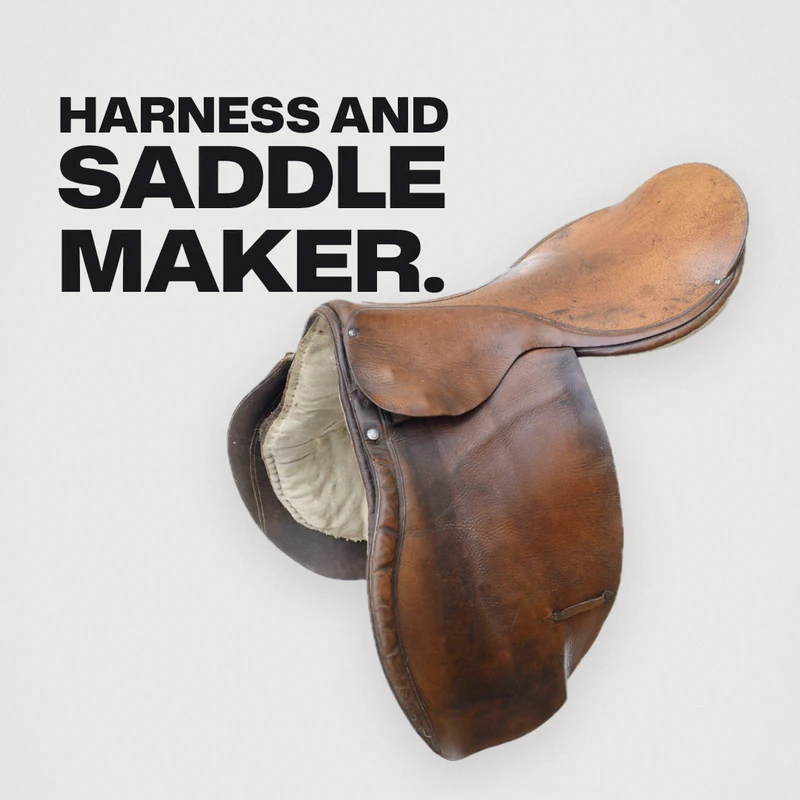
Leather came first by a long way. The 2021 registration document of Hermès traces the house to the workshop Thierry Hermès opened in Paris in 1837, as a saddler and harness maker. Its list of key dates gives 1951 to Eau d'Hermès as the start of "a new métier".
Ten years later came Calèche, which Hermès's 2013 press kit for Épice Marine names as the house's first women's perfume; the same kit says that in 2004 Hermès took on an exclusive perfumer to create all its fragrances. Roudnitska went on to compose Eau Sauvage for Dior in 1966, says the University of Bristol's article on Hedione, the start of the Hedione story. Our full story of Eau d'Hermès opens the bag.
Which house waited longest for its first perfume?
Hermès: 114 years passed between its harness workshop and Eau d'Hermès, against 73 for Louis Vuitton, 11 for Chanel and about one for Dior, by our subtraction from the dates in the table. The order matches what each house made first. The two oldest began with goods for horses and travel, saddles and harnesses at Hermès and trunks at Louis Vuitton, and reached perfume decades later.

Chanel and Dior were couture houses, and their founders came to perfume within their own careers. Gabrielle Chanel launched N°5 eleven years after her first hat shop, by the house's dates. Christian Dior hardly waited at all: by his house's account, Miss Dior was in the air at his very first show.
The newest house in this guide reversed the order. The Tom Ford brand page published by its owner says the brand launched in 2005 with fragrance and eyewear and debuted its womenswear in 2010, five years on. That story is the last chapter below.
Are the first perfumes still made?
N°5 and Eau d'Hermès are still sold under their first names. The 1927 Heures d'Absence is lost, and for Miss Dior the pages we read name newer versions without saying whether the 1947 formula is still on sale.
| First perfume | Status today | Source |
|---|---|---|
| Chanel N°5 (1921) | On sale, including an Eau de Parfum that Jacques Polge created in 1986 | Chanel N°5 page, archived June 2026 |
| Heures d'Absence (1927) | Lost; a new perfume has carried the name since 27 February 2020 | Louis Vuitton; its 2020 press text |
| Miss Dior (1947) | The original was later renamed Miss Dior Eau de Toilette Originale, Givaudan says; LVMH presents Francis Kurkdjian's Miss Dior Essence as a new interpretation | Givaudan; LVMH |
| Eau d'Hermès (1951) | On sale as an eau de toilette that Hermès calls its very first fragrance | Hermès product page, archived April 2026 |
A name on a shelf is not always the first formula. Chanel's N°5 page itself separates Beaux's composition from the fuller Eau de Parfum made in 1986 by Polge, whom it calls the Chanel nose since 1978. LVMH's fragrance guide calls Miss Dior Essence a new interpretation, and the Hermès pages we read do not say whether today's Eau d'Hermès follows the 1951 formula unchanged.
The four also sit in different families. Chanel calls N°5 a floral aldehyde, Dior calls Miss Dior a green chypre, and Hermès describes Eau d'Hermès as citrusy and spicy; what those family names mean is set out in our fragrance families guide.
Later chapters: CK One and Tom Ford Beauty
The four firsts above were each made for a fashion house under its own name. Two later stories show how far the model has moved since.
| Brand | Fragrance chapter | Year | Who stands behind it, as stated | Source | Read more |
|---|---|---|---|---|---|
| Calvin Klein | CK One | 1994 | Calvin Klein Fragrances, a division of Coty, with Calvin Klein, Inc., a PVH brand | PVH release, 2024 | CK One's 1994 story |
| Tom Ford | Tom Ford Beauty | 2006 | The Estée Lauder Companies, owner of the whole Tom Ford brand since 2023 | ELC, 2022; ELC, 2023 | Who owns Tom Ford? |
CK One, 1994: one fragrance for men and women
CK One launched at Tower Records in 1994, say Calvin Klein and Coty in a 2024 release published by PVH, which calls it "a fragrance for everyone". The words go back to the campaign: System Magazine's history of it quotes them from the ads and says CK One was "marketed as the first mass scent developed for both men and women". That is how it was sold, not a verified first.
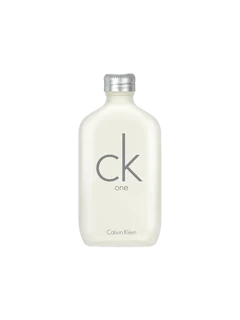
The art director Fabien Baron designed the bottle as a simple pocket flask in frosted glass, the magazine says. Baron recalls that, for Calvin Klein, youth "was female and male". He chose the twist cap after asking what every kid in America was doing; his answer was opening a bottle of Coke. His is the only account of the cap we found.
Two Firmenich perfumers are credited. The major wins of Alberto Morillas, as dsm-firmenich lists them, include CK One for 1994, and the 2024 release calls him the perfumer behind the original. A Firmenich release of June 2017 counts it among the creations and co-creations of Harry Fremont. Our CK One article checks the cap story and the unisex claim; Morillas has a profile of his own.
Tom Ford Beauty, 2006 and 2023: the beauty company that bought the brand
Tom Ford's perfume began under license at a beauty group. The Estée Lauder Companies (ELC) signed an exclusive global license for Tom Ford Beauty in 2005, and the line's first fragrance, Black Orchid, came out in November 2006, says ELC's 2007 annual report. That fits both dates ELC gives elsewhere: 2005 on its brand page, for the brand's start, and 2006 in its November 2022 announcement, for the beauty line.
That announcement also set out what buying the whole brand would change. ELC would stop paying royalties on beauty and keep the line beyond a license due to expire in 2030. The deal closed on 28 April 2023, and ELC became sole owner of the Tom Ford brand and all its intellectual property. The same release says ELC licenses the trademark to Zegna for fashion and accessories and to Marcolin for eyewear, so the fashion side now runs on licenses from a beauty company.
In 1947 a couture house commissioned its perfume. Here, the company that made the perfume came to own the house. The Tom Ford ownership story sets out the deal in full.
Part of Eau Facts, the Fragnatique team's series on fragrance history and science, also told in short videos on Instagram at @eaufacts. Researched from the sources listed above, drafted with AI assistance and checked against each source before publishing.
Frequently asked
- What was Chanel's first perfume?
- N°5, created in 1921. Chanel's founder page calls it Gabrielle Chanel's first perfume, made eleven years after she opened her first hat boutique in Paris (our arithmetic from the house's dates). The house credits the perfumer Ernest Beaux and says she chose the fifth of his samples. Quoting a memoir Beaux published in 1946, the page has her keeping the number for luck, because she was presenting her collection on 5 May, the fifth month.
- Which couturier launched a perfume first?
- Paul Poiret, on the records we found. Guinness World Records names his Nuit Persane, launched in Paris in 1911, as the first designer perfume. The Met's essay on Poiret dates his perfume and cosmetics company, named after his eldest daughter, Rosine, to two years after his 1909 move to avenue d'Antin. Chanel's founder page calls N°5 the first perfume by a dressmaker, but both independent sources date Poiret's perfume business ten years earlier.
- Who makes perfume for fashion houses?
- Three arrangements appear in this guide. Some houses keep their own perfumer: Louis Vuitton calls Jacques Cavallier Belletrud its Master Perfumer, and LVMH names Francis Kurkdjian as Dior's Perfume Creation Director. Some credits go to fragrance companies: Givaudan counts Miss Dior among Jean Carles's perfumes, and dsm-firmenich lists CK One among Alberto Morillas's wins. And a beauty group can run the line: Calvin Klein Fragrances is a division of Coty, and Estée Lauder introduced Tom Ford Beauty.

Explore Fragnatique