What Is a Fougère? Fougère Royale and the Smell of Shaving Soap
A fougère is a perfume family built on lavender, coumarin and oak moss, not fern; Houbigant says Paul Parquet began it with Fougère Royale in 1882.
- 01Houbigant says its perfumer Paul Parquet created Fougère Royale in 1882 and so began the fougère family; the Osmothèque perfume archive dates the perfume to 1884.
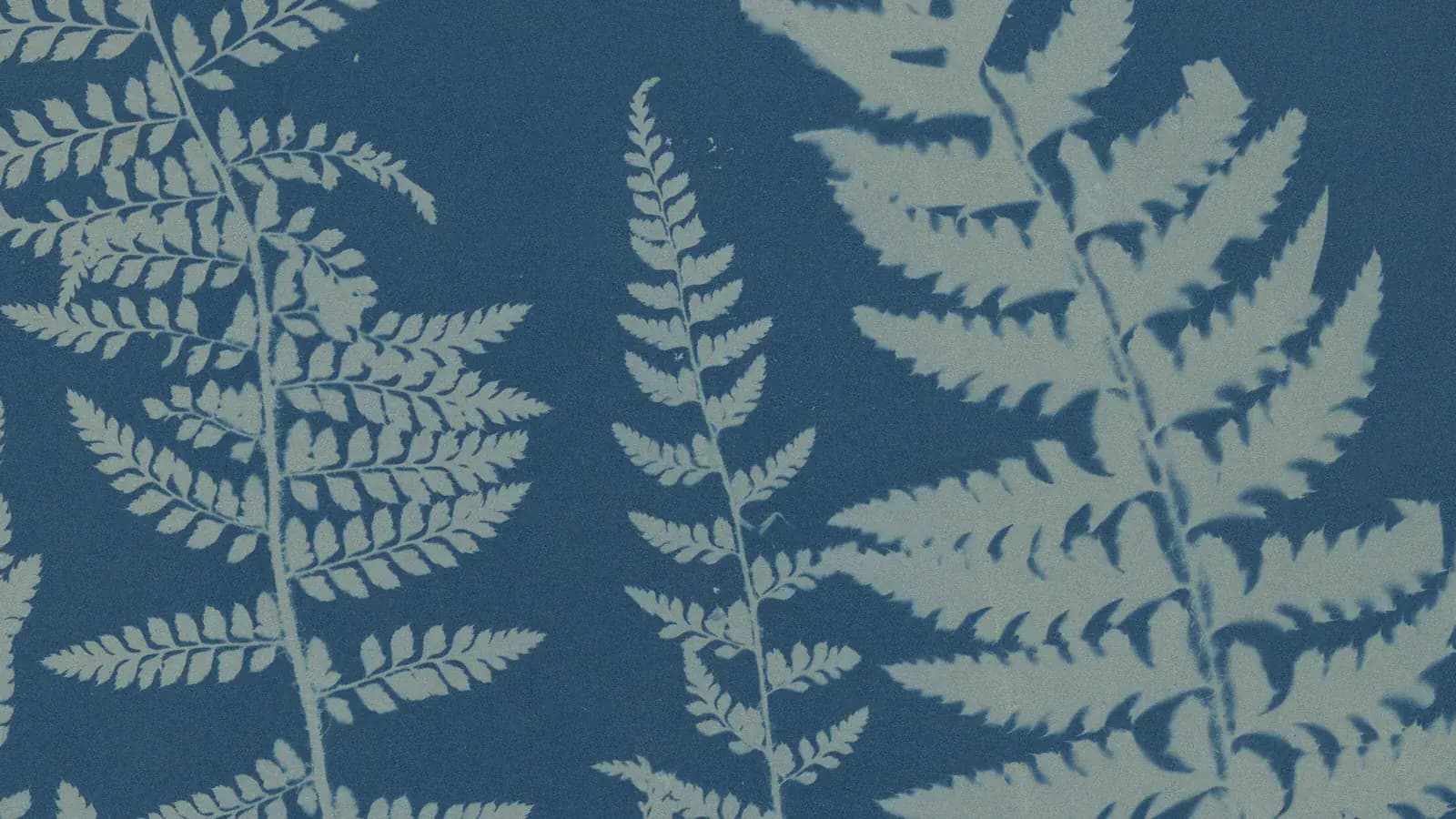
- 02Fougère is French for fern, yet the Osmothèque describes the family's accord as bergamot, lavender, geranium, coumarin and oak moss, with no fern.
- 03Perfumer & Flavorist reported in 1994 that Fougère Royale was first developed for soap and only later adapted to fine fragrance, toilet water and cologne.
- 04In 1868 the chemist William Henry Perkin made coumarin in the laboratory and found that it smelled exactly like coumarin from the tonka bean.
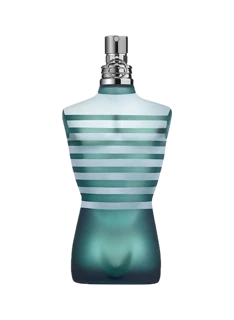
- 05Jean Paul Gaultier describes its Le Male Eau de Toilette as a lavender cologne that references the familiar smell of shaving soap.
The fougère is named after a fern, yet its classic accord contains none. Its story runs through a Paris perfume house, a chemist's laboratory and a bar of soap, and the sources behind it disagree on more than one detail.
What is a fougère fragrance?
A fougère is a perfume family built on lavender, coumarin and oak moss, with bergamot and geranium in its classic accord. Merriam-Webster's entry for fougère defines it as "a fragrance that consists of a blend of several oils or scents (such as lavender, citrus, or moss)". The Osmothèque calls it "one of the seven listed fragrance families in perfumery" in its article on tonka bean and coumarin. Its About page describes the Osmothèque as a nonprofit perfume archive that opened in 1990.
The name is French. Cambridge's French-English dictionary translates fougère as fern, and Merriam-Webster says the perfume sense probably began with one perfume: Fougère Royale ("Royal Fern"), introduced by the Paris house Houbigant in 1882. The house's own history speaks of the "fern-like" family.
On this site, fougères sit under the aromatic family. Our guide to fragrance families shows how that family relates to the other seven.
Who created the first fougère?
Paul Parquet, a perfumer and joint owner of Houbigant, according to the house. Houbigant's history says he became joint owner in 1880, and that under his direction manufacturing and administration moved to Neuilly-sur-Seine, where laboratories were installed. Two years later came the perfume:
In 1882, Paul Parquet created Fougère Royale, a fragrance that would define a new category of perfumes
Houbigant, "About us"
The house adds that the family "is still today the most popular family in men fragrances", a claim its page gives no figures for. An independent trade source makes a narrower claim. In 1994 the journal Perfumer & Flavorist ran two articles on the family by Danute Pajaujis Anonis, a consulting chemist perfumer; the second calls Fougère Royale "the first French fragrance in this odor tonality" and "the prototype of fougère compounds".
The same house page credits Parquet with Le Parfum Idéal, made for the Exposition Universelle in Paris in 1900. In 1912, it says, the perfumer Robert Bienaimé took over from him. Parquet appears beside other noses, among them Alberto Morillas, in our guide to famous perfumers.
The year is not settled. The Osmothèque dates Fougère Royale to 1884, in its 2016 article and on its collection page. Houbigant, the 1994 article, Merriam-Webster and a chemist writing for McGill University all give 1882. No page on either side cites a dated launch document, so we follow 1882: the house's own year, repeated by three independent sources.
Fougère Royale can still be smelled in two forms. The Osmothèque lists it among the treasures of its collection, "perfumes that no longer exist", and says it remakes such long-lost perfumes "rigorously respecting original formulas". Houbigant sells a Fougère Royale today that its product page calls "Reengineered from its 1882 regal compound".
What is in a fougère if not fern?
Lavender, coumarin and oak moss, with bergamot and geranium: the Osmothèque describes the family as based on an accord of those five materials, and none of them is a fern. The 1994 article traces the family's smell to "lavender, earthy notes and coumarin, with an addition of woody notes".
| Material | What the sources say | Parts in a 1950 fougère cologne |
|---|---|---|
| Bergamot | In the accord (Osmothèque); used for the top note of fougère soaps (Perfumer & Flavorist) | 400 |
| Lavender | The note behind the family's standing in men's perfumery (Osmothèque) | 100 |
| Geranium | In the accord (Osmothèque); added to fougère soaps "for rounding out and nuances" (Perfumer & Flavorist) | 40 |
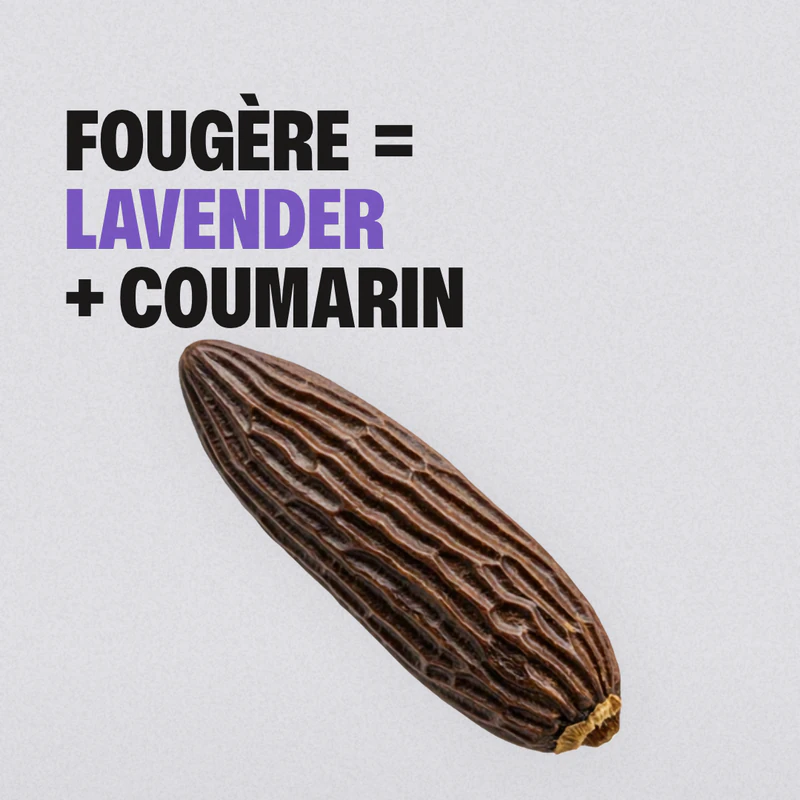
| Coumarin | Isolated from the tonka bean in 1820 (Osmothèque); made in a laboratory in 1868 (Perkin) | 300 |
| Oak moss | In the accord (Osmothèque); with lavender and coumarin, the usual base of fougère soaps (Perfumer & Flavorist) | 8 |
| Fern | Not in the accord, the soap base or the 1950 formula | none |
The last column comes from a cologne formula, Eau de Cologne à la Fougère, that the 1994 article reprints from a 1950 French formulary. It totals 1,200 parts, and synthetic carnation, amber and violet make up the rest. Coumarin is its second largest ingredient after bergamot; oak moss is the smallest.
The accord has kept changing. The Osmothèque writes that the family "gradually evolved to adapt to legislative issues (for oak moss, for example)", a story told in our article on natural and synthetic perfume safety. In the 1970s, it adds, the accord "took a fresh new turn thanks to synthetic molecules". The 1994 article lists newer materials for modern fougères, among them Hedione and Iso E Super, the subject of our article on Molecule 01.
Was the coumarin in Fougère Royale natural or synthetic?
The sources disagree, and none of them shows Parquet's formula. Houbigant says he used "the coumarin, isolated from tonka bean". Joe Schwarcz, a chemist at McGill University's Office for Science and Society, writes that "Synthetic coumarin first appeared on the market in 1882 in Fougere-Royal".
Both were possible by then. Coumarin itself was older than the perfume: the Osmothèque dates its isolation from the tonka bean to 1820 and its first synthesis to 1868, by the chemist William Perkin. Perkin's own paper, in the Journal of the Chemical Society, tested his product against "a specimen prepared from the Tonka bean": the crystals, the melting and boiling points and the smell all matched.
I think I may safely conclude that this artificial coumarin is the same as that obtained from the Tonka bean.
Journal of the Chemical Society, W. H. Perkin, "On the artificial production of coumarin and formation of its homologues", 1868
One part of the house's story needs care. Houbigant calls Parquet "the first perfumer to discover how to isolate particular molecules from natural raw materials and more specifically the coumarin". Coumarin had been isolated in 1820, 62 years before Fougère Royale by our arithmetic, so the claim can only mean a first among perfumers, and the page cites no evidence for it. The Osmothèque says something narrower: Parquet was "the first to use it" in creating Fougère Royale.
| Point | One side | The other side | Our reading |
|---|---|---|---|
| Year of Fougère Royale | 1882: Houbigant, Perfumer & Flavorist, Merriam-Webster, McGill | 1884: Osmothèque | 1882; neither side cites a launch document |
| Its coumarin | From the tonka bean: Houbigant | Synthetic: McGill | Open; no source shows the formula |
| Isolating coumarin | Parquet was "the first perfumer" to do it: Houbigant | Isolated from the tonka bean in 1820: Osmothèque | The house can only mean a first among perfumers, and cites no evidence |
Why do fougères smell like shaving soap?
Because the accord grew up in soap. The 1994 Perfumer & Flavorist article opens with the usual order: a new perfume appears "first as a fine fragrance, and only later" reaches colognes, cosmetics and soaps. "Fougère (fern) is an exception," it continues. Fougère Royale "was initially developed for soap" and was only later adapted to fine fragrance, toilet water and cologne.
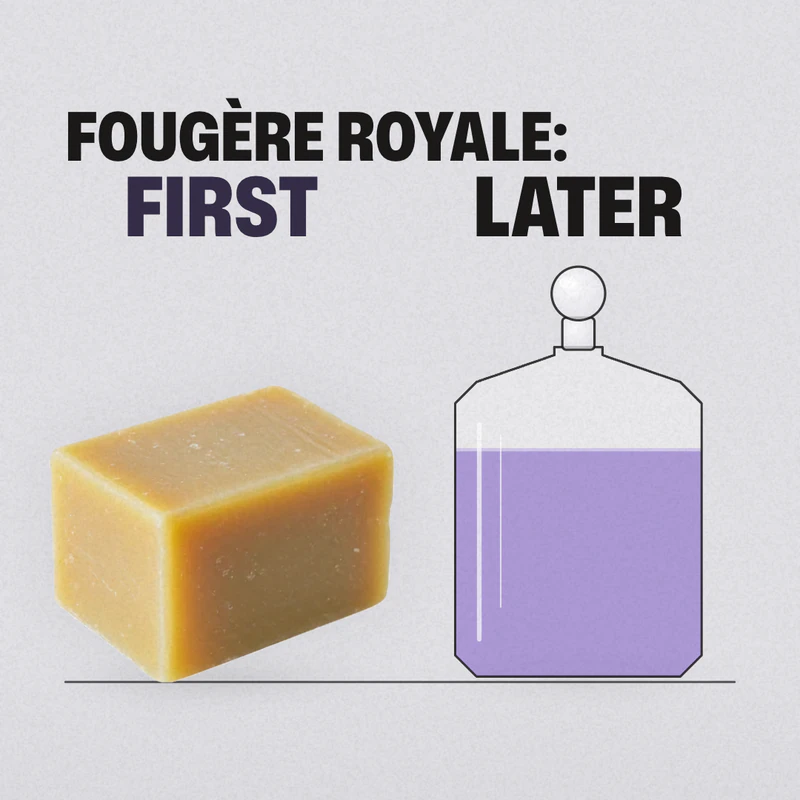
The family stayed close to soap. The same article gives lavender or one of its relatives, oak moss and coumarin as the usual base of fougère soaps, and records fougère in bath salts and in hair oils for men. By 1994, it says, fougère had lost its appeal as a cosmetic perfume, "but it endures as a soap perfume", with a fougère soap by Caswell-Massey as its example.
One house still draws on that memory openly. Jean Paul Gaultier's page for Le Male Eau de Toilette calls it "A lavender cologne for men that references the familiar smell of shaving soap". The house files Le Male under "Amber Aromatic", while the Osmothèque counts it among the modern variations of the fougère accord, a "Floriental with a fougère facet".
No source we read puts the resemblance to a smell test. What they document is a shared history: a lavender and coumarin accord that began in soap, stayed in soap and men's toiletries, and that a house selling a lavender cologne still describes through shaving soap.
Is fougère a masculine family?
By history, largely; by origin, no. The 1994 article gives the order: soap, then fine fragrance, cologne and cosmetic perfumes, and "Still later it was used as a men's fragrance." It judged the family's character "well suited for men's line fragrances" and named Canoe (Dana, 1935), Brut (Fabergé, 1964) and Paco Rabanne (1973) among its better known men's descendants.
The Osmothèque says the family was "Long considered a reference in men's perfumery because of its lavender notes", and Houbigant's claim about men's popularity is quoted above. Yet the same author wrote a companion article on fougère in fine fragrances, in the January/February 1994 issue, which covered its variations in women's perfumes. The author also noted that fougère appears in perfume genealogies for both women and men. Merriam-Webster's definition names no gender at all.
Part of Eau Facts, the Fragnatique team's series on fragrance history and science, also told in short videos on Instagram at @eaufacts. Researched from the sources listed above, drafted with AI assistance and checked against each source before publishing.
Frequently asked
- How do you pronounce fougère?
- Merriam-Webster, which lists fougère as an English noun for a kind of fragrance, gives the pronunciation füˈzher, roughly foo-ZHAIR, with the stress on the second syllable. Cambridge's French-English dictionary gives the French original as /fuʒɛʀ/. Both keep the grave accent on the second e, and Merriam-Webster forms the English plural by adding an s: fougères.
- When was Houbigant Fougère Royale created?
- In 1882, according to Houbigant's own history, which credits its perfumer and joint owner Paul Parquet. A 1994 article in Perfumer & Flavorist, Merriam-Webster's etymology and McGill University's Office for Science and Society give the same year. The Osmothèque, the perfume archive whose collection makes it possible to smell Fougère Royale, dates it to 1884. None of these pages cites a dated launch document, so we follow 1882.
- What does fougère mean?
- Fougère is the French word for fern, as Cambridge's French-English dictionary translates it. Merriam-Webster traces the perfume sense to Fougère Royale, Royal Fern, the Houbigant fragrance of 1882, and the word itself back through Old French fulgiere to the Latin filix, fern. In perfumery it names a family built on lavender, coumarin and oak moss, which Houbigant calls fern-like; the classic accord contains no fern.
- What is coumarin?
- Coumarin is an aroma molecule that the Osmothèque says was isolated from the tonka bean in 1820. In 1868 the chemist William Henry Perkin published a way to make it in the laboratory, gave its formula as C9H6O2 and found that his coumarin and the tonka bean's smelled exactly the same. Francis Kurkdjian, quoted by the Osmothèque, lists its facets as mild, bitter, almond and powdery. It is one of the five materials of the classic fougère accord.

Explore Fragnatique