Does Real Musk Come From a Deer? The Musk Deer Explained
Yes. The musk of perfumery comes from a gland of male musk deer, about 25 g per animal, says IUCN, which lists six of the seven species as Endangered.
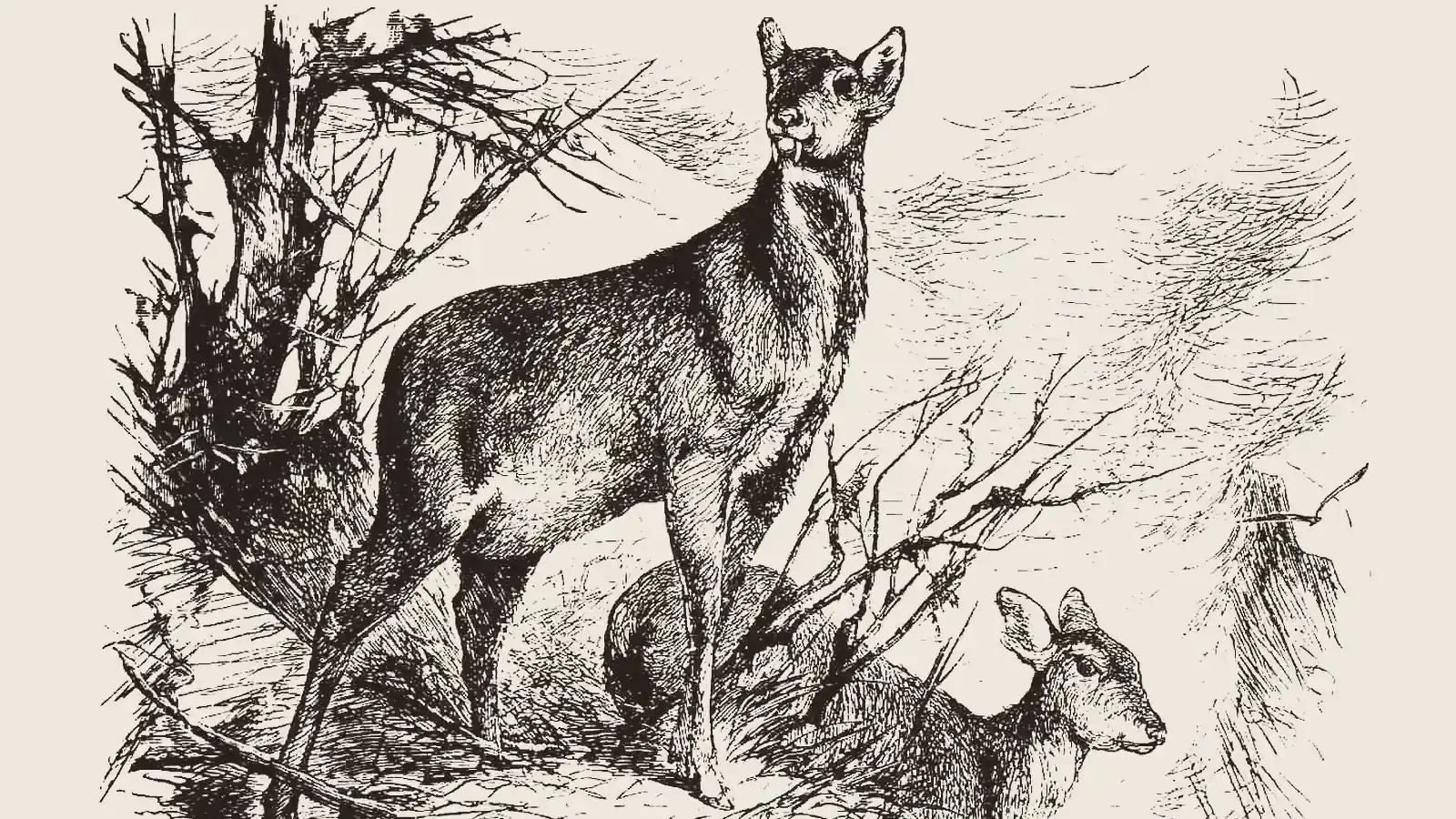
- 01The musk of perfumery comes from a gland that only male musk deer carry, set between the navel and the genitals, says TRAFFIC's 2004 report on the musk trade.
- 02A male yields about 25 grams of musk, say IUCN and Japan's ESABII database; most gatherers kill the deer for the whole pod, though live extraction is possible.
- 03IUCN's 2015 assessment of the Siberian musk deer says use of musk in the perfume industry is decreasing as cheaper synthetic alternatives become more popular.
- 04IUCN dates a musk price of up to US$45,000 a kilogram to the 1970s; TRAFFIC found raw musk averaging about US$30 a gram in Singapore and Malaysia in 2003.
- 05IUCN lists six of the seven musk deer species as Endangered, and CITES bars international commercial trade in wild musk deer from six countries' populations.
What is real musk made of?
Real musk is the secretion of the musk pod, a gland of male musk deer; a 2016 study in The Journal of Neuroscience names muscone its major odorant. It dates that finding to 1906; in 1926, Leopold Ružička and colleagues showed muscone to be a ketone with a 15-membered ring. The study adds that muscone-like ketones occur in the stink glands of the civet, the muskrat and the musk shrew. A 2014 paper in Neuron likewise calls muscone a musk odor "secreted by various animals from stink glands".
Musk deer are small animals native to Asia, 70 to 100 cm long and 7 to 17 kg, says a 2004 musk trade report by TRAFFIC, a wildlife trade monitor. They form their own family, the Moschidae. The Appendices of the Convention on International Trade in Endangered Species of Wild Fauna and Flora (CITES) list it apart from the deer family, the Cervidae. Neither sex grows antlers; the male has "a huge, scimitar-like canine instead", and females smaller ones, says the University of Michigan's Animal Diversity Web. That musk comes from a deer is one of the claims checked in Perfume Myths and Facts.
Is real musk still used in perfume?
Perfumers use less deer musk than before, says the International Union for Conservation of Nature (IUCN), because cheaper synthetic alternatives are becoming more popular.
As cheaper, synthetic alternatives for making perfumes are becoming more popular, use of musk in the perfume industry is decreasing ...
IUCN Red List, assessment of the Siberian musk deer, 2015
The same sentence in the IUCN assessment adds that musk's value for traditional medicines remains high. TRAFFIC's report, citing a 1999 study, says that demand is much higher than the perfume industry's.
The 2016 study notes that many compounds mimicking muscone have been synthesized for perfumery. They include nitro musks such as musk xylol and musk ketone, and polycyclic musks such as galaxolide; the study also names macrocyclic musks such as ethylene brassylate. Neither paper describes raw deer musk on its own. The study says musk odors are considered the "king" of the fragrance world for their "warm, sensual, fascinating scent". The Neuron paper speaks of their "fascinating animalic scent".
No source we read gives a share for deer musk in today's perfumes. For perfumes built on synthetic materials, see a perfume made of one synthetic molecule and whether natural perfume is safer than synthetic.
How is deer musk extracted?
Most musk gatherers kill the deer to remove the whole pod, IUCN says, although musk can be extracted from a live animal. Japan's Ministry of the Environment runs the threatened species database of the East and Southeast Asia Biodiversity Information Initiative (ESABII), which quotes IUCN to the same effect.
The pod lies between the navel and the genitals of males three years of age or older, TRAFFIC writes. IUCN calls it a preputial gland, the "musk-pod". In trade the gland measures about 4 to 6 cm long, 3.5 to 4.5 cm wide and 4 to 5 cm deep. Dried, its secretion turns granular and powdery, and a genuine pod on the market is walnut-sized and covered in fur, TRAFFIC adds. Males use the large gland to defend territory and attract mates, the IUCN text on ESABII says.
With snares and other indiscriminate methods, at least three to five animals may have to be killed per male with a large enough gland, TRAFFIC writes, citing a 1986 estimate. IUCN cites a 1987 estimate of four to five Siberian musk deer killed per pod, as hunting is often indiscriminate of sex and age.
Farming has not replaced the hunt. TRAFFIC dates musk deer farming to the 1950s and says it has served demand poorly, with disease, high mortality and low reproduction among captive animals. Siberian musk deer are bred successfully on farms in Russia and China, IUCN notes. Yet the IUCN text on ESABII finds little evidence that captive-bred musk has reduced poaching.
How much musk does one musk deer produce?
A male musk deer yields about 25 grams of musk, say IUCN, TRAFFIC and ESABII, which puts it at "1/40 of a kilogram".
- A wild male, pod taken once: about 25 g
- A captive male, each year: 7 to 17 g (TRAFFIC)
- One kilogram of musk: about 40 pods (ESABII's 1/40)
Yields vary between species, seasons and individuals, TRAFFIC adds. For the Siberian musk deer alone, IUCN cites an estimate of 25,000 adult males killed by harvesting and illegal hunting between 1990 and 2001.
How much does real musk cost?
Raw musk averaged about US$30 a gram in Singapore and Malaysia in 2003, TRAFFIC found, and IUCN dates a market value of up to US$45,000 a kilogram to the 1970s. TRAFFIC ties the price to the small yield per animal and calls musk reputedly the world's most expensive animal product.
| Figure | What it measures | Source |
|---|---|---|
| Up to US$45,000 per kilogram | International market value in the 1970s | IUCN, Siberian musk deer assessment, 2015 |
| US$45,000 per kilogram | What musk "can fetch" internationally, undated | IUCN text in Japan's ESABII database |
| About US$30 per gram on average; up to about US$100 per gram (one Singapore quote; Malaysia's highest about US$37) | Raw musk sold in vials, Singapore and Malaysia, February to June 2003 | TRAFFIC, 2004 |
At 1,000 grams to the kilogram (our arithmetic), that is about US$30,000 a kilogram on average and about US$100,000 for the top quote. TRAFFIC cautions that the spread in prices may indicate authenticity, telling natural from synthetic musk, or show raw musk adulterated with other substances. Figures this different show no trend, and we found no current price from a primary source.
Is real musk illegal?
Real musk may cross borders only with CITES permits, and wild musk deer from six countries' populations may not be traded internationally for commercial purposes, TRAFFIC explains. The Convention's text covers "any readily recognizable part or derivative" of a listed animal.
Appendix I shall include all species threatened with extinction which are or may be affected by trade.
Convention on International Trade in Endangered Species of Wild Fauna and Flora, Article II
An Appendix I import permit requires that the specimen "is not to be used for primarily commercial purposes" (Article III). An Appendix II export needs advice that it "will not be detrimental to the survival of that species" (Article IV). Species+, the CITES database run by the UN Environment Programme World Conservation Monitoring Centre (UNEP-WCMC), records how the listing grew:
| In force from | Musk deer listing | Source |
|---|---|---|
| 1 July 1975 | Appendix I: one subspecies, Moschus moschiferus moschiferus | Species+ |
| 28 June 1979 | Appendix II: the whole genus Moschus, with a Himalayan population in Appendix I | Species+ |
| 29 July 1983 | Populations of Afghanistan, Bhutan, India, Myanmar, Nepal and Pakistan in Appendix I; all others in Appendix II | Species+ |
The Appendices valid from 5 March 2026 keep that wording. TRAFFIC's report dates the six-country rule to 1979; we follow Species+, which records each listing's effective date. National laws add their own layer: Mongolia has banned hunting the Siberian musk deer since 1953, IUCN notes.
Is the musk deer endangered?
Yes: IUCN lists six of the seven musk deer species as Endangered and the Siberian musk deer as Vulnerable, in assessments published in 2015 and 2016. Categories follow IUCN's Red List dataset of 28 July 2026; ranges and CITES listings follow Species+.
| Species | Lives in | IUCN Red List | CITES Appendix | Assessment |
|---|---|---|---|---|
| Anhui musk deer (Moschus anhuiensis) | China | Endangered | II | IUCN 2015 |
| Forest musk deer (M. berezovskii) | China, Vietnam | Endangered | II | IUCN 2015 |
| Alpine musk deer (M. chrysogaster) | Bhutan, China, India, Nepal | Endangered | I, but II in China | IUCN 2016 |
| Kashmir musk deer (M. cupreus) | Afghanistan, India, Pakistan | Endangered | I | IUCN 2015 |
| Black musk deer (M. fuscus) | Bhutan, China, India, Myanmar, Nepal | Endangered | I, but II in China | IUCN 2015 |
| Himalayan musk deer (M. leucogaster) | Bhutan, India, Nepal | Endangered | I | IUCN 2015 |
| Siberian musk deer (M. moschiferus) | China, Kazakhstan, Mongolia, North Korea, Russia, South Korea | Vulnerable | II | IUCN 2015 |
TRAFFIC's 2004 report listed four species, none Endangered, before a 2007 split of Moschus chrysogaster into three that Species+ records.
For the forest musk deer in China, the IUCN text on ESABII gives guesses of over one million in the 1960s and 100,000 to 200,000 in 1992. Its 1998 source also covered the Anhui musk deer, M. anhuiensis. The text adds that "the basis for these numbers is not clear". For the Siberian musk deer, IUCN cites an estimate of about 110,000 animals across ten federal regions of Siberia in 2011.
TRAFFIC names two main causes of decline: habitat loss and hunting for musk. For the Siberian musk deer, IUCN calls illegal, unsustainable hunting for musk the principal threat. Frankincense is another natural material under pressure: see the decline of frankincense trees. Where musk notes sit in a perfume is covered in our guide to the notes pyramid.
Part of Eau Facts, the Fragnatique team's series on fragrance history and science, also told in short videos on Instagram at @eaufacts. Researched from the sources listed above, drafted with AI assistance and checked against each source before publishing.
Frequently asked
- Is the musk deer a true deer?
- Not in the zoologist's sense. Musk deer form their own family, the Moschidae, which the CITES Appendices list apart from the Cervidae, the family of deer, huemuls, muntjacs and pudus. They also grow no antlers. In their place the male has a huge, scimitar-like canine, while the female has smaller canines, according to the Animal Diversity Web of the University of Michigan.
- Which countries have musk deer?
- Thirteen, by our count of the ranges in Species+, the CITES species database: Afghanistan, Bhutan, China, India, Kazakhstan, Mongolia, Myanmar, Nepal, North Korea, Pakistan, Russia, South Korea and Vietnam. China has five of the seven species. TRAFFIC's 2004 report also gave at least 13 countries, from the Arctic Circle in Russia south to India, Myanmar and Vietnam.
- Is musk made from deer testicles?
- No, although the word suggests it. TRAFFIC's 2004 report traces the word musk to an ancient Indian word, muskah, meaning testicles. The musk itself comes from a separate gland, the pod between the navel and the genitals of males three years of age or older, which IUCN calls a preputial gland. Dried, its brownish, wax-like secretion turns granular and powdery.
- What does real musk smell like?
- No source we read describes raw deer musk on its own. The scientific papers speak of musk odors as a family, natural and synthetic: a 2016 study in The Journal of Neuroscience calls them warm, sensual and fascinating, the 'king' of the fragrance world, and a 2014 paper in Neuron describes their scent as fascinating and animalic. Both papers study muscone, the major odorant of deer musk.

Explore Fragnatique