Is the World Running Out of Frankincense? What the Science Says
Not yet. A 2019 Nature Sustainability study saw signs of collapse in frankincense's main tree, Boswellia papyrifera, and projected output halving in 20 years.
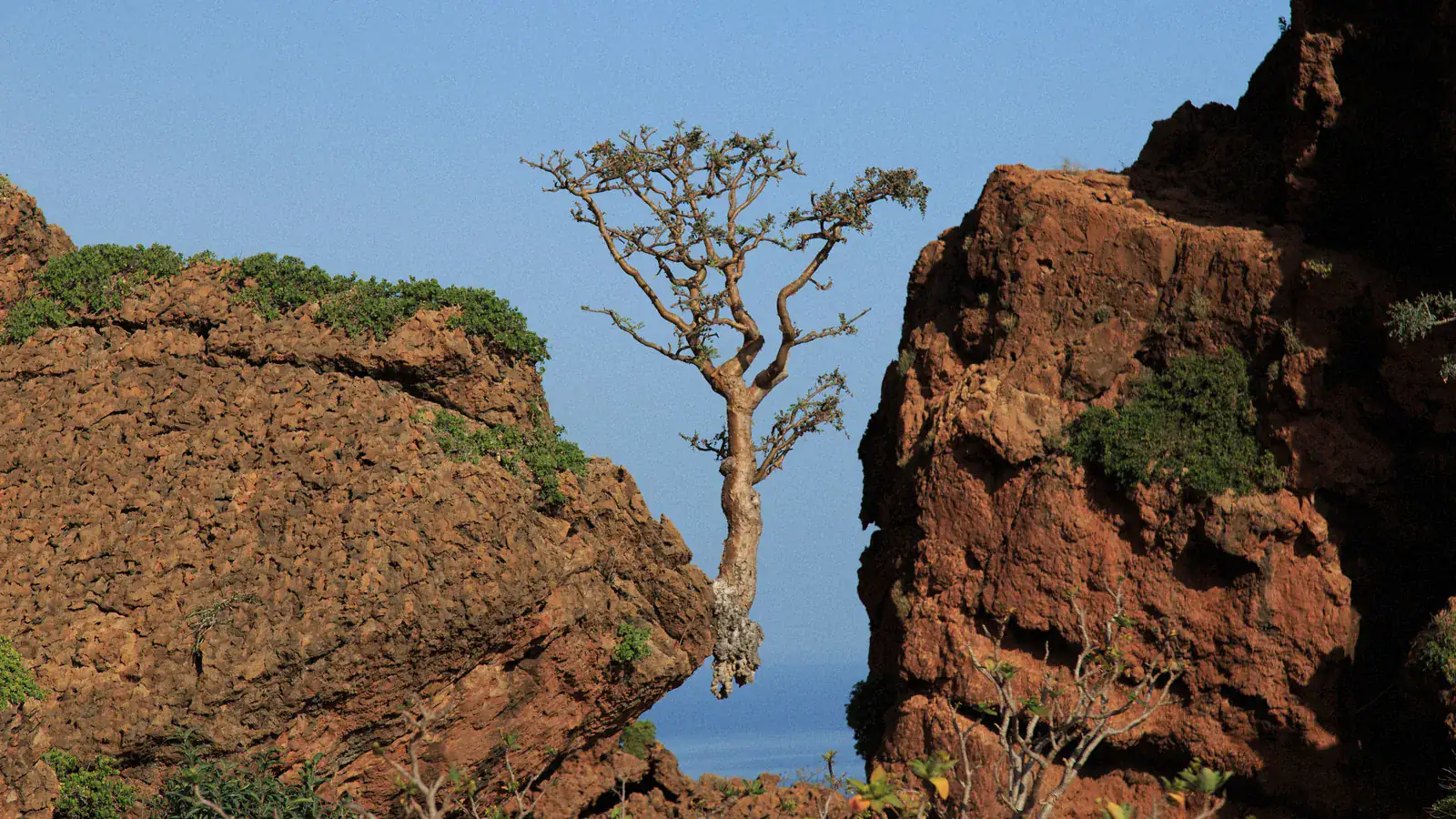
- 01Frankincense has not run out, but a 2019 Nature Sustainability study found evidence of population collapse in Boswellia papyrifera, now its main source tree.
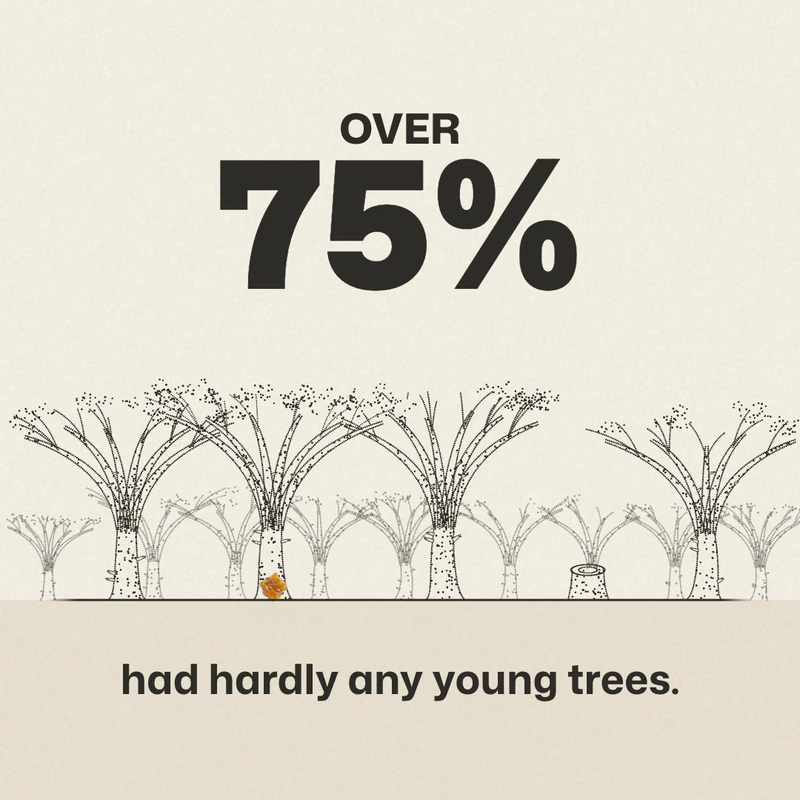
- 02Over 75 percent of 23 studied Boswellia papyrifera populations lacked small trees, and the authors' models projected frankincense production halving in 20 years.
- 03The 2019 study blames cattle grazing, frequent burns and reckless tapping; a 2012 Ethiopian study found adult trees dying at 6 to 7 percent a year.
- 04IUCN's Red List dataset of July 2026 has no assessment for Boswellia papyrifera and lists Boswellia sacra, of Oman, Yemen and Somalia, as Near Threatened.
- 05Since 19 January 2022, the EU has listed every Boswellia species in Annex D of its wildlife trade rules, the list it uses to monitor imports.
Is the world running out of frankincense?
Not yet. The tree that now supplies most of it is in decline, so the claim is half true, and only as a projection. In 2019, a team led by Frans Bongers of Wageningen University & Research reported "evidence of population collapse" in Boswellia papyrifera throughout its range. The tree is "now the main source of frankincense", says the abstract of their paper in Nature Sustainability.
Per the abstract, the study used inventories of 23 populations holding 21,786 trees, growth rings from 202 trees and demographic models built on 7,246 trees. Small trees were missing in over 75 percent of the populations, no natural regeneration had taken place for decades, and the models projected frankincense production halving in 20 years. Wageningen's press release gives the raw count: 18 of the 23 populations showed hardly any recruits, meaning young trees growing in to replace the old. Where tree rings dated the gap, it lasted half a century at two sites and a quarter century at two others.
Why only half true? The 20-year figure is a 2019 model forecast, not a measured fall: the abstract speaks of production that "will be halved", not of production that has stopped. We found no later range-wide count that tests it.
Nor is the decline universal. A 2017 survey of five districts in western Ethiopia found regenerating populations in three, "in sharp contrast to all earlier studies". Its authors tentatively link this to better rainfall, less disturbance and younger woodlands.
Concerted conservation and restoration efforts are urgently needed to secure the long-term availability of this iconic product.
Nature Sustainability, "Frankincense in peril", 2019
What tree does frankincense come from?
From Boswellia, a genus of trees and shrubs of the dry tropics, and mainly, the 2019 study says, from one species, Boswellia papyrifera. Frankincense is "an aromatic resin sourced from natural populations of Boswellia trees and shrubs", says the 2019 abstract. The 2011 frankincense management guide of the Center for International Forestry Research (CIFOR) counts about 20 species in the genus.
Which species leads has changed. In 1995, a report by the Food and Agriculture Organization of the United Nations (FAO) noted that some sources traced Middle Eastern olibanum mainly to Boswellia carteri and Boswellia frereana in Somalia and Boswellia sacra in southern Arabia. B. papyrifera of Ethiopia was then a minor source; by 2017, the western Ethiopia study called it "the principal source of the globally traded frankincense". No source we read gives trade shares.
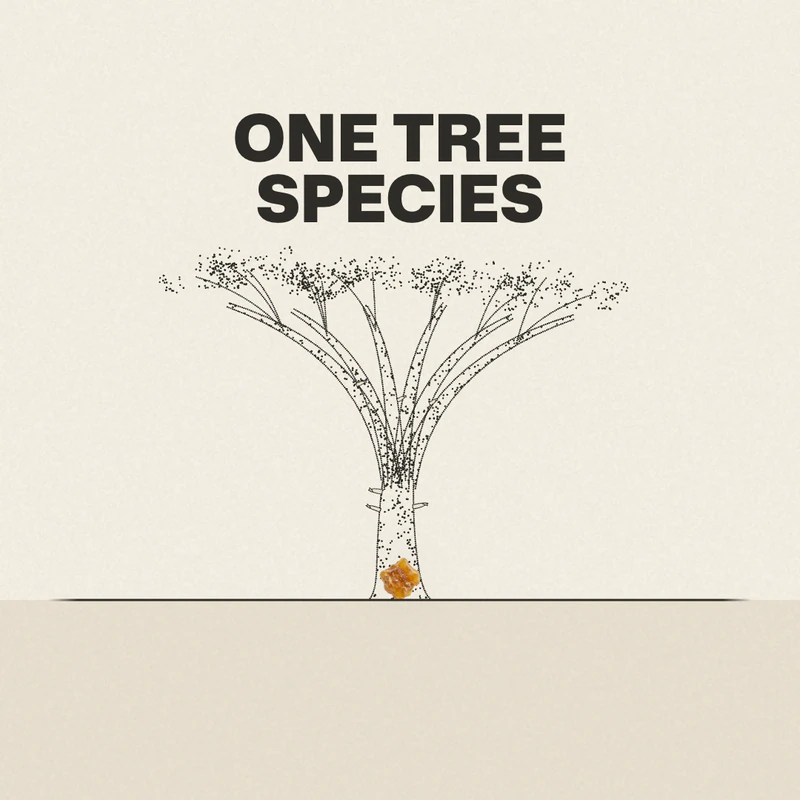
Boswellia papyrifera can reach 20 meters, and its outer bark peels off in thin, papery flakes, according to CIFOR. Bart Muys, a forest ecologist at KU Leuven, wrote in a Nature Sustainability commentary that the trees "look like root systems turned upside down". It grows on steep, rocky slopes in eight African countries, from Nigeria and Cameroon to Ethiopia and Eritrea, as CIFOR and Kew's World Checklist of Vascular Plants both record.
Why are frankincense trees declining?
Because young trees are not replacing the old ones that are dying. The 2019 paper puts the decline down to "increased human population pressure" on the woodlands "through cattle grazing, frequent burns and reckless tapping". Wageningen's release names browsing by cattle, goats and camels, burning and insect outbreaks as likely causes.
Earlier fieldwork measured parts of that picture:
| Year | Study | Sample | Finding | Causes it names |
|---|---|---|---|---|
| 2012 | Journal of Applied Ecology study | 12 populations, northern Ethiopia | No seedlings became lasting saplings; adults died at 6 to 7 percent a year; yield projected to halve within 15 years | Fire, grazing, beetle attacks |
| 2013 | Forest Ecology and Management study | Tree-ring ages | No successful recruitment since 1955 | Grazing and fire as settlement grew |
| 2019 | Nature Sustainability study by Bongers and others | 23 populations in Ethiopia, Eritrea and Sudan | Over 75 percent lacked small trees; production projected to halve in 20 years | Cattle grazing, frequent burns, reckless tapping |
The studies part ways on tapping. The 2012 study judged the decline "unlikely to be a consequence of harvesting", while the 2019 paper lists reckless tapping among its causes. Muys, noting that the 2019 paper did not study the drivers explicitly, suggests one it may have overlooked: lopping leafy branches to feed cattle. On our reading, every study in the table names fire and grazing; tapping weakens trees (next section), but none of them shows it to be the main brake on young trees.
Clearing for crops adds to the pressure. CIFOR's guide cites the Metema district office in northwestern Ethiopia, which reported 303,180 hectares of B. papyrifera woodland converted to cropland in the 20 to 30 years before 2011.
How is frankincense harvested?
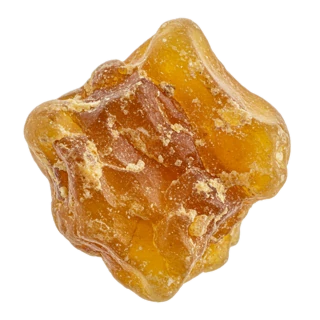
By tapping: harvesters cut small wounds into the bark and later pick off the hardened resin. FAO describes the result:
The milky liquid that exudes hardens on exposure to air into droplets or "tears" which are then easily detached by the collector.
Food and Agriculture Organization of the United Nations, Flavours and Fragrances of Plant Origin, 1995
In Ethiopia, CIFOR's guide sets out the routine. Tappers work in the dry season, shaving wounds about 1 to 2 cm high and 1 to 1.5 cm wide, usually three per side of the trunk from about 0.5 m above the ground. They reopen the wounds every 15 to 20 days until the rains, so a tree is tapped 8 to 12 times a year. The tool is an axe or, in northern Ethiopia, a mingaf.
Yields vary widely. A 2012 study of 500 trees in four populations measured an average of 261 grams per tree per year, from 41 to 1,829 grams. Yield rose with the number of incisions only up to 6 to 9 spots and peaked around the seventh collection round.
Tapping has a cost for the tree. A 2006 study in the Journal of Applied Ecology found that untapped trees produced three times as many healthy, filled seeds as tapped ones. Germination reached over 80 percent in untapped stands against under 16 percent in tapped ones. CIFOR recommends 6, 12 or 16 wounds by trunk size, untapped seed trees, and a rest of 3 to 5 years after a couple of tapping years.
Are frankincense trees endangered?
Some Boswellia species are, but not those that supply most frankincense, and the main source has no Red List assessment. In IUCN's Red List dataset of 28 July 2026, 13 of the 17 assessed Boswellia species sit in a threatened category. Going by Kew's ranges, 10 of those 13 grow only on the island of Socotra (our count).
| Species | Where it grows | IUCN Red List status | Sources |
|---|---|---|---|
| Boswellia papyrifera, the main source | Eight African countries, Nigeria to Eritrea | Not assessed | IUCN; CIFOR; Kew |
| Boswellia sacra (IUCN counts B. carteri as the same species) | Oman, Yemen and Somalia | Near Threatened | IUCN; Kew |
| Boswellia frereana | Northern Somalia | Not assessed | IUCN; FAO |
| Boswellia serrata, source of Indian olibanum | India and Sri Lanka | Least Concern | IUCN; FAO; Kew |
| Ten species found only on Socotra | Socotra | Four Critically Endangered, five Endangered, one Vulnerable | IUCN; Kew |
The first row matters most. In 2019, Muys wrote that the authors "mount a convincing case" to list B. papyrifera as Vulnerable, yet seven years later the dataset holds no assessment for it.
Species+, the CITES species database, shows no Boswellia in the CITES Appendices. The EU, however, has listed every Boswellia species in Annex D of its wildlife trade rules since 19 January 2022, under Commission Regulation (EU) 2021/2280, to collect trade data and judge whether stricter protection might be needed later.
Council Regulation (EC) No 338/97 reserves Annex D for species "imported into the Community in such numbers as to warrant monitoring". Imports must be declared with an import notification at the border. The entry covers all parts and derivatives except seeds, pollen and "finished products packaged and ready for retail trade", and Commission Regulation (EU) 2026/1383 kept it in June 2026.
What does this mean for perfume?
For perfume, the pressure falls on the raw material, not the bottle. FAO wrote in 1995 that the major fragrance use of olibanum is burning as incense in religious ceremonies. Small amounts are distilled into oils with balsamic odors for perfumery, and resinoids and absolutes serve as fixatives. In a composition it sits with the resins of the base, as our guide to the notes pyramid explains, and among the resinous fragrances.
A bottle on the shelf falls outside the EU listing, but its resin still comes from the wild. CIFOR wrote in 2011 that frankincense "is produced from natural populations" of the tree. The 2019 authors' remedies (cattle exclosures, fire breaks, planting and gentler tapping) all work on those woodlands. Muys suggested the perfume industry could help through eco-certification standards and conservation funds.
Another natural material under pressure is the musk of the musk deer. For how far back written recipes go, see Tapputi and the oldest dated perfume recipe that names its maker. More popular claims are tested in Perfume Myths and Facts.
Part of Eau Facts, the Fragnatique team's series on fragrance history and science, also told in short videos on Instagram at @eaufacts. Researched from the sources listed above, drafted with AI assistance and checked against each source before publishing.
Frequently asked
- Is frankincense the same as olibanum?
- In everyday use, yes. FAO's 1995 report Flavours and Fragrances of Plant Origin says the two terms are used somewhat interchangeably, and sometimes loosely, with no clear indication of the tree. FAO keeps olibanum for the resin of northeast African and Arabian Boswellia species, and CIFOR's 2011 guide calls the product of Boswellia papyrifera frankincense or gum olibanum. The resin of India's Boswellia serrata is known as Indian olibanum.
- Where does most frankincense come from?
- From Boswellia papyrifera, which the 2019 Nature Sustainability paper calls now the main source of frankincense. Its 23 studied populations grow in Ethiopia, Eritrea and Sudan, and CIFOR and Kew record the species in eight African countries, from Nigeria and Cameroon to Ethiopia and Eritrea. Other species add to supply, such as Boswellia sacra in Oman, Yemen and Somalia. No source we read gives each species' share of world trade.
- How fast do frankincense trees grow?
- Slowly. Boswellia papyrifera forms one growth ring a year and adds 1.15 millimeters of radius a year on average, a 2013 tree-ring study in Forest Ecology and Management found, or about 2.3 millimeters of trunk diameter (our arithmetic). Before it becomes a tree, the young plant can die back above ground every dry season while it grows deep roots, Bart Muys of KU Leuven wrote in 2019.
- Can frankincense be farmed?
- Not at scale yet, on the evidence we read. CIFOR's 2011 guide says frankincense is produced from natural populations and that Boswellia papyrifera has not yet been domesticated in Ethiopia. Nursery seedlings reach planting size in four to five months but survived poorly once planted out, so the guide expects more from rooted branch cuttings. Some farms in Tigray keep the trees in their fields, to a very limited extent.

Explore Fragnatique